55 Million Cyberattacks: Mexico Braces for FIFA World Cup 2026 Security Tsunami

The largest World Cup in history brings unprecedented cyber risk across three nations
Executive Summary
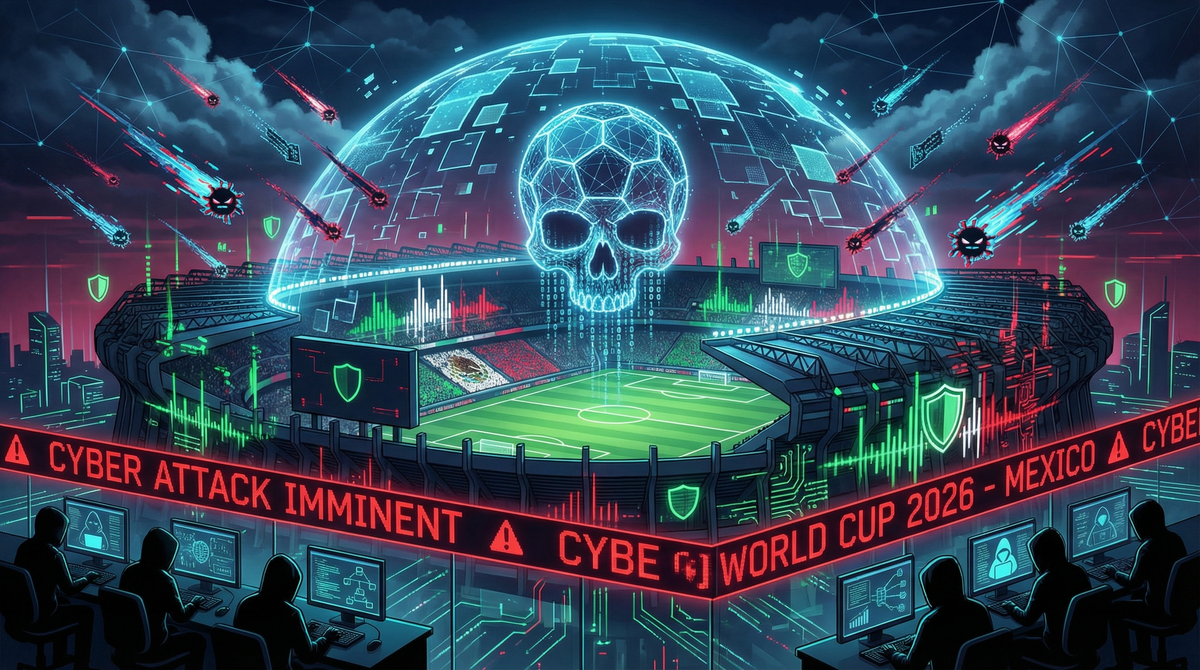
Mexico faces up to 55 million additional cyberattack attempts linked to the 2026 FIFA World Cup, according to cybersecurity firm SILIKN. The tournament—the largest in FIFA history with 48 teams across 16 cities in Mexico, the US, and Canada—presents an unprecedented attack surface combining ticketing fraud, hospitality scams, operational disruption risks, and complex cross-border coordination challenges.
The Threat Landscape
By the Numbers
- 55 million: Projected additional cyberattack attempts targeting Mexico
- 48 teams: Largest World Cup roster in history
- 104 matches: More games than any previous tournament
- 16 host cities: Spanning three countries
- 5,000+: Suspicious domains already detected impersonating World Cup platforms
- 7,500+: Fraudulent hospitality websites identified
- $1 billion+: Combined US and FIFA security investment
Why This World Cup Is Different
The 2026 tournament represents a significant expansion from previous events, creating exponentially more digital touchpoints:
- Trinational coordination: Security operations must span Mexico, Canada, and the United States
- Expanded digital footprint: Ticketing, access control, payment systems, broadcasting, transportation, and essential services all depend on interconnected digital infrastructure
- High-value targets: The convergence of global attention, financial transactions, and personal data makes this an irresistible target for cybercriminals
Primary Attack Vectors
1. Ticketing Fraud
SILIKN has already detected more than 5,000 suspicious domains impersonating official World Cup platforms. These fraudulent sites:
- Target Latin American users with Spanish-language content
- Replicate FIFA branding and official partner logos
- Use deceptive domain extensions (.icu, .top, .website, .global)
- Include terms like "login," "pay," "store," and "jobs" to appear legitimate
- Simulate ticket purchases, live-stream access, and merchandise sales
Expected escalation: Fraudulent domain registrations will accelerate as the June 2026 opening match approaches and ticket demand peaks.
2. Hospitality and Travel Scams
Over 7,500 fraudulent websites have been identified impersonating platforms like Booking.com and Airbnb. These scams:
- Advertise non-existent hotel reservations
- Offer bundled "premium experience" travel packages
- Capture credit card information and personal data
- Expose legitimate hospitality companies to chargebacks and reputational damage
3. Operational Disruption
Security experts have compared the World Cup risk profile to the 2023 casino ransomware attacks that cost major US hospitality operators tens of millions of dollars. Potential targets include:
- Stadium access control systems
- Payment processing infrastructure
- Broadcasting and streaming services
- Transportation coordination systems
- Emergency services communications
4. Organized Crime Integration
SILIKN warns that criminal groups may integrate cyber capabilities into traditional illicit activities:
- Extortion campaigns targeting businesses in high-traffic areas
- Money laundering through digital payment channels
- Counterfeit goods distribution via online platforms
- Coordination of physical crimes through digital communication
Lessons from Previous Events
Qatar 2022
After the tournament, threat analysts identified compromised network infrastructure capable of disrupting communications and streaming services—discovered only after the event concluded.
UEFA Euro 2024
More than 15,000 customer credentials linked to UEFA platforms were compromised and sold online during the championship, demonstrating the scale of credential harvesting operations targeting major sporting events.
The Pattern
Major sporting events consistently attract:
- Social engineering schemes
- Ransomware attacks
- Nation-state targeting
- Deepfake and AI-generated disinformation
- Credential harvesting at scale
Mexico City: Ground Zero
As host of the tournament's opening match, Mexico City faces concentrated risk:
- Peak visitor concentration: Maximum density of tourists and commercial activity
- Hospitality sector exposure: Hotels, restaurants, and retail face elevated extortion and fraud risk
- Critical infrastructure stress: Transportation, utilities, and emergency services under maximum load
- Existing threat landscape: Some hospitality zones already flagged for extortion risks
Defensive Measures Underway
Physical Security
Mexico has deployed advanced security measures including:
- Robot dogs patrolling high-risk areas with AI-powered surveillance
- Anti-drone technology to counter aerial threats
- Military coordination for unauthorized drone response
- $500 million federal grant program for local law enforcement equipment
Cyber Coordination
The trinational tournament structure requires unprecedented cooperation:
- Threat intelligence sharing across three national cybersecurity agencies
- Incident response alignment with standardized protocols
- Infrastructure protection coordination across borders
- Joint training exercises for combined operations
Private Sector Preparation
Organizations in exposed sectors should:
- Implement enhanced phishing awareness training for all staff
- Deploy additional email and web filtering during the tournament period
- Establish incident response plans specific to World Cup-related scenarios
- Coordinate with sector ISACs for threat intelligence sharing
- Review insurance coverage for cyber-related business interruption
The Bigger Picture
The 2026 World Cup cybersecurity challenge reflects a broader reality: major global events are now high-value cyberattack targets. The combination of:
- Concentrated attention and resources
- High-volume financial transactions
- Personal data processing at scale
- Time-compressed operations
- Multi-stakeholder coordination
...creates conditions that favor attackers over defenders.
Timeline to Watch
| Date | Event | Risk Level |
|---|---|---|
| Q1 2026 | Ticket sales peak | HIGH - Fraud campaigns intensify |
| April-May 2026 | Travel booking surge | HIGH - Hospitality scams peak |
| June 11, 2026 | Opening match (Mexico City) | CRITICAL - Maximum attack surface |
| June-July 2026 | Tournament play | ELEVATED - Sustained threat activity |
| Post-tournament | Credential sales, infrastructure analysis | MODERATE - Delayed disclosure |
Recommendations for Travelers
- Purchase tickets only through official FIFA channels
- Verify accommodation bookings directly with hotels
- Use credit cards with fraud protection for all purchases
- Be suspicious of "too good to be true" deals
- Enable multi-factor authentication on all accounts
- Monitor financial accounts closely before, during, and after travel
Conclusion
The 2026 FIFA World Cup presents the most complex cybersecurity challenge in sporting event history. With 55 million projected additional attack attempts, 12,500+ identified fraudulent websites, and a trinational operational footprint, the tournament will test the limits of coordinated cyber defense.
Success will require unprecedented cooperation between governments, private sector organizations, and security researchers. Failure could result in disrupted services, financial losses in the billions, and compromised personal data for millions of fans.
The countdown to kickoff is also a countdown to the largest coordinated cyber campaign targeting a sporting event in history.