
Betterment Data Breach Exposes 1.4 Million Customers: A Masterclass in Social Engineering

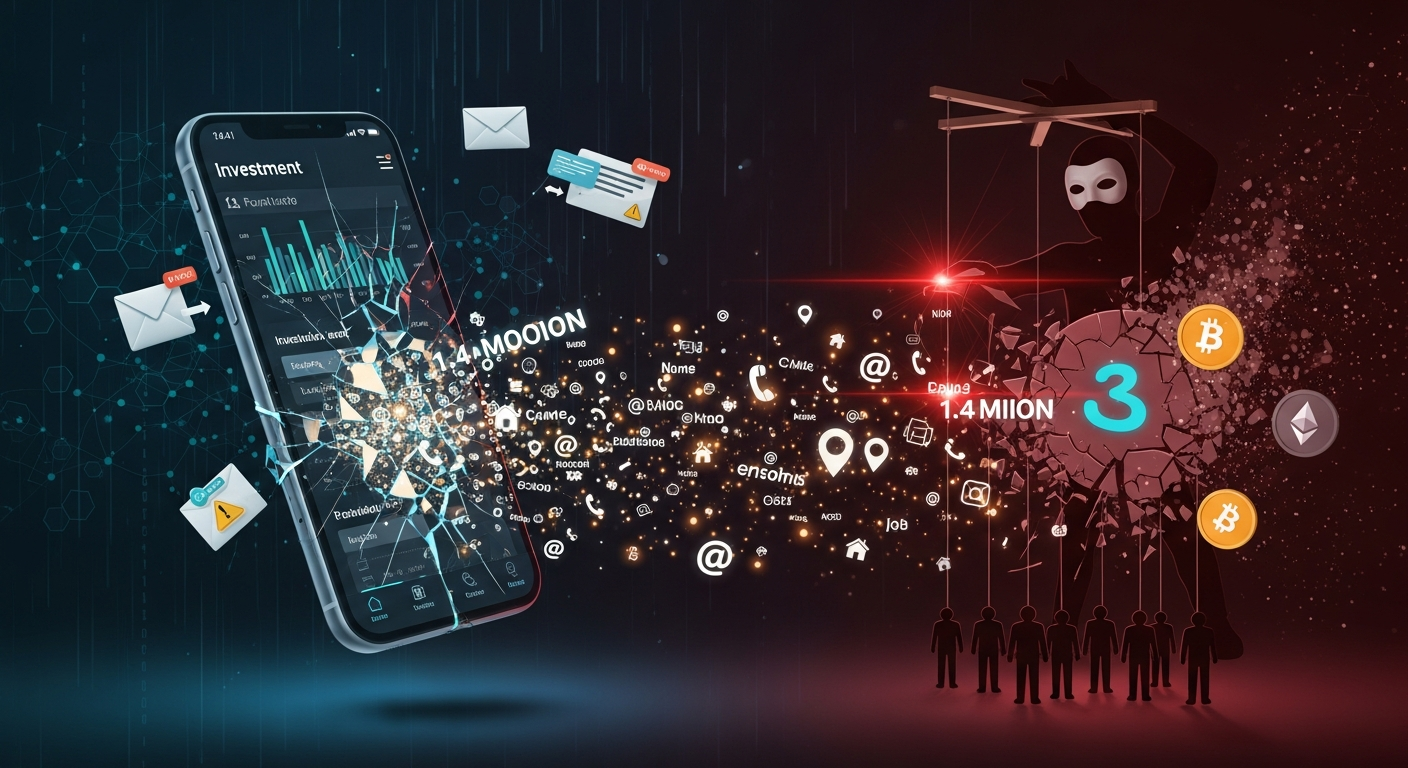
How a single deceptive phone call or email bypassed millions of dollars in cybersecurity infrastructure and exposed the personal details of over a million investors
Executive Summary
On January 9, 2026, Betterment—one of America's pioneering robo-advisory investment platforms managing $65 billion in assets for over one million customers—fell victim to a sophisticated social engineering attack. The breach exposed personal information belonging to 1,435,174 customer accounts, including names, email addresses, physical addresses, phone numbers, dates of birth, device information, employer details, and job titles.
What makes this breach particularly noteworthy isn't the scale of data exposed (though 1.4 million affected customers is significant), but rather how the attacker gained access: not through a sophisticated zero-day exploit or a brute-force attack on Betterment's infrastructure, but through good old-fashioned deception—impersonating someone with legitimate access to trick their way into third-party systems.
This incident serves as a stark reminder that in 2026, the weakest link in cybersecurity remains fundamentally human.
The Attack Timeline: From Breach to Exposure
January 9, 2026: The Initial Compromise
The attack began sometime on January 9, 2026, when an unauthorized individual employed social engineering techniques to gain access to third-party software platforms that Betterment uses for marketing and customer communications.
According to Betterment's official statements, "the individual used identity impersonation and deception to gain access, rather than compromising our technical infrastructure." This is a critical distinction—Betterment's core investment platform, customer accounts, and financial systems were never breached. Instead, the attacker targeted the softer perimeter: the ecosystem of third-party tools that modern fintech companies rely on for day-to-day operations.
By approximately 7:00 PM Eastern Time, the attacker had executed the first phase of their campaign: sending fraudulent emails to Betterment customers from a legitimate company email address.
The Crypto Scam: Immediate Monetization
With access to Betterment's marketing infrastructure, the attacker wasted no time attempting to monetize their position. They sent emails from support@e.betterment.com—a legitimate Betterment subdomain—with the subject line:
"We'll triple your crypto! (Limited Time)"
The message claimed that Betterment was "celebrating our best-performing year yet by tripling Bitcoin and Ethereum deposits for the next three hours." Customers were directed to send cryptocurrency to wallet addresses controlled by the attacker, with the promise of receiving triple their deposit in return.
The scam email claimed deposits up to $750,000 would be accepted and set a deadline of January 9, 2026, at 8:45 PM Eastern Standard Time—notably using the wrong year, a telltale sign of the fraudulent nature that some recipients may have caught.
This "crypto doubling" or "crypto tripling" scam is a classic fraud scheme that has been around since the early days of cryptocurrency, but its delivery through a legitimate corporate email address gave it an air of authenticity that pure phishing emails typically lack.
January 9-10: Betterment's Initial Response
To Betterment's credit, their response was swift. By 7:00 PM on January 9, just hours after the fraudulent emails went out, the company issued its first public statement warning customers that the crypto promotion was unauthorized and should be disregarded.
On January 10, Betterment provided a more detailed update:
"On January 9, an unauthorized individual gained access to certain Betterment systems, which allowed them to represent themselves as Betterment and send a fraudulent crypto offer to some customers. This is not a real offer and should be disregarded."
The company confirmed that unauthorized access had been revoked and that there was "no indication that the unauthorized individual had any access to Betterment customer accounts."
January 12: The Full Disclosure
Three days after the initial breach, Betterment released a comprehensive statement that revealed the attack's true nature:
"On January 9, an unauthorized individual gained access to certain Betterment systems through social engineering. This means the individual used identity impersonation and deception to gain access, rather than compromising our technical infrastructure. The unauthorized access involved third-party software platforms that Betterment uses to support our marketing and operations."
This statement made it clear that:
- The attack was social engineering-based
- Third-party platforms were the entry point
- Betterment's core infrastructure remained secure
- Customer data had been accessed, including names, email addresses, physical addresses, phone numbers, and dates of birth
Betterment also announced they had engaged "a leading cybersecurity firm" to assist with the investigation—later revealed to be CrowdStrike.
January 13: The DDoS Attack and Alleged Extortion
The situation escalated on January 13 when Betterment experienced a distributed denial-of-service (DDoS) attack beginning at 9:04 AM Eastern Time. The attack caused intermittent outages of both the website and mobile app, preventing customers from accessing their accounts and managing their investments.
Partial service was restored by 10:25 AM, with full access returning by 2:40 PM—a five-and-a-half-hour disruption that left many customers anxious about their investments.
According to reporting by BleepingComputer, sources indicated that Betterment was also being extorted, though the company has not publicly confirmed this detail. The timing of the DDoS attack—just days after the initial breach—suggests a coordinated campaign designed to maximize pressure on the company.
February 3: CrowdStrike Forensic Findings
Nearly a month after the initial breach, Betterment released an update based on CrowdStrike's forensic investigation:
"Our forensic investigation, supported by the cybersecurity firm, CrowdStrike, has confirmed that no customer accounts, passwords, or login information were compromised as part of the January 9 incident."
However, the update also revealed that data had been "posted online by a group claiming responsibility for the unauthorized access." Betterment stated they were working with an independent data analytics firm to assess all data that was accessed to identify potential privacy risks.
February 5: Have I Been Pwned Confirms 1.4 Million Affected
The true scope of the breach became clear when Have I Been Pwned (HIBP), the authoritative data breach notification service run by security researcher Troy Hunt, analyzed the leaked data and added the Betterment breach to their database.
The analysis confirmed 1,435,174 accounts were exposed, with the following data types compromised:
- Names
- Email addresses
- Physical addresses
- Phone numbers
- Dates of birth
- Device information
- Geographic locations
- Employers
- Job titles
Understanding Social Engineering: The Human Vulnerability
What Is Social Engineering?
Social engineering is the art of manipulating people into divulging confidential information or performing actions that compromise security. Unlike technical hacking, which exploits software vulnerabilities, social engineering exploits human psychology—our natural tendencies to trust, help others, defer to authority, or respond to urgency.
Common social engineering techniques include:
Pretexting: Creating a fabricated scenario (pretext) to engage a victim and extract information. The attacker might pose as an IT support technician, a vendor, or a company executive.
Phishing: Sending fraudulent communications that appear to come from a reputable source to induce targets to reveal sensitive information or click on malicious links.
Vishing: Voice phishing—using phone calls to manipulate victims, often impersonating banks, government agencies, or tech support.
Spear Phishing: Highly targeted phishing attacks customized to specific individuals, often using personal information gathered from social media or other sources.
Business Email Compromise (BEC): Impersonating company executives or trusted vendors via email to trick employees into transferring funds or sharing sensitive data.
Why Third-Party Platforms Are Prime Targets
In the Betterment case, the attacker didn't try to breach Betterment's core systems directly. Instead, they targeted the third-party platforms that Betterment uses for marketing and customer communications.
This approach is increasingly common for several reasons:
Lower Security Investment: Third-party vendors, especially those providing marketing or communication tools, may not have the same security budgets or expertise as their enterprise clients.
Trust Relationships: Once inside a third-party platform, attackers can leverage the trust relationship between that platform and the target company to send communications that appear legitimate.
Broader Attack Surface: Every third-party tool a company uses represents another potential entry point. Modern enterprises often use dozens or hundreds of SaaS applications, creating a vast attack surface that's difficult to monitor and secure.
Access to Sensitive Data: Marketing platforms often store customer contact information, purchase history, preferences, and other valuable data—exactly what the Betterment attacker obtained.
The Grubhub Connection
Notably, a similar attack hit food delivery platform Grubhub just two weeks before the Betterment breach, on December 24, 2025. The attack method was nearly identical:
- Access gained through third-party communication platforms
- Fraudulent crypto reward scam emails sent
- Promised 10x return on cryptocurrency deposits
- Targeted merchant partners and restaurants
The timing and methodology suggest the same threat actor may be responsible for both breaches, indicating a coordinated campaign specifically targeting companies through their third-party marketing and communication tools.
The Data Exposed: What It Means for Victims
Categories of Compromised Information
The Betterment breach exposed several categories of personal information:
Personally Identifiable Information (PII):
- Full names
- Email addresses
- Physical addresses
- Phone numbers
- Dates of birth
Professional Information:
- Employers
- Job titles
- Geographic locations (of employers)
Technical Data:
- Device information
Why This Data Is Dangerous
While Betterment has emphasized that no account credentials or financial information was compromised, the exposed data still presents significant risks:
Identity Theft Risk: The combination of name, date of birth, address, and phone number provides most of what's needed to impersonate someone for identity theft purposes. This data can be used to:
- Open fraudulent credit accounts
- File fake tax returns
- Apply for loans or credit cards
- Bypass security questions at other institutions
Targeted Phishing: With knowledge of someone's employer, job title, and physical location, attackers can craft highly convincing spear-phishing emails that reference the victim's professional context.
Physical Security Risks: Exposure of physical addresses, combined with knowledge that someone is a Betterment customer (implying financial assets), could make victims targets for physical crimes.
Account Takeover Attempts: Even without passwords, attackers can use exposed information to attempt social engineering attacks on other services the victim uses, or to try password reset flows that rely on personal information for verification.
Long-Term Vulnerability: Unlike a password that can be changed, personal information like birthdates and physical addresses are much harder to alter. This data remains useful to criminals for years or even decades.
The Paradox of "No Accounts Compromised"
Betterment has repeatedly emphasized that "no customer accounts, passwords, or login information were compromised." While technically accurate and certainly better than a full account breach, this framing can downplay the real risks facing affected customers.
The exposed data enables:
- Credential stuffing attacks: If victims reuse passwords, attackers can try known credentials from other breaches
- Social engineering of victims: Attackers can pose as Betterment support using the victim's own personal details as "verification"
- Secondary breaches: Information can be used to breach accounts at other services
Betterment's Response: A Case Study in Incident Handling
What Betterment Did Right
Rapid Initial Disclosure: Within hours of the fraudulent emails being sent, Betterment issued a public warning. This quick response may have prevented some customers from falling for the crypto scam.
Transparent Timeline: The company maintained a public customer update page with timestamped entries documenting the evolution of their response and findings.
Engagement of Top-Tier Forensics: Bringing in CrowdStrike, one of the most respected incident response firms in the industry, demonstrated a serious commitment to understanding the breach.
Clear Communication: Betterment's updates were relatively clear about what happened, what was compromised, and what wasn't—avoiding the vague language that often characterizes breach notifications.
Commitment to Post-Incident Review: The company promised a detailed post-incident review within 60 days, showing commitment to transparency and learning from the incident.
Areas for Improvement
Delayed Scope Disclosure: While initial communications were quick, the full scope of affected customers (1.4 million) wasn't publicly confirmed until HIBP analyzed the leaked data nearly a month later. More proactive disclosure of the breach scale would have been preferable.
Extortion Details: The company has not publicly addressed the reported extortion attempt, leaving questions about what demands were made and how the company responded.
Third-Party Security Questions: The breach raises questions about Betterment's third-party risk management program. How were these vendors vetted? What security requirements were in place? How did social engineering succeed against their controls?
The Bigger Picture: Third-Party Risk in Fintech
The Modern Fintech Stack
Today's fintech companies operate on a foundation of interconnected third-party services. A typical investment platform might use:
- Cloud infrastructure (AWS, Azure, GCP)
- Customer relationship management (Salesforce, HubSpot)
- Marketing automation (Marketo, Mailchimp, Braze)
- Customer support (Zendesk, Intercom)
- Analytics (Mixpanel, Amplitude)
- Payment processing (Stripe, Plaid)
- Identity verification (Jumio, Onfido)
- And dozens more
Each of these integrations requires some level of data sharing and access permissions. Each represents a potential entry point for attackers.
Supply Chain Security Is Everyone's Problem
The Betterment breach illustrates a fundamental truth about modern cybersecurity: your security is only as strong as your weakest vendor. You can invest millions in securing your core infrastructure, but if an attacker can social engineer their way into your marketing platform, they may gain access to customer data anyway.
This reality requires a shift in security thinking:
- Zero trust must extend to vendors: Third-party access should be minimized and monitored
- Data minimization matters: Only share the data vendors absolutely need
- Regular security assessments: Vendor security should be continuously evaluated, not just at onboarding
- Incident response planning must include third parties: Tabletop exercises should model third-party compromises
The Regulatory Implications
Financial services companies are subject to stringent regulations around data protection, including:
- SEC Regulation S-P: Requires financial institutions to have written policies for protecting customer information
- GLBA (Gramm-Leach-Bliley Act): Mandates financial institutions explain information-sharing practices and protect sensitive data
- State data breach notification laws: Require timely notification to affected individuals
- CCPA/CPRA in California: Provides additional rights and requirements for California residents
The Betterment breach may trigger regulatory scrutiny and potentially enforcement actions, particularly if regulators find that third-party risk management practices were inadequate.
Lessons for Customers: Protecting Yourself After a Breach
Immediate Actions
If you're a Betterment customer affected by this breach, or if you're unsure whether you were affected, consider taking these steps:
1. Check Have I Been Pwned
Visit haveibeenpwned.com and enter your email address to see if you appear in the Betterment breach (or any other breaches).
2. Enable Two-Factor Authentication
If you haven't already, enable 2FA on your Betterment account and all other financial accounts. Use an authenticator app rather than SMS when possible.
3. Be Vigilant About Phishing
With your personal details exposed, expect highly targeted phishing attempts. Be suspicious of any communication—email, phone, or text—that asks you to click links, provide information, or take urgent action. When in doubt, contact companies directly using known contact information (not links or numbers provided in suspicious messages).
4. Monitor Your Credit
Consider placing a fraud alert or credit freeze with the three major credit bureaus (Equifax, Experian, TransUnion). Monitor your credit reports for any unauthorized accounts or inquiries.
5. Watch for Identity Theft Signs
Monitor your mail for unexpected bills, cards, or statements. Check your tax records for any unauthorized filings. Review your bank and investment accounts regularly for suspicious activity.
6. Update Passwords
While Betterment says passwords weren't compromised, now is a good time to update your password—especially if you've reused it elsewhere. Use a unique, strong password and consider a password manager.
Long-Term Vigilance
Unfortunately, once your personal information is exposed, the risk doesn't disappear after a few months. The data from the Betterment breach may be combined with data from other breaches to build more complete profiles, sold on dark web marketplaces, or used in attacks years from now.
This means maintaining ongoing vigilance:
- Continue monitoring your credit and financial accounts
- Be skeptical of unexpected communications forever—not just in the weeks after a breach
- Keep your contact information and security settings updated
- Stay informed about new scams and fraud techniques
The Social Engineering Epidemic
Why It's Getting Worse
Social engineering attacks are becoming more sophisticated and more common for several reasons:
AI-Powered Personalization: Modern AI tools can help attackers analyze targets' social media, professional profiles, and communication patterns to craft more convincing pretexts.
Remote Work Vulnerabilities: The shift to remote work has made it harder to verify identities and easier for attackers to impersonate colleagues or vendors.
Deepfakes and Voice Cloning: Emerging technologies allow attackers to create convincing fake audio or video of trusted individuals.
Information Availability: The sheer volume of personal and professional information available online (LinkedIn, social media, data breaches) gives attackers ample raw material for pretexting.
Technical Controls Aren't Enough
The Betterment breach demonstrates that even companies with strong technical security can fall victim to social engineering. This requires a multi-layered approach:
Human-Layer Security:
- Regular security awareness training that includes realistic simulations
- Clear policies for verifying identities before granting access or sharing information
- Culture that encourages questioning unusual requests—even from apparent authority figures
- Channels for reporting suspicious activity without fear of embarrassment
Process-Level Controls:
- Multi-person authorization for sensitive actions
- Out-of-band verification for unusual requests (e.g., calling back on a known number)
- Clear escalation paths for security concerns
- Regular audits of access permissions
Technical Backstops:
- Behavioral analytics to detect unusual account activity
- Monitoring of third-party access patterns
- Data loss prevention tools to flag unusual data access
- Network segmentation to limit blast radius
Looking Forward: What Comes Next
For Betterment
Betterment has committed to publishing a post-incident review within 60 days of their February 3 update. This review will likely detail:
- The specific attack methodology
- What controls failed
- Remediation steps taken
- Future prevention measures
The company will also face:
- Potential regulatory inquiries from the SEC and state regulators
- Possible class action lawsuits from affected customers
- Reputational damage that may affect customer acquisition and retention
- Increased scrutiny of their third-party risk management practices
For the Industry
The Betterment breach, coming on the heels of the similar Grubhub attack, signals a trend that should concern all companies relying on third-party platforms:
Increased Third-Party Targeting: Attackers are recognizing that third-party platforms offer a lower-friction path to valuable data than attacking well-defended core infrastructure.
Need for Industry Standards: There may be momentum toward stricter standards for third-party security in financial services, potentially including new regulatory requirements.
Social Engineering Defense Innovation: We may see more investment in tools and training specifically designed to combat social engineering, including AI-powered detection of suspicious communications.
For Consumers
The Betterment breach is another reminder that personal data protection requires active participation:
- Assume your data is already compromised
- Practice good security hygiene everywhere
- Stay informed about breaches and their implications
- Advocate for stronger data protection laws and corporate accountability
Conclusion: The Human Element Remains Critical
The Betterment data breach of January 2026 stands as a powerful illustration of a fundamental cybersecurity truth: technology alone cannot protect us. Despite managing $65 billion in assets and serving over a million customers—with all the security investment that implies—Betterment was breached not through a technical exploit but through the age-old art of deception.
An attacker who knew how to manipulate human psychology gained access to systems that exposed 1.4 million customer records. They then launched a crypto scam, followed by a DDoS attack and alleged extortion attempt—all stemming from that initial human vulnerability.
For the 1.4 million affected customers, the exposed data represents a long-term risk that will require ongoing vigilance. For Betterment, the breach represents a significant challenge to customer trust and regulatory standing. For the broader industry, it's a reminder that third-party risk management and social engineering defense must be priorities.
As we move deeper into 2026, the lesson is clear: while we must continue to invest in technical security controls, we cannot neglect the human element. The best encryption, the most advanced intrusion detection, and the most sophisticated AI security tools are all bypassed when an attacker simply convinces a human to open the door.
The future of cybersecurity lies not just in better technology, but in better training, better processes, and a culture where healthy skepticism is encouraged and rewarded.
Key Takeaways
- 1.4 million Betterment customers had personal data exposed including names, emails, addresses, phone numbers, dates of birth, device information, employers, and job titles.
- The breach was caused by social engineering, not a technical exploit—the attacker used "identity impersonation and deception" to access third-party platforms.
- Customer accounts, passwords, and financial data were not compromised, but the exposed personal information still creates significant identity theft and phishing risks.
- The attacker launched a crypto scam, DDoS attack, and alleged extortion attempt as part of a coordinated campaign.
- A similar attack hit Grubhub two weeks earlier, suggesting a coordinated campaign targeting companies through their third-party marketing platforms.
- Affected customers should enable 2FA, monitor credit, and remain vigilant against phishing attempts that may leverage their exposed personal information.
- The breach highlights the critical importance of third-party risk management and social engineering defense in modern cybersecurity strategies.