China's Second-in-Command Accused of Leaking Nuclear Weapons Data to U.S. in Unprecedented Insider Threat Case

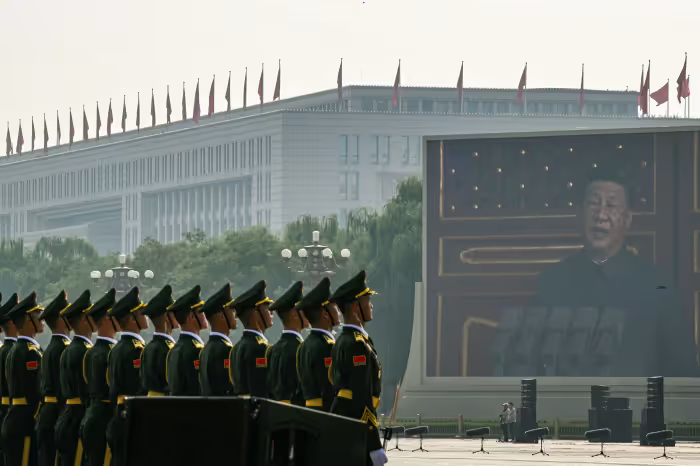
The highest-ranking insider threat case in modern military history exposes critical vulnerabilities in state secrets protection as Beijing's military command structure collapses under Xi's purge
The cybersecurity world has witnessed countless insider threat incidents—disgruntled employees exfiltrating customer databases, privileged administrators selling access credentials, contractors walking out with intellectual property. But nothing in the annals of insider threat history compares to the allegations now rocking Beijing: China's most senior military officer allegedly leaked core technical data on the nation's nuclear weapons program to the United States.
General Zhang Youxia, 75, the Vice Chairman of China's Central Military Commission and the second most powerful military figure in the country after Xi Jinping himself, stands accused of what would constitute one of the most catastrophic insider breaches in the history of nation-state security.
The Allegations: Nuclear Secrets to a Strategic Rival
According to sources familiar with a closed-door briefing held Saturday morning with China's highest-ranking military officers, Zhang allegedly transferred technical specifications regarding China's nuclear arsenal to the United States. The briefing—convened just before the Ministry of National Defense's public announcement of the investigation—laid out allegations that extend far beyond traditional corruption charges.
The accusations include:
- Leaking core technical data on China's nuclear weapons program to the U.S.
- Forming political cliques that undermined Communist Party unity
- Abusing authority within the Central Military Commission
- Accepting massive bribes in exchange for military promotions, including allegedly facilitating former Defense Minister Li Shangfu's rise to power
The evidence trail reportedly leads back to Gu Jun, the former general manager of China National Nuclear Corporation (CNNC)—the state-owned enterprise that oversees all aspects of China's civilian and military nuclear programs. Gu was placed under investigation on January 19, 2026, and authorities revealed that his probe uncovered Zhang's connection to a security breach within China's nuclear sector.
Insider Threat at the Highest Level
From a cybersecurity and counterintelligence perspective, this case represents the nightmare scenario that security professionals warn about: a trusted insider with legitimate access to the most sensitive information a nation possesses. This comes as China's Ministry of State Security has emerged as arguably the world's most formidable cyber power, making the alleged leak all the more significant.
Zhang wasn't some mid-level bureaucrat with peripheral access. He was:
- The second-ranking member of the Central Military Commission
- A Politburo member with access to China's highest state secrets
- The former commander of the General Armament Department (now Equipment Development Department), overseeing all military procurement
- A "princeling" whose father fought alongside Xi Jinping's father during the Chinese civil war
If the allegations prove accurate, Zhang represents the ultimate privileged access threat—someone with decades of trust, familial connections to power, and unfettered access to China's most closely guarded military secrets. The case parallels a troubling pattern of insider threats emerging within U.S. military and intelligence communities, demonstrating that no nation is immune to this vulnerability.
Digital Forensics and Device Seizures
Chinese authorities have already begun what appears to be an extensive digital forensics operation. According to reports, investigators have seized mobile devices from officers who rose through the ranks under Zhang and General Liu Zhenli, the Chief of the Joint Staff Department who is also under investigation.
The scope is staggering: thousands of officers with ties to the two generals have now become potential targets of investigation. This represents one of the largest device seizure operations in military counterintelligence history.
Xi Jinping has also commissioned a special task force to conduct a deep-dive investigation into Zhang's tenure as commander of the Shenyang Military Region from 2007 to 2012. In a telling operational security measure, the investigative team traveled to Shenyang but chose to stay in local hotels rather than military bases—a clear indication that authorities believe Zhang's network of supporters could interfere with the investigation from within military facilities.
The Procurement Corruption-Security Nexus
The Zhang case illuminates a pattern that cybersecurity professionals have long warned about: the correlation between corruption and security vulnerabilities.
Zhang allegedly accepted bribes in exchange for promotions within the Equipment Development Department, the agency responsible for research, development, and procurement of military hardware. This same procurement system has been under scrutiny since 2023, when investigations began targeting what authorities described as a system "controlled by a small circle of people."
When procurement decisions are made based on kickbacks rather than security and capability requirements, the integrity of entire weapons systems becomes suspect. If officers can be bribed for promotions, they can be bribed for information. If equipment contracts go to the highest bidder rather than the most secure supplier, vulnerabilities propagate through the entire military-industrial complex.
Command Structure Decimation
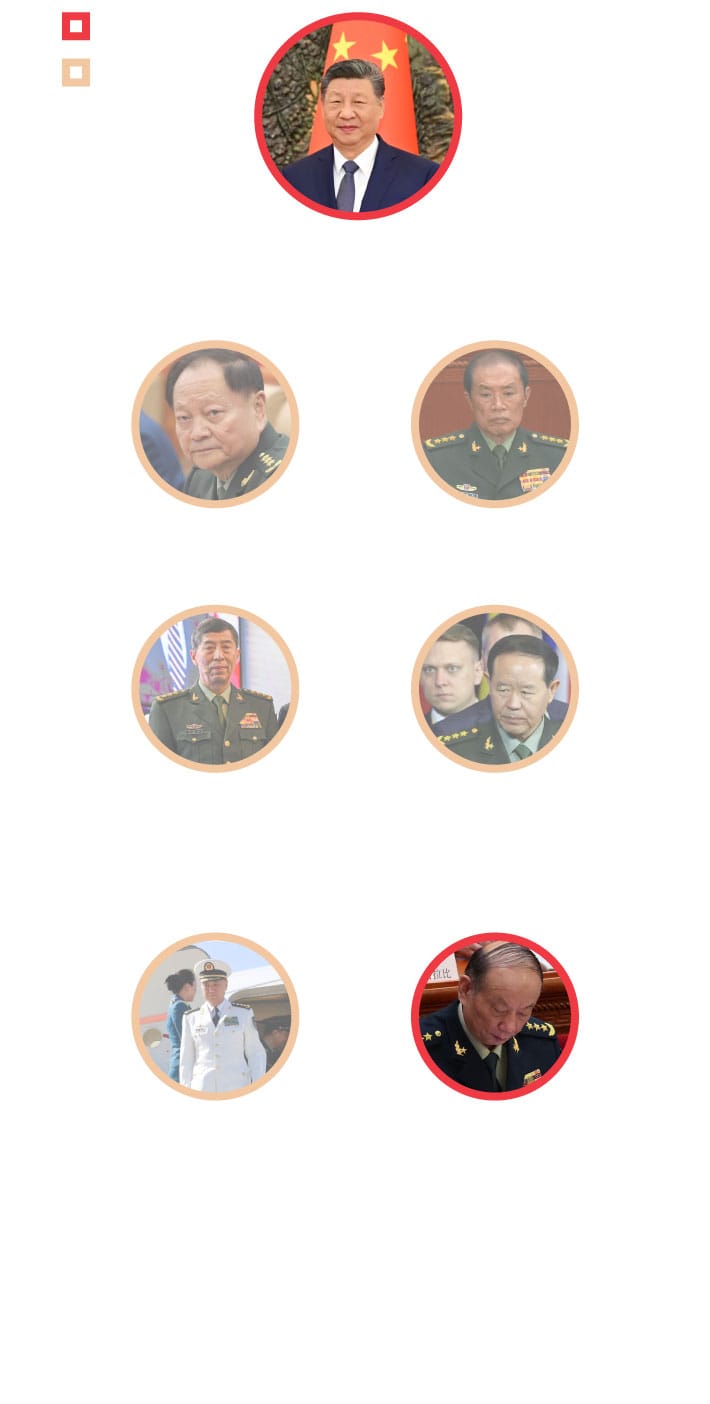
The fallout has effectively decapitated China's military command structure. The Central Military Commission, China's supreme military decision-making body, originally had seven members when Xi's current term began in 2022. Now it has been reduced to just two: Xi himself and Zhang Shengmin, the military's anti-corruption chief who was only promoted to Vice Chairman in October 2025.
Since summer 2023, more than 50 senior military officers and defense-industry executives have been placed under investigation or removed from office. The purge has touched every branch of China's military: the army, air force, navy, strategic-missile force, paramilitary police, and major theater commands—including the one focused on Taiwan.
Christopher Johnson, a former CIA China analyst now heading China Strategies Group, characterized the situation bluntly: "This move is unprecedented in the history of the Chinese military and represents the total annihilation of the high command."
Implications for Global Security
The immediate security implications cut both ways. If Zhang did provide nuclear weapons data to the United States, American intelligence gained invaluable insight into China's strategic capabilities. But the chaos within China's military leadership raises its own set of concerns—particularly as PRC-linked groups like Salt Typhoon have demonstrated five-year persistent access to U.S. telecommunications infrastructure.
M. Taylor Fravel, director of MIT's Security Studies Program, noted that the leadership vacuum is "bound to have an impact on the PLA's current readiness to undertake major, complex military operations in the short to medium term."
For cybersecurity professionals tracking nation-state threats, the instability creates uncertainty. A military focused on internal purges and loyalty tests may be less capable of sophisticated offensive cyber operations—though China's cyber operations already dwarf America's elite units in sheer scale. Alternatively, a leadership desperate to prove loyalty might pursue more aggressive actions to demonstrate competence.
Lessons for Enterprise Security
While few organizations face the prospect of their second-in-command selling nuclear secrets to a rival superpower, the Zhang case offers lessons applicable to any security program:
1. Trust but verify—even at the top. Zhang's decades of personal history with Xi Jinping didn't prevent the alleged betrayal. Behavioral monitoring and anomaly detection must apply to executives, not just rank-and-file employees.
2. Corruption and security failures correlate. Organizations that tolerate procurement irregularities, nepotistic promotions, or financial misconduct are creating the conditions for security breaches. Ethics and security are intertwined. State-sponsored actors routinely exploit these vulnerabilities to exfiltrate sensitive data.
3. Network analysis matters. Chinese investigators are now mapping Zhang's entire patronage network, seizing devices from thousands of associated officers. Understanding relationship networks within organizations can reveal potential insider threat clusters. This mirrors how China's MSS has built sophisticated networks to recruit insiders at American institutions.
4. Physical and digital security intersect. The investigative team's decision to avoid military bases and stay in civilian hotels reflects awareness that compromised physical environments can undermine digital forensics. Insider threats require considering the full operational environment.
5. Supply chain extends to personnel. Just as compromised vendors can introduce vulnerabilities, compromised personnel in positions of authority can corrupt entire organizational structures.
The Verification Challenge
It's worth noting that some analysts urge caution about the allegations. Drew Thompson, a former Pentagon official, pointed out that "internal accounts are not always true" and suggested Beijing may have constructed the most serious possible accusations to justify removing such a high-profile figure.
China's opaque political system makes independent verification impossible. The allegations against Zhang may be entirely accurate, partially true, or entirely fabricated for political purposes. What's undeniable is that Beijing has decided to portray this as one of the most serious insider threat cases in its military history—and the implications of that narrative, true or not, will shape regional security dynamics for years to come.
This story continues to develop. Updates will be posted as additional information becomes available.
Related Reading:
- The Growing Insider Threat: How U.S. Military and Intelligence Personnel Are Being Recruited as Spies
- The Silent Revolution: How China's Ministry of State Security Became the World's Most Formidable Cyber Power
- China's Cyber Campaigns: A Deep Dive into Salt & Volt Typhoon and Other Threat Actors
- The Dragon's Digital Army: How China's Massive Cyber Operations Dwarf America's Elite Units
- FBI Veteran Reveals Salt Typhoon Monitored Every American for Five Years