
Half of US States Now Enforce Age Verification Laws: The 2026 Mass Rollout of Digital ID Requirements


The United States is experiencing an unprecedented wave of age verification legislation, with over 25 states having enacted or actively implementing laws that require digital identity checks for accessing pornography and social media platforms. What began in Louisiana in 2022 as a single-state experiment has transformed into a coordinated national movement that critics warn represents the end of online anonymity and the beginning of a comprehensive digital surveillance infrastructure.
 Breached Company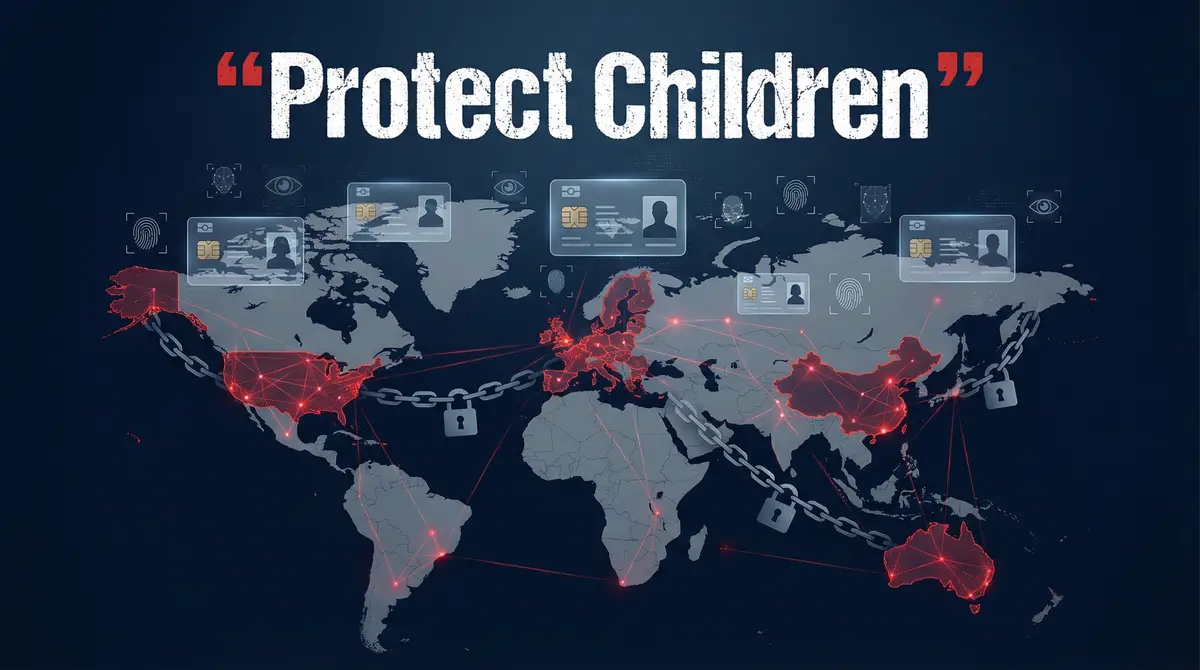
Executive Summary
Between 2022 and 2026, at least 25 US states enacted age verification laws targeting both pornography websites and social media platforms. These laws require users to provide government-issued identification, biometric data (including facial scans), or submit to third-party age verification systems before accessing restricted content or creating accounts. Seven major implementation dates fall in 2026 alone, creating what privacy advocates call a "constitutional crisis" for the First Amendment and online anonymity.
Key developments:
- Louisiana (2022): First state to require government ID or "transactional data" verification for adult content sites
- Texas, Utah, Florida: Led the social media age verification wave (2023-2024)
- California SB 976 (2025): Requires age verification by December 31, 2026, despite ongoing legal challenges
- Nebraska, Virginia (2025-2026): Latest states with July 2026 and January 2026 effective dates
- NetChoice litigation: Tech industry group has filed lawsuits in at least 12 states, winning preliminary injunctions in Arkansas, California (partial), Ohio, Mississippi (reversed), and Utah (stayed)
The laws share common features: mandatory age verification via government ID or biometric scans, parental consent requirements for minors (typically under 16-18), restrictions on personalized content algorithms for youth, and fines ranging from $2,500 to $250,000 per violation. However, enforcement remains inconsistent due to ongoing constitutional challenges, leading to a patchwork of blocked provisions, delayed implementations, and active requirements that vary dramatically by state and platform type.

The Louisiana Precedent: How It All Started
In 2022, Louisiana passed Act 440, requiring websites where more than 33.33% of content constitutes "material harmful to minors" to implement commercial age verification systems. The law mandated either:
- Government-issued identification checks (driver's licenses, state IDs)
- "Public or private transactional data" to confirm users are at least 18 years old
- Third-party age verification services that verify but do not retain identifying information
The Louisiana law set the template that two dozen states would copy, refine, or expand over the next four years. It established the legal framework for requiring platforms to:
- Verify every user's age before granting access
- Use "commercially reasonable methods" (a vague standard that courts continue to interpret)
- Face penalties of $2,500-$10,000 per violation
- Provide users with assurances that biometric and identity data would not be retained
Louisiana's original effective date: January 1, 2023
Delayed implementation: July 1, 2025 (after HB 577 in 2024 pushed it back)
Major pornography sites like Pornhub responded by geoblocking Louisiana users entirely, claiming the law was "ineffective, haphazard, and dangerous" and created massive data breach risks by requiring centralized ID databases.
 David Stauss
The Social Media Expansion: Utah and Texas Lead the Charge
While Louisiana focused on pornography, Utah pioneered social media age verification with the Utah Social Media Regulation Act (SB 152 and HB 311), signed March 23, 2023:
Utah's Requirements (Modified 2024):
- Age verification for all users (originally via ID, later changed to 95% accurate "age assurance")
- Parental consent for users under 18
- No personalized content algorithms for minors
- Originally: Curfew restricting minors from accessing social media 10:30 PM - 6:30 AM (removed after backlash)
- Parents can access all posts and messages sent by their children
- Private right of action for parents to sue platforms for addiction or harm
Texas followed with HB 18 (the SCOPE Act) in June 2023, requiring:
- Parental consent for minors using "commercially reasonable methods"
- Prohibition on minors making purchases or financial transactions
- No collection of minors' precise geolocation data
- No targeted advertising to minors
- Content filtering mandate: Platforms must prevent minors from exposure to content promoting suicide, self-harm, eating disorders, substance abuse, stalking, bullying, harassment, or "grooming" (critics note this vague term could target LGBTQ+ content)
Florida (HB 3, enacted March 2024) banned anyone under 14 from social media entirely and requires parental consent for 14-15 year olds. After the law took effect January 1, 2025, VPN demand in Florida surged by 1,150% as minors sought to circumvent the restrictions.
The 2026 Mass Rollout: Seven States, One Year
January 1, 2026: Virginia
SB 854 (amendment to Virginia Consumer Data Protection Act) requires platforms to limit minors under 16 to one hour per day per app without parental consent. Parents can adjust time limits. Violators face fines up to $7,500 per incident. Includes a 30-day cure period.
July 1, 2026: Nebraska
LB 383 (Parental Rights in Social Media Act, enacted May 2025) requires age verification and parental consent for anyone under 18. Parents can view minors' profiles. Fines: $2,500 per violation, plus private right of action.
September 30, 2025 (retroactive enforcement 2026): Ohio
HB 96 (Ohio Innocence Act, part of 2026-2027 fiscal bill) requires age verification for pornography and "harmful content" websites. Law took effect September 30, 2025 but enforcement began in 2026 after industry challenges.
December 31, 2026: California SB 976
"Protecting Our Kids from Social Media Addiction" requires platforms to exclude those under 18 from "addictive" algorithmic feeds unless parental consent is given. Time-of-day restrictions (12 AM - 6 AM and 8 AM - 3 PM during school year) were blocked by Judge Edward Davila but age verification requirements remain in force after his January 2, 2026 partial injunction.
2026 Implementation (dates TBD):
- Texas HB 18 (pending after August 2024 partial injunction)
- Tennessee HB 1891 (Protecting Kids From Social Media Act, took effect January 1, 2025)
- Arizona HB 2112 (pornography age verification, signed May 2025)
 Lovable
Two Legal Strategies: Pornography Sites vs. Social Media Platforms
The state laws divide into two categories with distinct legal vulnerabilities:
1. Pornography Age Verification (Louisiana Model)
States: Louisiana, Texas, Utah, Montana, Arkansas, Mississippi, Virginia, North Carolina, Kansas, Kentucky, Indiana, Idaho, Oklahoma, Nebraska, South Dakota, Arizona (25+ total)
Requirements:
- Government-issued ID verification OR
- Biometric age estimation (facial scans) OR
- Third-party commercial verification systems (using "transactional data" like credit card history, public records, etc.)
Legal challenges: Fewer First Amendment concerns (adult content isn't protected speech for minors), but massive privacy and data security concerns. Platforms like Pornhub, Aylo (formerly MindGeek), and xHamster have responded by geoblocking entire states rather than complying.
2. Social Media Age Verification (Utah/Florida Model)
States: Utah, Texas, Florida, Arkansas, California, Ohio, Mississippi, Tennessee, Georgia, Louisiana, Nebraska, Virginia, New York (pending rules)
Requirements:
- Age verification or "age assurance" for all users
- Parental consent for minors (age thresholds vary: 13, 14, 16, or 18)
- Algorithm restrictions: No personalized/addictive feeds for minors
- Time-of-day restrictions (typically 10:30 PM - 6:30 AM or midnight - 6 AM)
- Parental access to minors' accounts, messages, and posts
- No targeted advertising to minors
- No collection of minors' geolocation data
Legal challenges: Direct conflict with First Amendment (protected political speech), particularly:
- Compelled ID disclosure violates anonymous speech rights (NAACP v. Alabama precedent)
- Overbroad content restrictions (banning "grooming" or "harmful" content without clear definitions)
- Parental surveillance mandates undermine minors' constitutional rights (especially for LGBTQ+ youth seeking resources)
The NetChoice Litigation Blitz: 12 States, 8 Injunctions
NetChoice, a tech industry trade association representing Meta, Google, X (Twitter), Snap, TikTok, and others, has filed federal lawsuits challenging age verification laws in at least 12 states. The group argues these laws violate:
- First Amendment (compelled speech, anonymous speech, right to receive information)
- Fourteenth Amendment Due Process Clause (void for vagueness)
- Section 230 federal preemption (states cannot impose liability for third-party content)
Preliminary Injunction Scorecard:
Granted (laws blocked):
- Arkansas (July 27, 2023): Judge Timothy L. Brooks blocked Social Media Safety Act (SB 396), ruling it was too vague and ineffective
- California AB 2273 (September 18, 2023): Judge Beth Labson Freeman blocked Age-Appropriate Design Code's Data Protection Impact Assessment (DPIA) requirements; 9th Circuit affirmed August 16, 2024
- California SB 976 (December 31, 2024/January 2, 2026): Judge Edward Davila blocked time-of-day restrictions and reporting requirements but allowed age assurance and feed restrictions (partially blocked)
- Ohio (January 9, 2024): Chief Judge Algenon L. Marbley blocked Social Media Parental Notification Act; full injunction granted February 12, 2024
- Mississippi (July 1, 2024): Judge Halil Suleyman Ozerden granted injunction; REVERSED by 5th Circuit April 17, 2025 and remanded (injunction lifted)
- Florida HB 3 (June 3, 2025): Judge Mark E. Walker granted injunction, ruling law failed First Amendment intermediate scrutiny
- Utah (September 10, 2024): Chief Judge Robert J. Shelby granted injunction; STAYED by district court October 18, 2024 after state appealed to 10th Circuit
- Texas HB 18 (August 30, 2024): Judge Robert Pitman granted partial injunction blocking "harmful to minors" content filtering section
Pending (no injunction yet):
- Georgia (sued before July 1, 2024 effective date)
- Louisiana (sued March 18, 2025)
- Tennessee (sued October 3, 2024)
- New York (no lawsuit filed yet, despite law enactment June 20, 2024)
Key Legal Turning Point: Moody v. NetChoice (2024)
The US Supreme Court's June 2024 decision in Moody v. NetChoice (Texas/Florida social media "censorship" laws) created confusion about how courts should review social media regulations. The Court held that social media platforms' content curation and moderation decisions receive First Amendment protection but remanded both cases for further analysis under the correct standard.
Impact on age verification laws:
- Lower courts now disagree on whether age verification violates the First Amendment
- 5th Circuit (Mississippi case, April 2025) ruled district court applied wrong standard and lifted injunction
- 9th Circuit (California AB 2273, August 2024) upheld DPIA section injunction
- Judge Davila (California SB 976, December 2024) ruled "age assurance that runs in the background does not restrict adult access to speech" — controversial interpretation
Privacy and Security Concerns: The Case Against Age Verification
Privacy advocates including the Electronic Frontier Foundation (EFF), American Civil Liberties Union (ACLU), and R Street Institute have raised multiple security and civil liberties concerns:
1. Mass Biometric Data Collection
Many age verification systems use facial scanning and biometric estimation to determine if a user "appears" to be over 18. This requires:
- Submitting live facial images to third-party verification vendors
- Creating permanent biometric profiles stored by vendors or platforms
- Potential government access to biometric databases (even if laws prohibit "retention," enforcement is unclear)
Example: Yoti, a major age verification vendor, uses facial analysis AI to estimate age within a 2-3 year range. Users must upload a government ID and take a live selfie. Yoti claims it deletes the data, but critics note the company's privacy policy allows data retention for "legal compliance" — a loophole wide enough to drive a surveillance truck through.
2. Government ID Submission Creates Honeypot Databases
Laws requiring government-issued ID verification create centralized databases linking:
- Real names and addresses
- Social media accounts and usernames
- Pornography viewing habits (in states with adult content laws)
- Political speech and associations (for social media platforms)
Data breach risk: A single breach of an age verification vendor's database would expose millions of users' real identities tied to their porn viewing history and social media activity — the ultimate blackmail and doxing goldmine.
3. Chilling Effect on Anonymous Speech
Age verification requirements eliminate anonymous and pseudonymous speech online, a core First Amendment protection established in McIntyre v. Ohio Elections Commission (1995) and NAACP v. Alabama (1958). Historically, anonymity protects:
- Political dissidents and whistleblowers
- LGBTQ+ youth seeking support resources
- Domestic violence survivors fleeing abusers
- Activists organizing protests or labor movements
ACLU statement (Florida HB 3 opposition): "This bill violates the rights of minors and adults by forcing them to hand over sensitive personal information to access lawful speech online. The First Amendment does not allow the government to condition access to protected speech on disclosing your identity."
4. VPNs Make Laws Easily Circumvented
As Florida's 1,150% VPN surge demonstrates, tech-savvy minors easily bypass geoblocking and age restrictions using virtual private networks (VPNs). This renders the laws:
- Ineffective at protecting children (the stated goal)
- Dangerous by pushing minors toward riskier, unregulated platforms
- Privacy-invasive without corresponding safety benefits
Legislative response: Some states have proposed banning VPNs entirely:
- Michigan HB 5920 (September 2024): Proposed prohibiting VPN use to circumvent age verification
- Wisconsin (similar proposal, no bill number yet)
Legal problem: VPN bans would violate the Commerce Clause (restricting interstate internet traffic) and potentially the First Amendment (VPNs protect journalist and activist communications).
5. "Harmful Content" Is Unconstitutionally Vague
Many social media age verification laws require platforms to filter or restrict minors' access to "harmful" content, defined as material promoting:
- Self-harm, suicide, eating disorders
- Substance abuse
- Bullying, harassment, stalking
- "Grooming" (undefined in most statutes)
Constitutional vagueness problem: Courts have repeatedly struck down content restrictions that fail to provide clear definitions. In FCC v. Pacifica Foundation (1978) and Reno v. ACLU (1997), the Supreme Court held that vague content restrictions violate due process and chill protected speech.
LGBTQ+ censorship concern: Critics note that Florida's HB 3 and Texas's HB 18 "grooming" provisions could be used to restrict minors' access to LGBTQ+ support groups, transgender healthcare information, and Pride-related content — precisely the resources that reduce suicide and self-harm among LGBTQ+ youth.
The Age Verification Technology Landscape
Commercial Age Verification Vendors:
- Yoti (UK-based): Facial age estimation using AI, claims 99.6% accuracy for 13+ detection. Used by OnlyFans, Tinder, and other dating apps. Requires government ID + live selfie.
- Veriff (Estonia): Government ID verification with liveness detection (detects fake IDs and photos). Used by Coinbase, Upwork, and cryptocurrency exchanges.
- IDology (GBG subsidiary, USA): "Transactional data" verification using credit reports, utility bills, and public records. No government ID required but creates permanent data trail.
- Ageify / AgeChecked (UK): Anonymous age verification using blockchain and cryptographic tokens. User's ID is verified once, then a token proves age without revealing identity to each website. Privacy improvement but adoption remains limited.
- Device-level age assurance (Apple, Google): Apple's Screen Time and Google's Family Link allow parents to set age restrictions at the device level, avoiding per-site verification. Privacy-preserving but requires device ownership and parental setup.
Age Estimation vs. Age Verification:
- Age verification: Requires government-issued ID and ties identity to age (Louisiana/Arizona model). High accuracy, massive privacy invasion.
- Age estimation: Uses biometrics (facial scans) to estimate age without ID. Lower accuracy (typically 95-99%), still collects biometric data, no identity linkage (unless combined with ID verification).
California SB 976 and Utah SB 194 both shifted from age verification (ID required) to age assurance (broader term including estimation) after privacy backlash. However, Judge Davila ruled in December 2024 that "age assurance that runs in the background" does not violate the First Amendment because it doesn't restrict adult access — a controversial interpretation that higher courts have not yet reviewed.
Alternatives to Age Verification: What Privacy Advocates Propose
Privacy organizations like EFF and the R Street Institute argue that age verification laws are:
- Constitutionally problematic
- Privacy-invasive
- Easily circumvented
- Ineffective at protecting children
Instead, they recommend:
1. Parental Control Software (Device-Level)
Tools like Apple Screen Time, Google Family Link, and third-party apps (Bark, Qustodio, Net Nanny) allow parents to:
- Block specific apps and websites
- Set time limits
- Monitor activity
- Filter content
Advantages: Privacy-preserving (no ID submission to websites), parent-controlled, flexible per family.
Disadvantages: Requires tech-savvy parents, doesn't work for shared devices, children can bypass on non-family devices.
2. Age-Appropriate Design Codes (Without Verification)
California's AB 2273 (partially enjoined) required platforms to:
- Provide privacy-by-default settings for likely minors
- Conduct Data Protection Impact Assessments (DPIAs)
- Avoid "dark patterns" that exploit children's psychology
- No mandatory age verification
The DPIA section was blocked for First Amendment violations, but privacy-by-default and dark pattern prohibitions could survive constitutional scrutiny.
3. Media Literacy and Digital Citizenship Education
Teaching children and parents about:
- Critical evaluation of online content
- Recognizing manipulation and misinformation
- Healthy social media habits
- How to report harassment and abuse
Advantage: Addresses root causes without privacy invasion or censorship.
Disadvantage: Requires sustained funding and curriculum changes; no immediate technical enforcement.
4. Platform Design Changes (No Age Gates)
Social media platforms could:
- Remove algorithmic amplification of harmful content for all users (not just minors)
- Increase content moderation for self-harm, eating disorders, and suicide content
- Provide better reporting tools and mental health resources
- Reduce addictive design features (infinite scroll, autoplay, notification badges)
YouTube's approach: Uses machine learning to detect likely child users based on viewing behavior and restricts targeted ads and comments without requiring ID verification.
5. Robust Data Protection Laws
Comprehensive privacy laws (like GDPR in the EU) that:
- Prohibit collection of minors' data without clear necessity
- Ban targeted advertising to minors
- Require data minimization and deletion
- Create strong enforcement mechanisms
California's CCPA/CPRA and Virginia's VCDPA include some of these protections but lack consistent enforcement.
International Context: How Other Countries Handle Age Verification
The US is not alone in pursuing age verification laws, but its approach is uniquely punitive and fragmented:
United Kingdom: Online Safety Act (2023)
Requires platforms "likely to be accessed by children" to implement "highly effective" age assurance measures. Unlike US laws:
- No specific technology mandated (flexibility for platforms)
- Enforcement by Ofcom (UK communications regulator), not private lawsuits
- Applies to UK-wide, not a state-by-state patchwork
Pornhub's response (January 27, 2026): Blocked all new UK users who haven't completed age verification, citing "flawed" implementation and privacy concerns. Only pre-registered users with verified accounts can access the site.
Australia: Social Media Minimum Age Act (2024)
Bans anyone under 16 from social media platforms entirely. Platforms face fines up to $49.5 million for systemic failures. Law takes effect in 2025 with phased implementation through 2026.
Key difference: Australia's law puts the onus entirely on platforms (not users) to develop age assurance systems, avoiding mass ID collection from users. Reddit and other platforms have filed constitutional challenges.
European Union: Digital Services Act (DSA, 2023)
Requires "very large online platforms" (VLOPs) to assess and mitigate risks to minors' mental health and safety. No mandatory age verification, but platforms must:
- Conduct risk assessments
- Implement age-appropriate design features
- Provide transparency reports
Privacy-first approach: EU's GDPR already prohibits most data collection from children under 16 without parental consent, reducing the need for new age verification mandates.
Ireland: Proposed Government ID App (2026)
Ireland is developing a government-run age verification app using its digital ID infrastructure. Social media platforms and pornography sites would query the app, which returns only a yes/no answer (user is 18+) without sharing identity information.
Privacy advantage: No biometric data shared with private companies; government controls the ID database (already exists for passports/driver's licenses).
Surveillance concern: Government tracks every website visit requiring age verification, creating comprehensive profiles of citizens' online activity.
France: Age Verification Pilot (2025-2026)
Testing anonymous age verification using cryptographic certificates issued by the government. User proves age once to government authority, receives a reusable token, then proves age to websites without revealing identity.
Privacy benefit: No per-site ID submission, no biometric data sharing, minimal tracking.
Challenge: Requires new government infrastructure and broad adoption by platforms.
The Political Divide: Bipartisan Support, Different Motivations
Age verification laws enjoy rare bipartisan support in the US, but for different reasons:
Conservative/Republican Motivations:
- Protect children from pornography and "sexual content"
- Limit social media companies' influence over youth ("Big Tech accountability")
- Parental rights and authority over children's online activity
- Some laws (Texas HB 18, Florida HB 3) include "anti-grooming" provisions critics say target LGBTQ+ content
Example: Utah Governor Spencer Cox (R) signed the first comprehensive social media age verification law, stating: "We're no longer willing to let social media companies continue to harm the mental health of our youth."
Progressive/Democratic Motivations:
- Children's mental health and safety from cyberbullying, eating disorder content, and self-harm material
- Reducing social media addiction and algorithmic manipulation
- Data privacy protection (limit collection of minors' personal information)
- Some laws (California AB 2273) focus on privacy-by-design rather than content filtering
Example: California Governor Gavin Newsom signed AB 2273 (Age-Appropriate Design Code) and SB 976 (social media addiction protections), stating: "California is leading the nation to protect our kids from the harmful effects of social media."
The Libertarian/Civil Libertarian Opposition:
Organizations across the political spectrum oppose age verification laws:
- EFF, ACLU (progressive civil liberties): First Amendment violations, privacy invasion, surveillance infrastructure
- R Street Institute (center-right libertarian): Government overreach, ineffective policy, easily circumvented
- Chamber of Progress (tech industry, center-left): Unintended consequences for LGBTQ+ minors, innovation barriers
NetChoice's position: "Age verification laws sound good in theory but create massive privacy and security risks, chill free speech, and don't actually protect kids. Platforms should have flexibility to develop age-appropriate features without government mandates."
Economic Impact: Compliance Costs and Market Distortion
Age verification laws create significant compliance burdens for online platforms:
Compliance Costs:
- Age verification vendor fees: $0.50 - $3.00 per user verification (varies by method and accuracy)
- Legal and engineering resources: Building state-specific verification flows, maintaining 25+ different compliance systems
- Litigation costs: Defending against NetChoice and ACLU lawsuits, appealing adverse rulings
- Fines and penalties: $2,500 - $250,000 per violation (depending on state), plus private lawsuits
Example: A social media platform with 100 million US users would face:
- $50-300 million in verification costs (one-time per user)
- $10-50 million/year in legal and engineering compliance
- Unpredictable litigation liability (private right of action allows individual users to sue)
Market Effects:
- Geoblocking entire states: Pornhub, xHamster, and other adult sites block Texas, Louisiana, Utah, Montana, Arkansas, Mississippi, Virginia, North Carolina, and other states entirely rather than implement age verification.
- Advantage to large platforms: Meta, Google, and TikTok can afford compliance costs; smaller platforms and startups cannot. Creates barrier to entry favoring incumbents.
- International platforms may exit US market: Reddit's Australian lawsuit argues the under-16 ban makes compliance impossible. Some European platforms may avoid US users entirely.
- VPN industry boom: NordVPN, ExpressVPN, and other VPN providers saw user surges in states with age verification laws, creating a cat-and-mouse game between platforms and circumvention tools.
- Push toward decentralized platforms: Users may migrate to decentralized social networks (Mastodon, Bluesky, Nostr) or end-to-end encrypted messaging apps (Signal, Telegram) that are harder to regulate.
What Happens Next: The 2026 Legal and Political Landscape
Supreme Court Showdown (2026-2027?):
Given the circuit split between the 5th Circuit (Mississippi ruling) and 9th Circuit (California ruling) on age verification laws, the US Supreme Court will likely grant certiorari to resolve the conflict. Key questions:
- Does age verification violate the First Amendment right to anonymous speech?
- Can states require age verification for accessing lawful content online?
- Does Moody v. NetChoice (2024) change the First Amendment analysis for age verification laws?
Prediction: The Court will likely issue a narrow ruling that allows some age verification (for pornography) but strikes down broad social media content filtering mandates as unconstitutionally vague or overbroad. Decision likely in 2027.
Federal Legislation (KOSA, COPPA 2.0):
Congress is considering two major bills that would preempt state age verification laws:
- Kids Online Safety Act (KOSA): Passed Senate 91-3 in July 2024, pending in House. Requires platforms to:
- Provide "safeguards" for minors (vague standard)
- Allow parents to control minors' accounts
- Conduct annual safety audits
- Does not mandate age verification but encourages age-appropriate design
- Children and Teens' Online Privacy Protection Act (COPPA 2.0): Updates 1998 COPPA law to:
- Raise age threshold from 13 to 16 for data collection consent
- Ban targeted advertising to anyone under 16
- Require data minimization and deletion
- No age verification mandate — relies on platforms' existing systems
If either passes: Would create a uniform federal standard, preventing the state-by-state patchwork. However, KOSA has stalled in the House due to concerns about LGBTQ+ censorship and First Amendment violations.
International Harmonization:
As the UK, Australia, EU, and US all pursue different age verification approaches, international pressure is building for:
- Interoperable age verification systems (anonymous tokens, cryptographic certificates)
- Mutual recognition agreements (UK-verified users don't need to re-verify in the US)
- Privacy-preserving technologies (zero-knowledge proofs, age attestation without identity disclosure)
W3C (World Wide Web Consortium) and other standards bodies are developing Verifiable Credentials for age that could enable privacy-preserving age verification — but adoption remains years away.
State Legislation Continues:
At least 15 additional states have pending age verification bills for 2026:
- Alabama HB 235: Bans under-16 social media use entirely, $25,000 fines + criminal misdemeanor penalties
- Indiana SB 11: Passed Senate 42-7, requires parental consent for under-16 users
- Connecticut HB 6587: Died in Senate, would have required age assurance for algorithmic feeds
- Alaska, Arizona, Illinois, Kentucky, Michigan, Minnesota, Missouri, Vermont, Washington: Active bills in various stages
Trend: States are learning from legal challenges and revising their laws to:
- Use "age assurance" (broader term) instead of "age verification" (narrower, more privacy-invasive)
- Remove unconstitutionally vague "harmful content" filtering mandates
- Focus on algorithmic feed restrictions and screen time limits instead of outright bans
- Provide explicit data deletion requirements for age verification information
Conclusion: The End of Online Anonymity or a Constitutional Correction?
The 2026 mass rollout of age verification laws represents a crossroads for internet freedom in the United States. Twenty-five states have enacted laws requiring government ID submission, biometric facial scans, or third-party data verification before accessing vast swaths of the internet — all in the name of protecting children.
Privacy advocates argue this is a Trojan horse for comprehensive surveillance, creating:
- Databases linking real identities to every website visit and social media post
- Massive data breach risks (honeypot databases of government IDs and porn viewing habits)
- Chilling effects on anonymous speech, political organizing, and LGBTQ+ youth seeking support
- Easily circumvented systems that don't actually protect children
State legislators counter that:
- Social media addiction and mental health crisis among youth require urgent action
- Pornography access by minors causes documented harm
- Parental rights include controlling children's online exposure
- Privacy concerns are overstated; verification data can be immediately deleted
The truth likely lies between these extremes. Age verification laws may survive constitutional scrutiny for pornography (where courts have long recognized states' interest in protecting minors from obscenity), but broad social media content filtering mandates will likely be struck down as unconstitutionally vague or First Amendment violations.
What emerges from this legal and political battle will shape the internet for decades:
- Scenario 1 (Privacy advocates' nightmare): Age verification becomes ubiquitous, creating comprehensive government and corporate surveillance of all online activity. Anonymous speech dies. VPN bans follow. Digital ID becomes mandatory for accessing the internet.
- Scenario 2 (Legislators' goal): Age verification effectively limits minors' access to harmful content while preserving adult privacy through immediate data deletion and anonymous verification systems. Children are protected without sacrificing constitutional rights.
- Scenario 3 (Tech industry's hope): Federal legislation (KOSA or COPPA 2.0) preempts state laws, creating a single national standard focused on age-appropriate design and privacy rather than mandatory ID checks. Platforms innovate on safety features without mass surveillance.
- Scenario 4 (Most likely outcome): Supreme Court issues a narrow ruling allowing pornography age verification but striking down broad social media mandates. States revise laws to comply. A patchwork persists, but the worst privacy invasions are curbed. The internet becomes slightly less anonymous, but not a total surveillance state — yet.
One thing is certain: The 2026-2027 legal battles will determine whether the United States follows the EU's privacy-first approach or builds the surveillance infrastructure that authoritarian regimes like China have long employed. The outcome will define internet freedom for the next generation.