Iran's 2026 Internet Blackout: 20 Days Offline, 30,000+ Dead, and the Plan for Permanent Digital Isolation

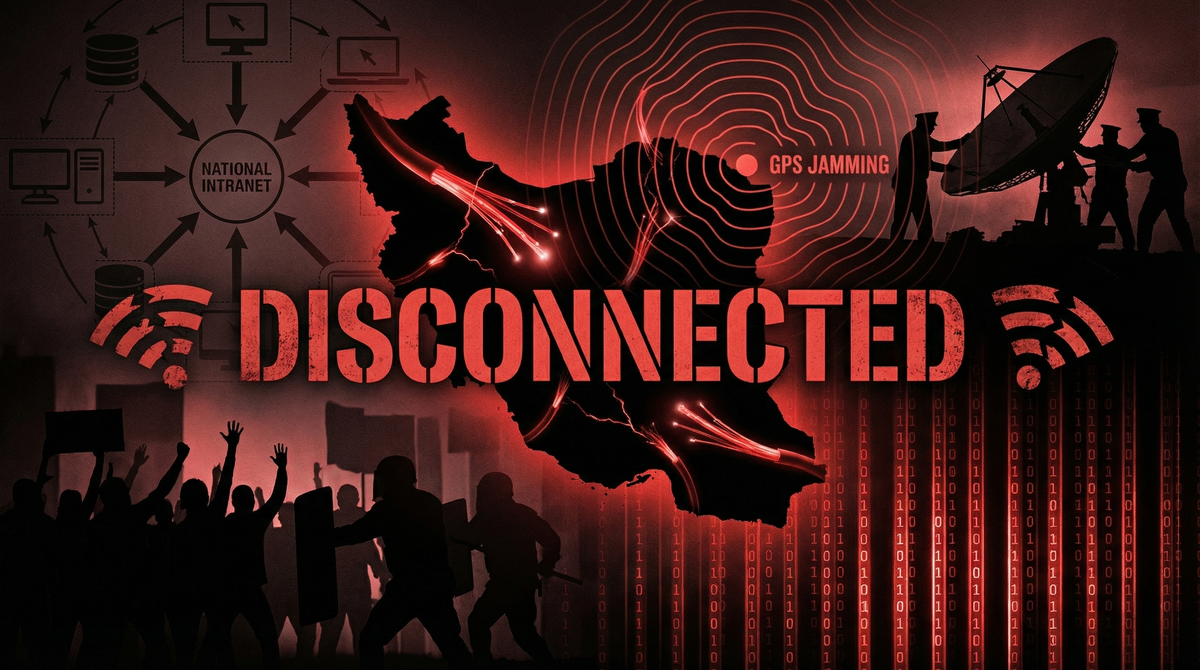
Iran entered its 20th consecutive day of near-total internet blackout on January 28, 2026, as the Islamic Republic implements what cybersecurity experts describe as the most sophisticated and severe internet shutdown in the country's history. What began on January 8 as a response to nationwide protests has evolved into a coordinated plan for "Absolute Digital Isolation" — a permanent disconnection from the global internet modeled after North Korea's hermetically sealed information environment.
 Breached Company
The blackout has coincided with mass killings of protesters, with death toll estimates ranging from 30,304 to 36,500 according to Time magazine and Iran International, making this the largest massacre in modern Iranian history. Human Rights Watch and Amnesty International have documented the internet shutdown as a deliberate strategy to conceal atrocities and prevent documentation of state violence against demonstrators.
Executive Summary
Since January 8, 2026, Iran has enforced a nationwide internet and telecommunications blackout affecting 88 million people, cutting off:
- 97% of internet connectivity (per NetBlocks and Georgia Tech's Internet Outage Detection and Analysis)
- Mobile networks (SMS, cellular data, voice calls)
- Landline telephone service in protest areas
- Starlink satellite internet (jammed via GPS disruption starting January 8, fully shut down January 11)
- International website access (even government and business sites show TIMEOUT or 504 Gateway errors to foreign visitors)
Economic impact: $20 million per day in losses (per Iran's Computer Trade Organization), halting:
- Digital banking and payments
- Hospital prescription systems
- Pharmacy inventory management
- Import/export documentation at borders
- Small business operations
Political context: The blackout coincides with the 2025-2026 Iranian protests, the largest uprising since the 1979 Islamic Revolution, sparked by:
- 42.2% annual inflation (December 2025)
- Iranian rial collapse (145,000 tomans per US dollar, down 40% since June 2025 war with Israel)
- Food prices up 72% year-on-year
- Energy crisis (electricity/gas blackouts)
 Breached Company
Government response: Supreme Leader Ali Khamenei ordered security forces to use live ammunition on protesters, resulting in what human rights organizations are calling the 2026 Iran massacres. The internet blackout prevents documentation of killings, with most casualty reports emerging only after partial connectivity was briefly restored on January 18.
The permanent plan: On January 15, internet monitoring organization Filterwatch published leaked details of Iran's confidential plan for "Absolute Digital Isolation", which will:
- Disconnect all citizens from the global internet
- Create a "Barracks Internet" allowing only vetted individuals with security clearances to access external sites via a monitored "whitelist"
- Limit all Iranians to regime-controlled websites and applications with no links to the worldwide web
- Replace previous content-blocking goals with complete user disconnection
- Implement by Iranian New Year 2026 (late March), per government spokesperson Fatemeh Mohajerani
International significance: The Iranian shutdown represents the most ambitious attempt by an authoritarian regime to completely sever a large, internet-connected population from the global web in the modern era. If successful, it establishes a blueprint for digital authoritarianism that China, Russia, and other repressive governments are closely watching.
The Timeline: How Iran Went Dark
December 28, 2025 - January 7: Localized Disruptions
The 2025-2026 Iranian protests began December 28, 2025, when shopkeepers and merchants at Tehran's Alaeddin Shopping Centre closed their businesses to protest the collapsed Iranian rial (1.45 million per US dollar). Within days, protests spread to all 31 provinces, with demonstrators chanting:
 Breached Company
- "Death to the Dictator" (referring to Supreme Leader Ali Khamenei)
- "Neither Gaza nor Lebanon, My Life for Iran" (criticizing government spending on Hezbollah and Hamas while Iranians suffer)
- "Death to Khamenei"
- "This is the year of blood, Seyyed Ali is overthrown"
Government response (pre-blackout):
- Slowed internet speeds in protest areas
- Disabled mobile network antennas
- Cut phone lines in specific neighborhoods
- Deactivated SIM cards of activists and dissidents
- Deployed localized disruptions timed to 4-10 PM (planned protest hours)
Cloudflare data showed Iran's internet traffic declining steadily from December 28 through January 7, with traffic drops of 20-35% during peak protest hours. However, connectivity remained above zero nationwide — authorities had not yet pulled the "kill switch."
January 6: Reza Pahlavi's Call for Nationwide Protests
On January 6, Reza Pahlavi — the exiled crown prince and son of the deposed Shah Mohammad Reza Pahlavi — issued a call for unified nationwide protests on January 8-9. Pahlavi, who has emerged as a symbolic leader (though the protests remain largely decentralized), urged:
- Peaceful demonstrations across all cities
- Chants from rooftops and streets at 8:00 PM IRST
- "Disciplined" and "as large as possible" gatherings to show the regime's loss of legitimacy
- A referendum to determine Iran's future political system (he has not explicitly called for monarchy restoration)
Context: Pahlavi's influence has grown since the June 2025 Twelve-Day War between Iran and Israel, when he appealed to the international community to help Iranians oust Khamenei's theocratic rule. Unlike the 2022 Mahsa Amini protests (led primarily by women and girls protesting mandatory hijab), the 2025-2026 movement includes:
 Breached Company
- Young men (larger participation than 2022)
- Merchants and bazaari (historically influential since the 1979 revolution)
- Labor unions, teachers, retirees
- Kurdish, Baloch, and Azerbaijani separatist groups
- University students across 22+ campuses
January 8, 8:30 PM IRST: The Kill Switch
On January 8, 2026, at approximately 20:30 IRST (17:00 UTC), Iranian authorities imposed a near-total internet shutdown. Within hours:
- NetBlocks confirmed a nationwide blackout, writing: "Iran is now in the midst of a nationwide internet blackout; the incident follows a series of escalating digital censorship measures targeting protests across the country and hinders the public's right to communicate at a critical moment."
- Georgia Tech's IODA (Internet Outage Detection and Analysis) database reported Iran's National Information Network was fully disconnected, even internally within Iran
- Mobile networks collapsed (SMS, calls, data)
- Landline telephone service cut in Tehran, Isfahan, Lordegan, Abdanan, parts of Shiraz, and Kermanshah
What triggered the blackout: By January 8, an estimated 1.5 million protesters had gathered in Tehran alone, with 5 million nationwide by January 9 (per protest organizers). Security forces escalated to live ammunition, resulting in mass casualties. The government cut communications to:
- Prevent protesters from coordinating
- Stop documentation of killings (no videos/photos could be uploaded)
- Isolate Iran from international scrutiny
- Cover up what would become the 2026 Iran massacres
Technical details: Cybersecurity experts reported that Iran's National Information Network (a parallel, government-controlled internet infrastructure developed since 2012) was disconnected from the global internet at the backbone level. Even domestic Iran-hosted websites became inaccessible from abroad, showing:
- TIMEOUT errors
- NXDOMAIN (domain not found) responses
- HTTP 504 Gateway Timeout
This indicates Iran didn't just block social media or messaging apps — they severed international routing entirely at major internet exchange points.
 Breached Company
January 8-11: Starlink Becomes the Lifeline
In the first three days of the blackout, Starlink satellite internet emerged as the only reliable way for Iranians to communicate with the outside world. Although the Iranian government banned Starlink terminals and actively polices ground equipment, an estimated 40,000-50,000 users had access via:
- Smuggled Starlink dishes (purchased abroad and brought into Iran)
- Hotels and offices with existing satellite infrastructure
- Shared bandwidth (diaspora users running proxy servers to route Iranian traffic through their connections)
Elon Musk's role: Iranian activist Masih Alinejad and others publicly urged Musk to waive subscription fees for Iranian users. On January 14, Starlink reportedly made service free in Iran, allowing users to bypass payment barriers.
Iranian government countermeasures:
- GPS jamming (starting January 8): Iran launched a large-scale GPS jamming campaign to disrupt Starlink's satellite positioning, resulting in 30% packet loss for most users and 80% packet loss in heavily jammed areas (per cybersecurity expert Amir Rashidi of the Miaan Group)
- Door-to-door raids (starting January 11): Security forces began seizing satellite dishes and Starlink terminals in coordinated sweeps across Tehran and other cities
- Full Starlink shutdown (January 11): Iran successfully blocked Starlink for the first time, using a combination of GPS jamming, RF interference, and network-level blocking
By January 11, Starlink was offline in Iran, cutting off the last avenue of uncensored communication.
January 15: The Leaked Plan for "Absolute Digital Isolation"
On January 15, 2026, Filterwatch — an independent internet monitoring organization — published explosive details of Iran's confidential plan for permanent internet disconnection. The report, titled "Iran Enters a New Age of Digital Isolation," revealed:
The "Barracks Internet" Model:
- All Iranians will be disconnected from the global internet
- Access to external websites will be granted only to individuals and organizations with security clearances via a monitored "whitelist"
- Communications will be limited to:
- Enterprise Messenger (intra-organization)
- P2P (peer-to-peer) interactions within approved groups
- Any attempt to breach organizational networks will be automatically blocked
In plain terms: Iran is building a North Korea-style isolated intranet where citizens can access only a handful of regime-controlled websites and applications. No Google. No social media. No international news. No encrypted messaging. No VPNs (since there's no external internet to VPN to).
 Breached Company
Implementation timeline:
- Current phase (January 2026): Test the nationwide blackout, identify and confiscate Starlink terminals, remove foreign telecom equipment
- Final phase (by March 2026): Permanently disconnect from global internet, implement whitelist-based access for security-vetted users only
Orchestrated by:
- Mohammad Amin Aghamiri (high-level official)
- Mehdi SeifAbadi (high-level official)
- Ali Hakim-Javadi (former head of Information Technology Organization, prominent security figure)
- Coordinated by the Infrastructure Security Unit under the Supreme National Security Council
Foreign partners:
- Huawei (Chinese telecommunications giant, providing network equipment)
- China (technical and strategic support, advising based on China's Great Firewall experience)
January 16-28: Partial Restoration, Immediate Re-Blocking
On January 16, after more than 200 hours of complete blackout, NetBlocks reported a slight internet connectivity increase to 2%. On January 18, limited access was briefly restored in some areas, allowing:
- Banking transactions to resume (partially)
- Hospitals to access prescription systems
- Some businesses to send/receive emails
However: Within hours, the government re-imposed the blackout, with government spokesperson Fatemeh Mohajerani stating on January 15 that "access to international websites would remain unavailable until at least the Iranian New Year" (late March, approximately March 20-21, 2026).
As of January 28, 2026:
- Iran remains 97% offline (NetBlocks)
- Internet connectivity fluctuates between 0-3%
- Government claims they are "generating false traffic" to create the illusion of restoration
- No timeline for permanent restoration
The Death Toll: Iran's 2026 Massacres
The internet blackout's primary purpose, according to Amnesty International and Human Rights Watch, was to conceal mass killings of protesters. Without internet access, Iranians could not:
- Upload videos of security forces shooting demonstrators
- Report casualties to international media
- Coordinate medical evacuations
- Notify families of arrested or killed relatives
Documented casualties (as of January 28, 2026):
Conservative estimate (HRANA - Human Rights Activists in Iran):
- 22,490 deaths confirmed (as of January 27)
- Conservative methodology: Only counts verified deaths with names, locations, and circumstances
- Likely significant undercount due to blackout preventing verification
Higher estimates (Time magazine, Iran International):
- 30,000-36,500 protesters killed (primarily January 8-9, during peak crackdowns)
- Based on reports from local health officials, hospital staff, and eyewitness accounts that emerged during brief connectivity windows
- One Guardian witness: "I saw hundreds of bodies across Tehran"
- Hospitals in Tehran and Shiraz reported being "overwhelmed" by gunshot victims
Government losses:
- 209 government-affiliated military and non-military personnel killed (per opposition groups)
- Includes Basij militia members, IRGC soldiers, and police
Arrests:
- 42,324 protesters arrested (as of January 27, per HRANA)
- Thousands more detained but not yet documented due to blackout
Injuries:
- 330,000-360,000 estimated (extrapolated from hospital reports before blackout)
- Many gunshot wounds, tear gas exposure, baton injuries
Historical context: The 2026 Iran massacres surpass all previous post-1979 massacres:
- 1988 executions of MEK prisoners: 5,000-30,000 killed (estimates vary, most scholars cite 5,000-10,000)
- 2009 Green Movement: 72-150 protesters killed (per Human Rights Watch)
- 2019 November protests: 1,500 killed (per Reuters investigation citing Iranian interior ministry documents)
- 2022-2023 Mahsa Amini protests: 551 killed (per Human Rights Activists in Iran)
The 2026 death toll represents an order of magnitude increase over any prior crackdown, and the true number may never be known due to the internet blackout preventing comprehensive documentation.
 Breached Company
How Protesters Were Killed
Security forces' methods:
- Live ammunition: Gunfire from IRGC, Basij, and police forces using assault rifles, handguns, and sniper rifles
- Mass shootings: Reports of security forces firing into crowds of demonstrators
- Targeted killings: Snipers positioned on rooftops shooting protest leaders and prominent chanters
- Hospital raids: Security forces stormed Sina Hospital (Tehran) and Imam Khomeini Hospital (Ilam) to arrest injured protesters, firing tear gas inside hospital buildings
Supreme Leader Khamenei's order (January 3):
Responding to US President Donald Trump's warning that the US would "come to [protesters'] rescue" if Iran shot demonstrators, Khamenei stated:
- "We will not yield to the enemy"
- "Rioters must be put in their place"
This was widely interpreted as an order for security forces to use lethal force without restraint.
Foreign militia involvement:
Iran deployed approximately 5,000 Iraqi Shia militiamen to supplement Iranian security forces, including:
- Kata'ib Hezbollah
- Harakat al-Nujaba
- Kata'ib Sayyid ul-Shuhada
- Badr Organisation
These militias, part of Iraq's Popular Mobilization Forces (PMF), have extensive experience in urban combat from the Syrian Civil War and Iraqi insurgency. Their involvement suggests the Iranian government views the protests as an existential threat requiring foreign reinforcement.
The Technology of Repression: How Iran Killed the Internet
Iran's 2026 internet shutdown represents the most sophisticated digital repression in history, combining:
1. Backbone-Level Disconnection
Unlike previous shutdowns (2019, 2022, 2025) that throttled speeds or blocked specific services, the 2026 blackout severed Iran from the global internet at the network backbone level. Technical details:
Border Gateway Protocol (BGP) withdrawal:
- Iran's major internet service providers (Telecommunication Company of Iran, Mobile Communications of Iran, Irancell) withdrew their BGP route announcements
- BGP is the protocol that tells the global internet how to reach Iranian IP addresses
- Withdrawing BGP routes makes Iranian networks "unreachable" from abroad
International Gateway shutdown:
- Iran has a limited number of international internet exchange points (IXPs) where Iranian networks connect to global infrastructure
- Authorities physically or logically disconnected these gateways, cutting all external routing
Result: Even Iranian government websites and business pages became inaccessible from outside Iran, showing TIMEOUT or 504 errors. This indicates the blackout wasn't selective — Iran chose total isolation.
2. National Information Network (NIN) Weaponization
Since 2012, Iran has built a National Information Network — a parallel, government-controlled internet infrastructure designed to:
- Host domestic websites on Iranian servers
- Route internal traffic without touching external networks
- Create a "clean internet" free of Western influence
In theory, the NIN was supposed to provide an alternative to the global internet, allowing Iranians to access domestic services even during external disruptions.
In practice (January 2026): The NIN was also shut down internally, per cybersecurity experts. This suggests:
- The government wanted to prevent any digital communication, even on domestic networks
- Internal NIN routing may have been disabled to prevent workarounds (e.g., using NIN infrastructure to route international traffic via VPNs)
The permanent plan (post-March 2026): The NIN will become the sole network available to Iranians, with:
- Only regime-approved websites and apps
- No external routing
- Full government monitoring of all traffic
 Breached Company
3. Mobile Network Shutdown
Iran didn't just cut internet — they disabled mobile cellular networks entirely in many areas:
Methods:
- Deactivating cell towers (physically turning off antennas or cutting power)
- Disabling 2G/3G/4G/5G base station controllers
- Deactivating SIM cards of known activists and dissidents (preventing them from accessing networks even if towers are active)
- Blocking SMS messages containing protest-related keywords
Why this matters: Many developing countries' populations rely on mobile internet more than fixed broadband. By killing mobile networks, Iran cut off the majority of its population from digital communication.
4. Landline Telephone Disruption
In protest hotspots (Tehran, Shiraz, Isfahan, Kermanshah), authorities cut landline telephone service, preventing:
- International calls
- Domestic long-distance calls
- Some local calls
Method: Likely involved disabling telephone exchanges or cutting fiber-optic trunk lines connecting different regions.
5. GPS Jamming to Kill Starlink
Starlink requires GPS signals to:
- Position satellite beams precisely
- Coordinate handoffs between satellites
- Maintain connection stability
Iran's GPS jamming campaign (starting January 8):
- Deployed powerful RF jammers across Tehran and other cities
- Created 30-80% packet loss for Starlink users
- Made service unreliable enough to prevent video uploads or live streams
Full Starlink shutdown (January 11):
Iran achieved the first-ever successful blocking of Starlink satellite internet using a combination of:
- GPS jamming (disrupting satellite positioning)
- RF interference (jamming Starlink's Ku-band and Ka-band frequencies)
- Possibly network-level deep packet inspection (DPI) to identify and block Starlink traffic patterns
Technical achievement: Blocking Starlink is significantly harder than blocking terrestrial internet, since satellite signals bypass government-controlled infrastructure. Iran's success suggests:
- Sophisticated signal intelligence capabilities
- Coordination with China (which has similar anti-satellite internet programs)
- Willingness to invest heavily in anti-circumvention technology
6. Physical Infrastructure Destruction
Beyond digital measures, Iranian security forces conducted physical raids:
Satellite dish confiscation (starting January 12):
- Door-to-door searches in Tehran, Shiraz, and other cities
- Seizure of satellite TV dishes (to prevent access to foreign broadcasts)
- Seizure of Starlink terminals (to prevent satellite internet access)
Foreign telecom equipment removal:
Under media silence, foreign telecommunications service providers began leaving Iran with "heavy security measures" in late January. Filterwatch speculates they are being replaced by Iranian institutions like Khatam al-Anbia (an IRGC-controlled engineering conglomerate).
Why this matters: Removing foreign equipment eliminates potential backdoors or vulnerabilities that activists or foreign intelligence services could exploit to restore connectivity.
The Economic Catastrophe: $20 Million Per Day
Iran's internet blackout has caused $20 million per day in economic losses (per Iran's Computer Trade Organization), totaling $400 million as of January 28 (20 days). Sectors affected:
1. Banking and Payments
Without internet:
- ATMs don't work (can't connect to bank servers)
- Point-of-sale (POS) terminals fail (no transaction processing)
- Online banking is impossible
- International wire transfers halt
- Cryptocurrency exchanges freeze (major revenue source for sanction-evading Iranians)
Result: Cash-only economy, but ATMs can't dispense cash because banks can't verify balances.
2. Healthcare
Hospitals and pharmacies rely on digital systems for:
- Electronic health records (EHRs)
- Prescription management
- Inventory tracking
- Patient admissions and billing
Crisis: Hospitals in Tehran and Shiraz reported being "overwhelmed" not just by gunshot victims but also by inability to access patient records and coordinate care.
3. Import/Export
Iran's borders with Iraq, Turkey, Azerbaijan, Turkmenistan, Afghanistan, and Pakistan require electronic customs documentation. Without internet:
- Truck drivers cannot submit customs forms
- Border crossings back up for days
- Import/export businesses lose millions
Quote from Iran's Computer Trade Organization: "Lorry drivers also reported it was difficult to cross borders because of the lack of electronic documentation."
4. Small Business Collapse
Most small and medium-sized businesses in Iran rely on:
- Digital payment systems (especially during inflation when cash becomes impractical)
- Email and WhatsApp for supplier communication
- Online inventory management
- Social media for customer engagement
Result: "Many businesses did not open" during the blackout (per Reuters).
5. Oil and Gas Industry
Iran's energy sector (the backbone of its economy) relies on:
- Digital monitoring systems for oil fields and refineries
- Remote operation of pipelines
- International market coordination (though sanctions limit this)
Impact: Energy production has likely decreased, though exact figures are unavailable due to the blackout.
 Breached Company
International Reactions and Geopolitical Implications
United States
President Donald Trump (January 3):
- Warned Iran that if they "shoot protesters," the US will "come to their rescue"
- Threatened Iran would be "hit very hard" if additional protesters are killed (January 4)
US State Department (January 31, ongoing):
- Condemned suppression of protesters' funerals
- Expressed concern about "intimidation, violence, and arrests"
- Imposed additional sanctions on IRGC officials involved in crackdown (specifics classified)
However: Trump administration has not taken military action or provided material support to protesters, despite rhetoric. Critics argue this is empty posturing.
European Union
Statement from EU High Representative (Josep Borrell):
- Condemned "excessive use of force" against peaceful demonstrators
- Called for restoration of internet access
- Imposed targeted sanctions on Iranian officials
However: EU sanctions have limited impact, as Iran is already under extensive sanctions since 2018 (when Trump withdrew from JCPOA nuclear deal).
United Kingdom
UK government: Sanctioned Iranian officials and called for internet restoration.
Cybersecurity discovery: The 2026 internet blackout inadvertently exposed Iranian disinformation operations:
- Many pro-Scottish independence accounts on X (formerly Twitter) went silent after January 8
- These accounts had also gone silent during Iran's June 2025 internet blackout
- Disinformation researchers concluded these accounts belonged to Iranians pretending to be from Scotland
- The blackout created a natural experiment proving Iranian state operations
Significance: Iran has been running covert influence operations on Western social media, using fake personas to amplify divisive narratives (Scottish independence, US political polarization, etc.). The blackout revealed these operations by making the operators disappear.
China
Public position: No official statement, likely viewing Iran as a strategic partner and not wanting to criticize
Behind-the-scenes role:
- Huawei is providing network equipment for Iran's isolated intranet
- China has advised Iran on implementing digital censorship based on the Great Firewall experience
- China views Iran's "Absolute Digital Isolation" plan as a potential model for future authoritarian regimes
Precedent: China already operates the world's most sophisticated internet censorship system (Great Firewall), but has not attempted to fully disconnect 1.4 billion people from the global internet. Iran's experiment may test whether such isolation is economically and politically sustainable.
Russia
Likely supportive: Russia has considered similar measures (sovereign internet laws passed in 2019 allow Russia to disconnect from global internet in "emergency"). Iran's blackout provides a test case for Russia's plans.
Israel
Muted response: Israel is focused on its own security concerns (Iran's nuclear program, Hezbollah in Lebanon) and likely views Iran's internal chaos as strategically beneficial.
However: Israeli intelligence services are likely monitoring the situation closely, as Iran's instability could affect regional proxy groups (Hezbollah, Hamas, Houthi rebels in Yemen).
Circumvention and Resistance
Diaspora Bandwidth Sharing
Iranian diaspora users (especially in Europe and North America) have run bandwidth-sharing applications to help users inside Iran circumvent the blackout. Methods include:
Psiphon: An anti-censorship tool that creates encrypted tunnels between users inside Iran and servers abroad. Diaspora users can run Psiphon "relay nodes" that route Iranian traffic through their connections.
Snowflake (Tor Project): A browser extension that turns ordinary internet users into proxy relays for Tor users in censored countries. Iranian activists can connect to Tor via Snowflake proxies, bypassing Iran's blocking.
VPN proxy servers: Some diaspora Iranians run personal VPN servers and share credentials with family/friends in Iran.
Effectiveness: Limited. With the backbone-level disconnection, even VPNs and proxies don't work because there's no internet connection to VPN/proxy from. These tools only work during brief windows of partial connectivity (like the January 18 restoration).
Hacker Resistance
On January 19, 2026, hackers broke into Iran's state TV satellite feed and broadcast a message from Reza Pahlavi urging security forces "not to point their weapons at the Iranian people."
Significance: Despite the internet blackout, some technical experts inside or outside Iran retained the capability to:
- Hack satellite uplink systems
- Interrupt live TV broadcasts
- Deliver opposition messaging to millions of Iranians
This suggests the regime's information control is not absolute, even during the blackout.
Social Media Sanitization
On January 20, 2026, an investigative watchdog reported that pro-government editors were active on Wikipedia and other services, deleting content and sanitizing articles related to the Islamic Republic's human rights record during the crackdown.
Targets:
- Wikipedia articles about the 2026 protests
- Casualty figures
- Descriptions of government violence
Method: Likely involves coordinated editing by pro-government users or state-affiliated accounts to remove or downplay evidence of atrocities.
Countermeasures: Wikipedia's volunteer editor community and automated bots have largely reverted these edits, but the campaign demonstrates Iran's multi-layered information control strategy (suppress domestic internet, manipulate external narratives).
Comparisons to Other Internet Shutdowns
2019 Iran Shutdown (November)
Duration: 6 days
Trigger: Protests over fuel price hikes
Scale: Near-total (similar to 2026)
Casualties: 1,500 killed (per Reuters)
Restoration: Gradual, over 2-3 weeks
Outcome: Protests suppressed, no regime change
2022-2023 Mahsa Amini Protests
Duration: Intermittent (not total blackout, but severe throttling and blocking of Instagram, WhatsApp, etc.)
Trigger: Death of Mahsa Amini in police custody for "improper hijab"
Scale: Selective (social media blocked, but some internet remained)
Casualties: 551 killed
Restoration: Partial (some apps remain blocked as of 2025)
Outcome: Protests gradually died down, mandatory hijab enforcement partially relaxed but still in place
2025 Iran Shutdown (June, during Twelve-Day War)
Duration: Approximately 2 weeks
Trigger: War with Israel
Scale: Near-total (97% drop per Cloudflare)
Casualties: Not applicable (military conflict, not protests)
Restoration: Gradual
Outcome: War ended, internet restored
Myanmar 2021 Coup
Duration: Ongoing intermittent shutdowns (2021-present)
Trigger: Military coup, pro-democracy protests
Scale: Partial (internet cut nightly, mobile data blocked)
Casualties: 5,000+ killed (ongoing civil war)
Restoration: Partial, inconsistent
Outcome: Civil war continues, military junta maintains control of cities but not countryside
2026 Iran is qualitatively different from all previous shutdowns because:
- Most complete: Even domestic networks were disabled
- Starlink defeated: First successful blocking of satellite internet
- Permanent intent: Government has announced plan to never restore full access
- Highest casualties: 30,000+ deaths dwarf all previous protest crackdowns
- Foreign military involvement: Iraqi militias deployed to suppress domestic unrest
The North Korea Model: Can Iran Survive Digital Isolation?
Iran's "Absolute Digital Isolation" plan is modeled after North Korea's Kwangmyong — a completely isolated domestic intranet with no connection to the global internet.
How North Korea's Internet Works:
Kwangmyong (Bright Star) Network:
- Approximately 30 government-approved websites
- Content includes: state news, educational materials, email (domestic only), library catalogs
- No access to Google, Facebook, YouTube, Twitter, Wikipedia, or any global services
- Monitored by government at all times
Access restrictions:
- Most North Koreans have never used the internet (global or domestic)
- Elite citizens (government officials, university researchers, foreign trade workers) get limited, monitored access to Kwangmyong
- Only a few thousand people (top officials, diplomats) have global internet access, strictly monitored
Economic model:
- North Korea's economy is largely isolated from global markets (due to sanctions and self-imposed isolation)
- Domestic internet is therefore economically viable because North Korea doesn't rely on international trade, banking, or business coordination
Can Iran Replicate North Korea?
Challenges:
- Economic integration: Iran is far more integrated into the global economy than North Korea:
- Oil exports (even under sanctions)
- Tourism (religious pilgrims to holy sites)
- International trade with China, Russia, Iraq, Turkey
- Remittances from Iranian diaspora
- Cryptocurrency markets
- Population expectations: 88 million Iranians have lived with internet access since the 1990s. They know what they're losing. North Koreans never had internet access, so they don't miss it.
- Diaspora communication: Millions of Iranians live abroad and communicate regularly with family in Iran. Cutting off international communication will cause immense social hardship.
- Brain drain: If Iran blocks internet, educated professionals (engineers, doctors, scientists) will emigrate en masse, crippling Iran's economy and innovation capacity.
However: The Iranian government may conclude that political survival outweighs economic costs. If the regime views internet access as an existential threat (enabling protests that could topple the government), they may accept economic collapse in exchange for information control.
Historical precedent: North Korea has survived 70+ years of extreme isolation, so the model is not impossible. However, North Korea has never attempted to transition FROM an open internet TO a closed one — Iran would be the first.
What Happens Next: Scenarios for 2026 and Beyond
Scenario 1: Protests Succeed, Regime Falls (Low Probability, 10-15%)
If protests continue to grow despite the blackout and casualties, the regime could collapse via:
- Military defection: If enough IRGC, Basij, and police refuse to shoot protesters or actively join them
- Elite fracture: If key regime insiders (senior clerics, IRGC commanders) abandon Khamenei
- International intervention: If US, Israel, or regional powers provide material support to protesters (weapons, intelligence, no-fly zones)
If this happens:
- Internet would be immediately restored by transitional government
- Mass release of political prisoners
- Trials for security officials involved in killings
- Uncertain political future (monarchy restoration under Reza Pahlavi? Secular democracy? Islamist reformist government?)
Why unlikely: Iranian security forces have killed 30,000+ protesters and remain willing to shoot. The regime has survived 47 years of crises (Iran-Iraq War, sanctions, previous protests). Regime change requires either mass military defection or foreign intervention, neither of which is currently occurring.
Scenario 2: Protests Suppressed, Permanent Blackout Implemented (High Probability, 60-70%)
The most likely outcome:
- Government continues brutal crackdown until protests die down (another 2-4 weeks)
- Internet remains offline until late March (Iranian New Year, as announced)
- After March, government implements "Absolute Digital Isolation":
- Only regime-approved websites available
- Security-vetted users get whitelist access to external sites
- General population limited to isolated intranet
- Economic crisis deepens ($10-20 billion annual losses from internet isolation)
- Brain drain accelerates (educated Iranians emigrate)
- Iran becomes a pariah state similar to North Korea
International response:
- Sanctions remain or intensify
- Humanitarian concerns about information isolation
- China and Russia continue support (viewing Iran as strategic partner)
Long-term stability: Uncertain. North Korea model "works" because North Korea never had internet. Iran's population knows what they've lost and may continue resisting indefinitely.
Scenario 3: Partial Restoration with Severe Censorship (Medium Probability, 20-25%)
A middle ground:
- Government restores internet but with:
- Whitelist-only model (can only access approved sites)
- Deep packet inspection (DPI) blocking VPNs, Tor, encrypted messaging
- Mandatory real-name registration for all internet accounts
- AI-powered content filtering (automatic removal of protest-related content)
- Criminal penalties for circumvention (years in prison for using VPNs)
Precedent: China's Great Firewall operates this way — Chinese citizens technically have internet access, but it's so heavily censored and monitored that dissent is nearly impossible.
Economic viability: More sustainable than total blackout, but still costly. Many international businesses would refuse to operate under these conditions.
Political outcome: Protests may diminish but simmer indefinitely. Periodic crackdowns whenever unrest flares up.
Scenario 4: Regional Fragmentation and Civil War (Low Probability, 5-10%)
If protests evolve into armed insurgency:
- Kurdish separatists in western Iran (already active, with multiple militias)
- Baloch separatists in southeast (Jebhe-ye Mobaarezin-e Mardomi / People's Fighters Front, formed December 2025)
- Azerbaijani separatists in northwest
- Arab separatists in Khuzestan (southwest)
Triggers:
- Continued mass killings alienating entire ethnic groups
- Foreign support for separatists (US, Israel, Saudi Arabia, Gulf states)
- Military defections creating armed opposition forces
If this happens:
- Syria-style civil war (regime controls cities, rebels control countryside)
- Internet becomes irrelevant (combatants use military-grade encrypted comms)
- Humanitarian catastrophe (millions of refugees, economic collapse)
- Regime possibly retains power in Persian-majority central regions while losing periphery
Why unlikely: Iran's military is far stronger than Syria's was in 2011. IRGC and Basij remain loyal. Foreign powers may not want the chaos of Iranian civil war (nuclear weapons, oil supply disruption, refugee crisis).
Implications for Global Internet Freedom
Iran's 2026 internet blackout and permanent isolation plan represent a watershed moment for internet freedom globally:
1. The North Korea Model is Exportable
If Iran successfully implements permanent digital isolation, other authoritarian regimes will take note:
- Russia (already has legal framework for sovereign internet)
- China (could escalate from Great Firewall to total isolation during crises)
- Saudi Arabia, UAE, Egypt (currently use selective blocking; could escalate)
- Myanmar, Belarus, Venezuela (precedents for crackdowns)
Implication: The global internet may fragment into isolated regional networks, destroying the "World Wide Web" concept.
2. Starlink is Not a Silver Bullet
The successful blocking of Starlink in Iran proves that satellite internet can be defeated with sufficient resources (GPS jamming, RF interference, physical raids). This undermines hopes that satellite constellations like Starlink, OneWeb, or Amazon's Kuiper would guarantee uncensored access in authoritarian countries.
Elon Musk's dilemma: If Iran can block Starlink, so can China, Russia, and other regimes. Musk's stated goal of "connecting the unconnected" may be impossible in countries determined to maintain information control.
3. Internet Kill Switches are Real
For years, internet freedom advocates warned about "internet kill switches" — government capabilities to shut down all internet access in a country. Iran has now demonstrated this is possible and sustainable for weeks, not just hours or days.
Technical lesson: Backbone-level disconnection (BGP withdrawal, international gateway shutdown) is far more effective than app-level blocking. Future shutdowns will likely emulate Iran's approach.
4. Human Rights Documentation Requires Redundancy
The 2026 Iran massacres are poorly documented because the blackout prevented video uploads, social media posts, and journalist communication. Lessons for human rights organizations:
- Pre-position satellite phones and equipment before crises
- Train activists in offline documentation methods (written notes, physical film)
- Develop mesh networks and alternative communication technologies that don't rely on centralized infrastructure
- Establish offline archives and data smuggling routes
However: All of these have limitations. The fundamental problem is that mass atrocities are easier to commit when the world can't watch.
5. Economic Costs May Not Deter Authoritarian Regimes
Despite $20 million/day losses, Iran is proceeding with permanent isolation. Lesson: Authoritarian regimes prioritize political survival over economic prosperity. Sanctions and economic pressure may not prevent digital authoritarianism.
Conclusion: The World Watches as Iran Goes Dark
As of January 28, 2026, Iran remains almost entirely offline, with 88 million people cut off from the global internet and 30,000+ protesters dead in the largest massacre in the country's modern history. The government has announced its intention to never restore full internet access, instead implementing a North Korea-style isolated intranet.
What began as an economic crisis — inflation, currency collapse, energy shortages — has evolved into the most significant challenge to Iran's Islamic Republic since the 1979 revolution. The protests are larger, more geographically widespread, and more politically radical than any previous movement, with demonstrators openly calling for regime change and the return of exiled crown prince Reza Pahlavi.
The internet blackout has served its purpose: concealing atrocities, preventing protest coordination, and isolating Iran from international scrutiny. But it has also cost Iran's economy hundreds of millions of dollars, accelerated brain drain, and demonstrated to the world that the Iranian government views its own population as a threat to be controlled rather than citizens to be served.
Three questions will determine Iran's future:
- Can the regime sustain permanent digital isolation economically? North Korea has, but Iran is far more integrated into global markets. Economic collapse could force restoration or regime change.
- Will security forces continue to kill protesters indefinitely? The 30,000+ death toll is unprecedented. If military/police morale breaks and mass defections occur, the regime could fall despite the internet blackout.
- Will the international community intervene? So far, the US and Europe have offered only rhetoric and sanctions. Material support for protesters (weapons, intelligence, no-fly zones) could change the calculus.
Iran's experiment in "Absolute Digital Isolation" is being closely watched by authoritarian regimes worldwide. If it succeeds, the global internet — envisioned as a tool for freedom and connection — may fracture into isolated national networks, each controlled by its government. If it fails, either through regime collapse or economic unsustainability, internet freedom advocates will have proof that digital authoritarianism has limits.
The stakes extend far beyond Iran. The outcome of this crisis will shape the future of internet freedom, authoritarian governance, and human rights in the 21st century. As Iran goes dark, the world waits to see whether information isolation is compatible with modernity — or whether the Iranian people will find a way to reconnect, even if it means tearing down the regime that imprisoned them offline.