McDonald's India Hit by Everest Ransomware: 861GB of Customer Data Exposed in Escalating Campaign

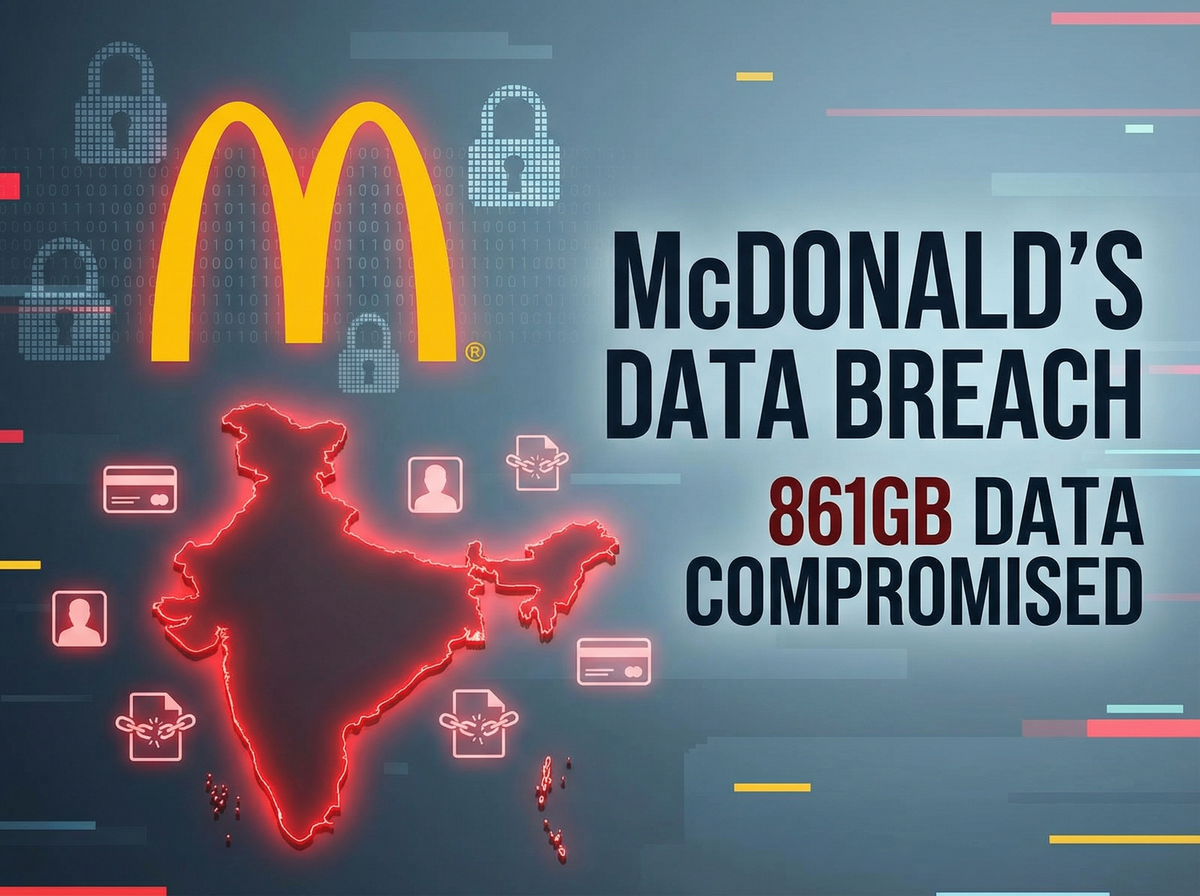
McDonald's operations in India have become the latest victim of the prolific Everest ransomware group, with threat actors claiming to have exfiltrated 861GB of sensitive customer and corporate data. The attack, disclosed on Everest's dark web leak site on January 20, 2026, follows a concerning pattern of high-profile breaches targeting major consumer brands—including Under Armour and Nike—suggesting a coordinated campaign against retail and food service companies with massive customer databases.
 Breached Company
Executive Summary
The McDonald's India breach represents a significant escalation in Everest's targeting strategy. While the group has historically attacked a diverse range of sectors—from aerospace and critical infrastructure to technology and automotive—the concentrated focus on consumer-facing brands in January 2026 suggests either a deliberate strategy or opportunistic exploitation of common vulnerabilities across the retail and food service sectors.
As of January 27, 2026, McDonald's India has neither confirmed nor denied the breach claims, maintaining public silence despite the gravity of the allegations. This lack of communication leaves millions of Indian customers uncertain about whether their personal information has been compromised and what steps they should take to protect themselves.
Timeline of the Attack
Late 2025 / Early January 2026: Initial Compromise
Everest ransomware group gains unauthorized access to McDonald's India systems. The exact date of initial compromise has not been disclosed, but ransomware groups typically operate within victim networks for days or weeks before triggering their final extortion attempt, using this time to:
- Map network architecture
- Identify valuable data stores
- Escalate privileges
- Disable or corrupt backup systems
- Exfiltrate data before encryption or exposure
January 2026: Data Exfiltration
Everest claims to have stolen 861GB of data from McDonald's India systems. This substantial volume suggests the attackers had significant access to multiple databases and file systems.
January 20, 2026: Dark Web Disclosure
Everest adds McDonald's India to its leak site with details of the alleged breach, warning that the stolen data would be released publicly unless a ransom is paid within a specified deadline (typically 7 days).
January 20-27, 2026: Public Silence
Despite widespread media coverage of the breach claims, McDonald's India has not issued a public statement, leaving customers, franchisees, and stakeholders without official information.
What Data Was Allegedly Compromised
According to Everest's dark web posting, the stolen data includes:
Customer Personal Information
The threat actors state that "personal data of your customers and internal documents were leaked into our storage," describing the cache as a "huge variety of personal documents and information of clients."
While Everest has not provided a detailed inventory of the stolen data fields, security experts analyzing similar breaches suggest the compromised information likely includes:
Typical Customer Data in Food Service Systems:
- Names and contact details — Full names, phone numbers, email addresses
- Delivery addresses — Home and work addresses for delivery orders
- Order histories — Purchasing patterns, favorite items, frequency
- Payment information — Potentially including masked credit card data, digital wallet details
- Loyalty program data — McDelivery account information, promotional participation
- Demographic information — Age, gender, location data
- Behavioral data — App usage patterns, promotional response rates
Internal Corporate Documents
Beyond customer data, Everest claims the breach exposed "internal documents," which could potentially include:
Operational Information:
- Supply chain documentation
- Vendor relationships and contracts
- Franchise agreements and financial arrangements
- Employee records (names, contact information, potentially salary data)
- Store performance metrics and financial data
Strategic Information:
- Marketing plans and campaign details
- Menu development and pricing strategies
- Expansion plans and market analysis
- Competitive intelligence
- Operational procedures and standards
Financial Information:
- Sales data by location
- Profit and loss statements
- Vendor payment information
- Franchise financial reporting
The combination of customer personal information and internal business documents makes this breach particularly severe, as it enables multiple forms of exploitation:
- Identity theft and fraud targeting customers
- Competitive intelligence for rivals in the Indian food service market
- Supply chain attacks using vendor relationship information
- Extortion of franchisees or executives whose information was exposed
Why McDonald's India?
The targeting of McDonald's India raises several strategic questions about Everest's attack selection criteria:
Large Customer Base
McDonald's operates over 350 outlets across India, serving millions of customers through dine-in, drive-through, and delivery channels. The company's McDelivery service and mobile app have substantial user bases, creating large repositories of customer data.
Digital Transformation
Like many food service companies, McDonald's has aggressively pursued digital channels:
- Mobile ordering app with saved payment methods and delivery addresses
- Loyalty programs encouraging repeat engagement and data collection
- Third-party delivery platform integration (Swiggy, Zomato, etc.)
- Data analytics for personalized marketing and menu optimization
This digital transformation creates more data—and more potential entry points for attackers.
Complex Infrastructure
McDonald's India operates through:
- Westlife Foodworld Ltd (operating in West and South India)
- Connaught Plaza Restaurants Ltd (operating in North and East India)
This corporate structure involves multiple data systems, franchisee integrations, and third-party service providers—creating a complex attack surface with numerous potential vulnerabilities.
Brand Sensitivity
McDonald's is one of the world's most recognizable brands. A data breach affecting millions of Indian customers creates:
- Reputational damage in a key growth market
- Regulatory scrutiny from Indian data protection authorities
- Pressure to pay ransom to prevent further data exposure
- Customer trust erosion in a competitive market
India's Regulatory Environment
India's digital economy regulations have evolved significantly:
Digital Personal Data Protection Act (DPDP), 2023
While implementation is ongoing, this legislation establishes:
- Consent requirements for data collection and processing
- Data breach notification obligations
- Significant penalties for non-compliance (up to ₹250 crore/$30 million)
- Data localization requirements for certain categories of data
A breach of this magnitude could result in substantial penalties once the DPDP Act is fully enforced, in addition to reputational damage in India's rapidly growing digital economy.
Everest's Campaign: A Pattern Emerges
The McDonald's India attack must be understood as part of a broader Everest campaign targeting major consumer brands:
January 2026 Surge
Under Armour (November 2025 attack, disclosed January 2026)
72.7 million customer accounts exposed, including names, emails, dates of birth, purchase histories
Nike (January 2026)
WorldLeaks group (possibly connected to or competing with Everest) claims 1.4TB of data stolen, including Jordan Brand design files
McDonald's India (January 20, 2026)
861GB of customer and corporate data allegedly stolen
Nissan Motor Corporation (January 2026)
Everest claims 900GB of data stolen
ASUS (December 2025)
Everest compromises the technology manufacturer through a supply chain attack
Earlier High-Profile Targets
Dublin Airport (October 2025)
1.5 million passenger records reportedly compromised
Collins Aerospace
Major aerospace and defense contractor breach
Sweden's Power Grid
Critical infrastructure targeting
Brazilian Government
Public sector data exposure
This portfolio demonstrates several concerning patterns:
1. Target Diversity
Everest attacks across sectors—aerospace, critical infrastructure, government, technology, aviation, automotive, food service, retail—suggesting opportunistic targeting rather than specialization.
2. Geographic Spread
Attacks span North America, Europe, South America, and Asia, indicating either a globally distributed operation or sophisticated remote exploitation capabilities.
3. Brand Recognition Focus
Recent attacks increasingly target household-name brands (McDonald's, Nike, Under Armour, Nissan), suggesting a strategic shift toward high-profile targets that may be more likely to pay to protect their reputations.
4. Data Value Maximization
By targeting consumer brands with large customer databases, Everest maximizes both the extortion value (companies will pay to protect customer data) and the resale value (stolen customer data can be sold on criminal marketplaces).
Who Is Everest?
Everest stands out in the crowded ransomware landscape for its longevity, sophistication, and relatively low public profile.
Six Years of Operations
Operating continuously since 2020, Everest has outlasted most ransomware groups, which typically survive 12-18 months before law enforcement disruption, internal collapse, or strategic rebranding.
This operational longevity suggests:
- Sophisticated operational security preventing law enforcement identification and infiltration
- Effective internal governance avoiding the disputes that often fracture cybercrime groups
- Strategic discipline maintaining lower profiles than groups like LockBit or BlackCat, which attracted intensive law enforcement attention
- Financial success generating sufficient revenue to retain skilled operators and invest in capability development
Three Revenue Models
Unlike simple ransomware operations, Everest operates a diversified criminal enterprise with three distinct income streams:
1. Double Extortion Ransomware
The core business model:
- Infiltrate target networks
- Exfiltrate valuable data
- Deploy encryption malware (optional—data theft alone may be sufficient)
- Demand ransom for decryption key and/or promise not to leak data
- If unpaid, leak data on dark web sites and criminal forums
2. Network Access Brokerage
Everest sells access to compromised networks:
- Initial access credentials
- VPN configurations
- Network maps and security control information
- Privilege escalation paths
This approach generates revenue even from targets that prove unsuitable for direct ransomware attacks, and allows other threat actors to leverage Everest's initial compromise efforts.
3. Insider Recruitment Program
Perhaps most concerning, Everest actively recruits malicious insiders within target organizations:
- Identifies and approaches employees through various channels
- Offers payment for credentials, security control information, or active assistance
- Leverages insiders to bypass security controls and accelerate attacks
- Uses insider knowledge to identify most valuable data and optimal attack timing
This insider recruitment capability gives Everest significant advantages over groups relying solely on external exploitation.
Impact on Affected Customers
If the breach claims are accurate, millions of McDonald's India customers face multiple risks:
Identity Theft and Financial Fraud
The combination of names, phone numbers, email addresses, and delivery addresses enables:
- Fraudulent account creation using stolen identities
- Credit fraud if enough information is combined with other breached data
- SIM swap attacks using phone numbers and personal information to hijack accounts
- Tax fraud using identity information (particularly if other documents like Aadhaar numbers were exposed)
Targeted Phishing and Social Engineering
Attackers can craft highly personalized attacks using:
- Order histories to reference specific McDonald's locations and menu items
- Delivery addresses to create convincing location-based offers
- Loyalty program details to impersonate legitimate McDonald's communications
- Phone numbers for voice phishing (vishing) attacks
Physical Security Risks
Home addresses enable:
- Burglary using delivery address information to identify potential targets
- Mail theft to intercept financial documents or identity documents
- Physical stalking or harassment in extreme cases
Long-Term Privacy Erosion
Personal information, once exposed, cannot be "un-exposed":
- Data will appear in aggregated databases combining multiple breaches
- Information remains exploitable for years or decades
- Future attack techniques may find new ways to weaponize today's stolen data
Regulatory and Legal Implications
India's Data Protection Landscape
Digital Personal Data Protection Act (DPDP), 2023
McDonald's India could face:
- Penalties up to ₹250 crore (approximately $30 million USD) for violations
- Requirements to notify affected individuals and the Data Protection Board
- Potential restrictions on data processing activities
- Reputational damage from public regulatory action
Information Technology Act, 2000 (as amended)
Section 43A requires companies to implement "reasonable security practices" for sensitive personal data, with liability for negligence.
Reserve Bank of India (RBI) Regulations
If payment card data was compromised, additional RBI cybersecurity requirements may apply.
Class Action Litigation Risk
Following similar incidents globally, McDonald's India may face:
- Class action lawsuits from affected customers
- Claims of negligence in data protection
- Demands for compensation for identity theft, fraud, or misuse of data
- Legal fees and settlement costs
Franchise Liability Questions
McDonald's complex franchise structure in India raises interesting legal questions:
- Are franchisees liable for data breaches in centralized systems?
- Do franchisees have contractual claims against McDonald's for security failures?
- How are breach notification and remediation costs allocated?
McDonald's Silence: Strategic or Negligent?
As of January 27, 2026—a week after Everest's public disclosure—McDonald's India has not issued any statement about the breach claims. This silence is notable and raises several possibilities:
Scenario 1: Verification in Progress
McDonald's may be conducting forensic analysis to verify:
- Whether a breach actually occurred
- What data was compromised
- How many customers were affected
- How attackers gained access
Responsible breach response requires thorough investigation before public notification. However, a week of silence seems excessive if McDonald's knows the breach occurred.
Scenario 2: Legal Strategy
McDonald's lawyers may be advising silence to:
- Avoid admissions that could be used in litigation
- Minimize public attention to the incident
- Allow time to prepare a comprehensive response with legal review
However, this approach risks:
- Customer anger at lack of communication
- Regulatory penalties for delayed notification
- Increased media scrutiny when statement eventually comes
Scenario 3: Negotiations with Everest
McDonald's may be:
- Negotiating a ransom payment to prevent data release
- Attempting to verify the authenticity of stolen data before responding
- Buying time to implement security improvements before public disclosure
Paying ransoms is controversial and often counterproductive, as it:
- Funds further criminal activity
- Provides no guarantee data won't be leaked anyway
- Encourages additional attacks on perceived "payer" organizations
Scenario 4: India Operational Complexity
McDonald's India's dual-entity structure may create coordination challenges:
- Multiple legal entities involved (Westlife Foodworld, Connaught Plaza Restaurants)
- Potential disagreement about appropriate response
- Complex liability allocation between entities
- Coordination with McDonald's global corporate structure
Regardless of reason, the extended silence appears to be a strategic mistake, as it:
- Leaves customers uncertain and unable to take protective action
- Allows narrative control to shift to Everest and media speculation
- Suggests either breach notification dysfunction or deliberate non-transparency
- Increases likelihood of regulatory intervention and penalties
What McDonald's India Should Do
Immediate Actions
1. Break the Silence
Issue a public statement acknowledging:
- Awareness of the breach claims
- Status of investigation
- What is known about potentially compromised data
- Steps being taken to protect customers
- Resources available to affected individuals
2. Notify Affected Customers
Even if investigation is ongoing, provide preliminary notification:
- Email to all potentially affected account holders
- In-app notifications for mobile app users
- Prominent website notices
- SMS alerts for customers with phone numbers on file
3. Offer Protective Services
Provide affected customers:
- Credit monitoring services (adapted for Indian credit systems)
- Identity theft protection and insurance
- Dedicated support hotline for fraud concerns
- Clear guidance on protective steps customers should take
4. Engage Regulators Proactively
Work with:
- Data Protection Board of India
- Ministry of Electronics and Information Technology (MeitY)
- Reserve Bank of India (if payment data involved)
- State-level consumer protection authorities
5. Establish Incident Command Structure
Coordinate response across:
- Legal (Indian counsel and global McDonald's legal team)
- IT Security (forensics, containment, remediation)
- Communications (media relations, customer communications)
- Operations (franchise liaison, business continuity)
- Executive Leadership (decision-making authority)
Medium-Term Security Improvements
1. Complete Forensic Analysis
Engage top-tier incident response firms to:
- Identify initial attack vector
- Map attacker movement through networks
- Identify all compromised systems and data
- Ensure complete attacker expulsion
- Verify backup integrity
2. Remediate Identified Vulnerabilities
Based on forensic findings, implement:
- Patches for exploited vulnerabilities
- Reconfiguration of insecure systems
- Enhanced access controls and monitoring
- Network segmentation improvements
3. Reset Credentials Comprehensively
Change all:
- Customer account passwords (force reset)
- Employee credentials
- Service account passwords
- API keys and integration credentials
- Privileged account credentials
4. Enhance Monitoring and Detection
Deploy:
- Advanced SIEM with AI-powered anomaly detection
- User and Entity Behavior Analytics (UEBA)
- Data loss prevention (DLP) systems
- Network traffic analysis (NTA)
- Endpoint detection and response (EDR)
Long-Term Security Transformation
1. Zero Trust Architecture
Redesign security around zero trust principles:
- Never trust, always verify
- Least privilege access controls
- Micro-segmentation of networks
- Continuous authentication and authorization
2. Data Minimization
Reduce risk by limiting data collection:
- Collect only essential customer information
- Implement aggressive data retention policies
- Anonymize data for analytics where possible
- Encrypt sensitive data at rest and in transit
3. Vendor and Franchise Security
Extend security requirements to entire ecosystem:
- Comprehensive third-party risk assessment
- Security requirements in franchise agreements
- Regular security audits of vendors and franchisees
- Shared threat intelligence and incident response
4. Insider Threat Program
Given Everest's insider recruitment tactics:
- Implement employee behavior monitoring
- Establish anonymous reporting mechanisms
- Conduct regular security awareness training
- Implement separation of duties for sensitive functions
5. Business Continuity and Cyber Resilience
Prepare for future incidents:
- Regular tabletop exercises simulating ransomware
- Immutable offline backups
- Incident response playbooks
- Cyber insurance with adequate coverage
What Affected Customers Should Do
If you're a McDonald's India customer who may have been affected:
Immediate Steps
1. Monitor for Official Communication
Watch for:
- Emails from McDonald's India
- In-app notifications
- SMS messages
- Official website announcements
2. Change Passwords
Reset credentials for:
- McDonald's app/website account
- Any other accounts using the same password
- Email accounts associated with McDonald's account
3. Enable Additional Security
Implement:
- Two-factor authentication on all important accounts
- Biometric authentication where available
- Strong, unique passwords for each account
4. Monitor Financial Accounts
Watch for:
- Unauthorized credit/debit card charges
- Unfamiliar bank account activity
- New credit accounts you didn't open
- Unusual digital wallet transactions
5. Be Alert for Phishing
Expect:
- Emails claiming to be from McDonald's
- SMS messages offering promotions or refunds
- Phone calls requesting account verification
Verify legitimacy before clicking links or providing information.
Ongoing Protection
1. Credit Monitoring
In India's evolving credit system:
- Check CIBIL score and report regularly
- Monitor for unauthorized credit applications
- Set up fraud alerts with your bank
2. Identity Theft Vigilance
Watch for:
- Unexpected government communications about tax or benefits
- Bills for services you didn't order
- Collection notices for unknown debts
- Unexplained denial of credit or services
3. Physical Security Awareness
If your delivery address was exposed:
- Be cautious about unexpected deliveries
- Watch for unfamiliar individuals near your home
- Secure mail and packages promptly
4. Document Everything
Keep records of:
- Time spent responding to breach
- Money spent on protective measures
- Any fraud or identity theft experienced
- Communications with McDonald's
Implications for Food Service and Retail in India
The McDonald's India breach has broader implications for the sector:
Digital India, Vulnerable India?
India's rapid digital transformation has created:
- Massive data repositories in retail, food service, e-commerce
- Complex technology stacks with multiple potential vulnerabilities
- Skilled workforce shortages in cybersecurity
- Evolving regulatory landscape with compliance uncertainty
Competitive Intelligence Risk
Beyond customer data, corporate information exposure enables:
- Competitive intelligence for rivals
- Supply chain targeting by identifying vendors
- Strategic anticipation based on expansion plans
Franchise Model Vulnerabilities
Food service franchises create unique security challenges:
- Distributed infrastructure across hundreds of locations
- Varying security maturity among franchisees
- Complex data flows between corporate, franchisee, and third-party systems
- Shared liability in breach scenarios
Third-Party Ecosystem Risks
Modern food service operations depend on:
- Delivery platforms (Swiggy, Zomato)
- Payment processors
- POS system vendors
- Cloud service providers
- Marketing and analytics platforms
Each integration point is a potential attack vector.
Conclusion: A Wake-Up Call for India's Digital Economy
The alleged McDonald's India breach by Everest ransomware serves as a stark reminder that India's booming digital economy has become a high-value target for sophisticated international cybercrime operations.
With over 750 million internet users, a rapidly growing e-commerce sector, and aggressive digital transformation across industries, India represents enormous opportunity for legitimate businesses—and for cybercriminals seeking to exploit the gap between digital adoption and security maturity.
For McDonald's India, the path forward requires:
- Transparent communication with affected customers and regulators
- Comprehensive remediation of security vulnerabilities
- Long-term investment in security transformation
- Accountability for failures that allowed the breach
For other companies operating in India's digital economy, McDonald's experience offers critical lessons:
- Digital transformation without security is digital vulnerability
- Customer data is a liability as much as an asset
- International cybercrime groups are targeting Indian businesses
- The time to invest in security is before, not after, a breach
As India's Digital Personal Data Protection Act moves toward full implementation and enforcement, companies that fail to take data security seriously face not just reputational damage and customer loss, but potentially massive financial penalties.
The question for every CISO in India's food service, retail, and e-commerce sectors is simple: Will you learn from McDonald's experience and invest in robust security now, or will you be the next headline explaining to customers, regulators, and shareholders why their data was stolen?
About This Analysis
This report is published by Breached.Company and CISO Marketplace, providing security professionals with comprehensive analysis of significant cyber incidents and actionable guidance for improving organizational security.
Sources:
- Everest Ransomware Dark Web Leak Site
- Cyber Press
- Verdict Food Service
- Security researchers and incident response professionals
- India's Digital Personal Data Protection Act, 2023
- Information Technology Act, 2000