
OPM 2.0: How Federal Employee Data Became Compromised—Again


A decade of lessons unlearned, and America's cleared workforce is once again at risk.
Executive Summary
In what security experts are calling a disturbing case of déjà vu, federal employee data—including some of the most sensitive personnel records in the U.S. government—has once again been compromised through a combination of systemic failures, lax oversight, and inadequate security practices.
Unlike the 2015 Office of Personnel Management (OPM) breach, where Chinese state-sponsored hackers exfiltrated 21.5 million security clearance records in what was called the worst breach of government data in American history, the current crisis represents a convergence of threats: internal mishandling of sensitive data by Department of Government Efficiency (DOGE) personnel, ongoing Chinese cyber operations targeting federal systems, and a government cybersecurity posture that critics say has failed to learn from past disasters.
The implications are staggering. Current and former federal employees, security clearance holders, and their families face renewed threats of foreign intelligence targeting, identity theft, and potential compromise. Meanwhile, the very agencies tasked with protecting this information appear caught in a perfect storm of administrative chaos, understaffing, and geopolitical cyberwarfare.
This is the story of how America's most sensitive personnel data became vulnerable—again—and what it means for national security in 2026.
 Breached Company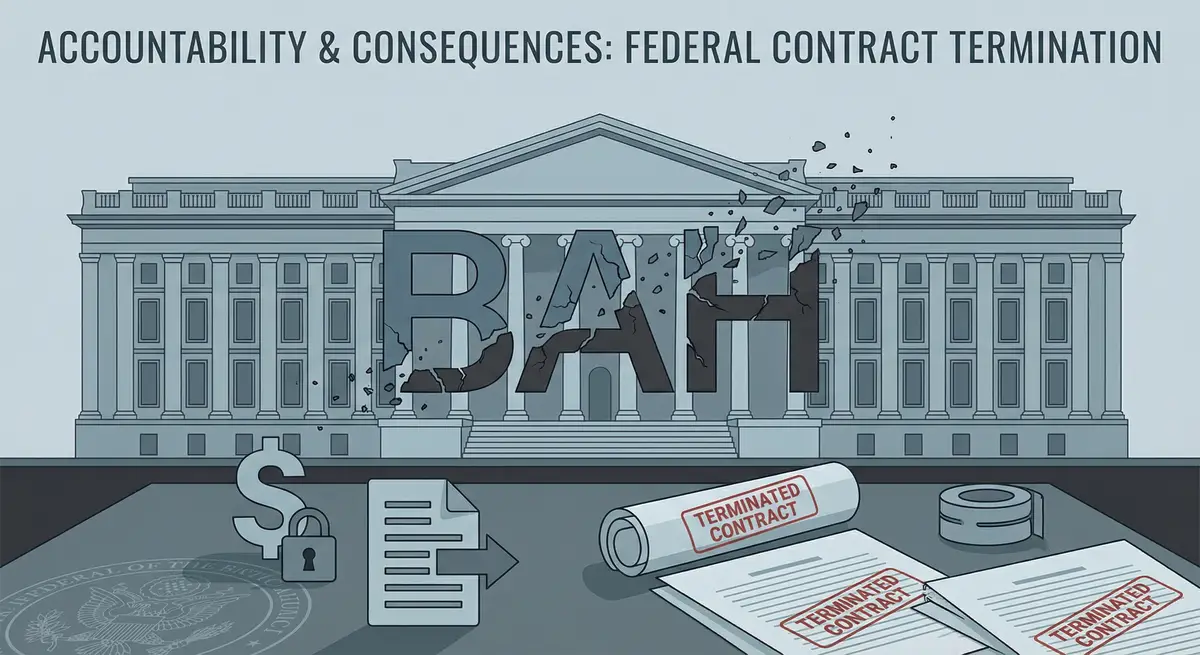
The Crown Jewels: What's at Stake
To understand why federal employee data represents such a high-value target, one must first understand what the government collects and retains about its workforce—particularly those with security clearances.
Standard Form 86: The Keys to the Kingdom
The Standard Form 86 (SF-86), officially titled "Questionnaire for National Security Positions," is the foundation of the U.S. security clearance system. This 127-page document is required for anyone seeking access to classified information and contains information that would make any intelligence service salivate:
- Complete personal history: Every address, school, and employer for the past decade
- Family information: Details on spouse, children, parents, and siblings, including their citizenships and foreign contacts
- Financial records: Bankruptcies, debts, and financial difficulties that could indicate vulnerability to coercion
- Mental health history: Psychiatric treatment, substance abuse counseling, and emotional conditions
- Foreign contacts and travel: Every interaction with foreign nationals, every trip abroad
- Criminal history: Arrests, charges, and convictions—even expunged records
- References: Names and contact information for people who can vouch for the applicant's character
- Cohabitants and roommates: Current and former living arrangements
Perhaps most critically, the SF-86 requires applicants to disclose anything that could be used for blackmail or coercion. This creates a document that, in hostile hands, becomes a roadmap for recruiting spies, compromising officials, and undermining national security.
Beyond the SF-86
Federal personnel databases contain far more than security clearance applications:
- Central Personnel Data File: Employment history, job classifications, pay grades, performance reviews
- Health insurance records: Medical conditions, prescriptions, treatment histories
- Pension and retirement data: Financial planning information, beneficiaries
- Biometric data: Fingerprints from background investigation processing
- Investigation files: Interview notes, reference checks, counterintelligence assessments
When the OPM breach occurred in 2015, attackers obtained 5.6 million fingerprint records—biometric data that cannot be changed like a password. Security experts warned that covert operatives could be identified by their fingerprints for the rest of their lives.
2015: The Original Sin
To understand the current crisis, we must revisit the catastrophic 2015 OPM breach—a watershed moment that was supposed to transform federal cybersecurity forever.
How It Happened
The OPM breach actually consisted of two separate but linked intrusions:
First Wave (X1): Discovered in March 2014 when a third party notified the Department of Homeland Security of data exfiltration from OPM's network. Attackers had been present since at least December 2013.
Second Wave (X2): On May 7, 2014, attackers posing as KeyPoint Government Solutions employees—a background investigation contractor—penetrated deeper into OPM systems. This breach wasn't discovered until April 2015, meaning attackers had unfettered access for nearly a year.
The attackers, identified as Chinese state-sponsored hackers likely working for the Jiangsu State Security Department (a subsidiary of China's Ministry of State Security), used sophisticated techniques:
- Valid credentials: Obtained through social engineering and contractor compromises
- PlugX malware: A backdoor previously used by Chinese hacking groups targeting Tibetan and Hong Kong activists
- Superhero pseudonyms: The attackers used the names "Tony Stark" and "Steve Rogers"—a hallmark of Chinese-linked operations
The Devastating Toll
When the dust settled, the damage was unprecedented:
- 21.5 million individuals affected, including current and former federal employees, contractors, and job applicants
- 22.1 million total records compromised
- 5.6 million fingerprint sets stolen
- Decades of SF-86 forms exfiltrated, containing the most intimate details of cleared personnel
The breach affected everyone who had undergone a background investigation since approximately 2000—and their references, family members, and close contacts. Intelligence community officials privately called it the worst counterintelligence disaster in American history.
Warnings Ignored
Congressional investigations revealed that OPM had been warned repeatedly about its security vulnerabilities:
- A March 2015 Inspector General report cited "persistent deficiencies in OPM's information system security program"
- Auditors found "incomplete security authorization packages, weaknesses in testing of information security controls, and inaccurate Plans of Action and Milestones"
- The agency was running systems so antiquated that modern security tools couldn't be implemented
- A 2014 New York Times story revealed that OPM had already detected Chinese intrusion attempts—but assured the public no personal data was compromised
OPM Director Katherine Archuleta, a political appointee with no cybersecurity background, initially resisted calls to resign. When she finally stepped down in July 2015, critics pointed to her lack of technical expertise as symptomatic of a government that treated cybersecurity as an afterthought.
The Aftermath
The government's response included:
- Creation of the National Background Investigations Bureau (later the Defense Counterintelligence and Security Agency) to take over security clearance processing from OPM
- Enhanced monitoring services for affected individuals
- Improved encryption and network segmentation requirements
- Executive orders mandating federal cybersecurity improvements
But ten years later, the question remains: Did any of it actually work?
2024-2025: China Strikes Again
While the government was implementing post-OPM reforms, Chinese state-sponsored hackers never stopped probing federal defenses.
The Treasury Breach
In December 2024, the U.S. Treasury Department disclosed a significant breach attributed to Chinese state-sponsored hackers. The attack targeted BeyondTrust, a third-party vendor providing remote technical support services:
- December 2, 2024: BeyondTrust detected suspicious activity
- December 5, 2024: The company confirmed a security breach
- December 8, 2024: Treasury learned that attackers had obtained a key used to secure a cloud-based remote support service
The attackers exploited critical command injection vulnerabilities (CVE-2024-12356 and related flaws) in BeyondTrust's remote support software. Using the stolen API key, they:
- Accessed over 3,000 unclassified files
- Compromised approximately 100 Treasury workstations
- Potentially gained insight into the Office of Foreign Assets Control (OFAC), which manages economic sanctions against foreign adversaries
The irony was bitter: A decade of post-OPM security investments, and hackers still found their way in through a third-party vendor—exactly the same attack vector that enabled the 2014 OPM breach via KeyPoint Government Solutions.
Salt Typhoon: The Telecoms Nightmare
Running parallel to the Treasury breach, a separate Chinese operation codenamed Salt Typhoon was executing what Senator Mark Warner called "the worst telecommunications hack in our nation's history."
Beginning as early as 2022 and continuing through 2025, Salt Typhoon systematically compromised American telecommunications infrastructure:
- Targets: AT&T, Verizon, T-Mobile, and virtually every major U.S. carrier
- Access: Real-time calls and text messages, including those of presidential candidates Donald Trump and J.D. Vance
- Intelligence gold: Potential access to systems used for court-authorized wiretapping and law enforcement surveillance
- Scale: The FBI notified over 600 organizations across 80+ countries of Salt Typhoon targeting
In January 2026, the Financial Times reported that Salt Typhoon had breached email systems used by House of Representatives committee staffers, including those serving on committees overseeing China policy, foreign affairs, intelligence, and armed services.
The Treasury sanctioned individuals and companies associated with Salt Typhoon operations, including:
- Yin Kecheng: A Chinese national involved in the Treasury compromise, sanctioned January 17, 2025
- Integrity Technology Group, Inc.: A Chinese company supporting Salt Typhoon operations, sanctioned January 3, 2025
- Sichuan Juxinhe Network Technology Co., Ltd. (Shanghai Heiying): Linked to multiple hacking campaigns
But sanctions alone couldn't undo the damage—or close the vulnerabilities that enabled the attacks.
2025-2026: The DOGE Debacle
If Chinese hackers represented an external threat, the establishment of the Department of Government Efficiency (DOGE) created an internal one.
Elon Musk's Digital Army
In early 2025, the Trump administration created DOGE, an advisory body led by Elon Musk tasked with identifying government waste and inefficiency. DOGE personnel—many of them young technologists with limited government experience and unclear security credentials—were granted access to some of the most sensitive databases in the federal government.
The problems began almost immediately.
The OPM Incursion
According to court filings and congressional investigations, DOGE personnel were granted access to OPM systems including:
- USAJobs and related hiring platforms: Data on every federal job applicant
- Federal employee personnel records: Names, Social Security numbers, addresses, employment histories
- Onboarding and performance management systems: Sensitive HR information
- Potentially SF-86 adjacent databases: Security clearance-related information
The Electronic Frontier Foundation filed suit to block DOGE access, explicitly citing the 2015 OPM breach:
"We have seen what happens when OPM data falls into the wrong hands. The 2015 breach by Chinese state actors compromised 21.5 million individuals and caused incalculable damage to national security. Yet here we are, a decade later, watching as individuals with unclear authorization and inadequate oversight are given the keys to the same kingdom."
A federal judge initially ordered OPM to restrict DOGE access, citing the 2015 breach as evidence of what could go wrong. However, subsequent rulings have allowed limited access to continue while litigation proceeds.
The Social Security Scandal
The situation proved even worse at the Social Security Administration. In January 2026, the Department of Justice disclosed in court filings that DOGE personnel had:
- Accessed sensitive personal data without proper authorization
- Shared Social Security information through non-secure, unauthorized servers
- Sent a password-protected file containing approximately 1,000 Americans' private records to DOGE affiliates outside the agency
- Circumvented IT security protocols to transfer data externally
- Maintained system access even after a court issued a temporary restraining order restricting such access
Perhaps most alarmingly, court documents revealed that DOGE personnel allegedly discussed providing Social Security data to an unnamed advocacy group seeking to "overturn election results."
Members of Congress demanded criminal investigations:
"DOGE employees tried to hand over sensitive personal records to an unnamed advocacy group seeking to 'overturn election results,' traded confidential data on an unapproved private server, and sent confidential information on about 1,000 Americans to Elon Musk's 'top lieutenant.'"
— Representatives John Larson and Richard Neal, January 2026
The Pattern Emerges
The DOGE incidents reveal a pattern disturbingly similar to the conditions that enabled the 2015 OPM breach:
| 2015 OPM Breach | 2025-2026 DOGE Crisis |
|---|---|
| Inadequate access controls | Personnel with unclear authorization granted broad access |
| Contractor vulnerabilities | Outsiders embedded in agencies with minimal oversight |
| Ignored warnings | Court orders and security concerns disregarded |
| Antiquated systems | Legacy databases exposed to new access patterns |
| Political leadership prioritizing other goals | Efficiency mandates overriding security protocols |
The Perfect Storm: Converging Threats
What makes the current situation uniquely dangerous is the convergence of internal and external threats.
External: Chinese Persistence
Salt Typhoon, the Treasury breach, and related operations demonstrate that Chinese intelligence services never stopped targeting federal systems. They've simply adapted:
- Third-party attacks: Rather than hitting hardened government networks directly, attackers target vendors, contractors, and software supply chains
- Credential theft: Stolen valid credentials remain a preferred access method, bypassing many technical controls
- Long-term presence: Salt Typhoon maintained access for years before detection
- Multi-pronged campaigns: Simultaneous operations across telecommunications, government, and critical infrastructure
The targeting of congressional committee staffers working on China policy suggests these operations have strategic intelligence objectives—not just data collection for its own sake.
Internal: Administrative Chaos
Meanwhile, the DOGE initiative has created new attack surfaces and introduced unprecedented risks:
- Unpredictable access patterns: Security systems designed to detect external intrusions may not flag authorized internal users behaving unusually
- Data exfiltration pathways: Information copied to external servers could be targeted by foreign adversaries
- Morale and attrition: Mass layoffs and uncertainty have driven experienced cybersecurity professionals from government service
- Degraded security culture: When personnel see data handling rules flouted at the highest levels, compliance across agencies suffers
The Nightmare Scenario
Security experts warn of a nightmare scenario: Chinese hackers exploiting the chaos created by DOGE operations to access or exfiltrate data that internal personnel have already loosened controls around.
"You have data being moved to unauthorized servers, access controls being circumvented, and experienced security staff fleeing the government. From an adversary's perspective, this is the optimal environment for intrusion."
— Former NSA analyst, speaking on condition of anonymity
National Security Implications
The compromise of federal employee data—whether by Chinese hackers, internal mishandling, or both—creates cascading national security risks.
Counterintelligence Catastrophe
Security clearance data is counterintelligence gold. With SF-86 information, a foreign intelligence service can:
- Identify recruitment targets: Financial difficulties, foreign contacts, and personal vulnerabilities are detailed in clearance applications
- Map intelligence community personnel: Even if CIA employees don't use OPM systems, their family members, references, and contacts do
- Track covert operatives: Biometric data allows identification of personnel operating under alias
- Prepare for espionage operations: Understanding an individual's history, connections, and potential pressure points enables sophisticated targeting
- Blackmail and coercion: Personal information revealed in SF-86 forms—affairs, mental health treatment, financial problems—provides leverage
Trust Erosion
The repeated compromise of personnel data erodes the fundamental trust relationship between the government and its workforce:
- Recruitment challenges: Who wants to provide their most sensitive personal information to an agency that can't protect it?
- Cooperation reluctance: Will cleared personnel fully disclose vulnerabilities if they don't trust the system?
- Morale damage: Employees who've seen their data compromised multiple times may lose faith in their employer
International Standing
American credibility in calling out Chinese cyber operations suffers when our own systems prove repeatedly vulnerable:
- Diplomatic leverage: It's harder to pressure allies on cybersecurity when our own house is in disorder
- Intelligence sharing: Partners may hesitate to share sensitive information with agencies that can't protect their own data
- Norm-setting: U.S. leadership on international cyber norms is undermined by domestic failures
What Affected Employees Should Do Now
For current and former federal employees, contractors, and security clearance holders, the following protective steps are essential:
Immediate Actions
- Freeze your credit with all three bureaus (Equifax, Experian, TransUnion) plus the lesser-known Innovis and NCTUE
- Enable fraud alerts and consider identity theft protection services (though recognize their limitations)
- Monitor financial accounts for unauthorized activity
- Use strong, unique passwords for all accounts, especially financial and email
- Enable multi-factor authentication everywhere possible
Ongoing Vigilance
- Be wary of targeted phishing: Attackers with your personal details can craft extremely convincing spear-phishing messages
- Secure your family members: Data about relatives was likely compromised too
- Watch for identity theft signs: Unexpected bills, denied credit, or unfamiliar accounts
- Report suspicious contacts: Foreign nationals making unexpected overtures could be intelligence approaches
- Document everything: Keep records of any identity theft or suspicious activity for potential legal action
Long-term Considerations
- Review what's in your SF-86: Understand what information adversaries potentially possess
- Update references and contacts: Warn people listed on your forms about potential targeting
- Consider identity monitoring services: Free services offered by OPM and other agencies post-breach
- Stay informed: Follow developments in any ongoing investigations or lawsuits
The Systemic Failures: Why History Repeats
The convergence of the 2015 OPM breach, ongoing Chinese operations, and the DOGE crisis reveals systemic failures that transcend any single incident.
Leadership Without Expertise
Both Katherine Archuleta in 2015 and various DOGE-era appointees shared a common characteristic: limited cybersecurity expertise in positions requiring exactly that expertise. Political loyalty continues to trump technical competence in critical appointments.
Contractor Dependency
The federal government's reliance on contractors creates persistent vulnerabilities:
- KeyPoint Government Solutions enabled the 2015 breach
- BeyondTrust enabled the 2024 Treasury breach
- Every contractor represents a potential access point for adversaries
Yet budget and efficiency pressures continue to push more functions to outside vendors with varying security standards.
Inadequate Oversight
Congressional oversight of federal cybersecurity remains fragmented across multiple committees with competing priorities. Inspectors General issue warnings that go unheeded. GAO reports document failures without consequences for those responsible.
Culture of Acceptable Risk
Perhaps most fundamentally, the federal government has developed a culture where data breaches are treated as unfortunate but acceptable costs of doing business:
- Affected individuals receive credit monitoring
- Officials issue statements of concern
- Some reforms are implemented
- And then it happens again
Without meaningful accountability—legal consequences for negligence, career impacts for failures, genuine resource commitment to security—the cycle continues.
Will This Finally Change Anything?
History suggests the answer is: probably not enough.
After the 2015 OPM breach, Congress held hearings, agencies implemented reforms, and officials promised change. Yet here we are, a decade later, facing an arguably worse situation: external adversaries still penetrating federal systems, internal chaos creating new vulnerabilities, and the same categories of data—security clearances, personnel records, biometric information—at risk.
What Would Actually Help
Meaningful improvement would require:
- Mandatory cybersecurity expertise requirements for senior positions at agencies holding sensitive data
- Real accountability for security failures, including legal liability for negligence
- Adequate funding for cybersecurity that doesn't get sacrificed to other priorities
- Contractor security standards with teeth—including mandatory breach notification and liability provisions
- Data minimization: Collecting and retaining less sensitive information reduces risk
- Zero-trust architecture: Assuming breach and limiting damage through segmentation and continuous verification
- Insider threat programs that address authorized users behaving badly, not just external attackers
The Political Reality
But the political reality suggests these measures remain unlikely:
- Efficiency mandates conflict with security investments
- Short-term thinking dominates budget decisions
- Expertise is undervalued in political appointments
- Contractor interests resist stricter oversight
- Nobody wants to be the one who admits the emperor has no clothes
Conclusion: The Data That Keeps on Giving
For Chinese intelligence services, the 2015 OPM breach was the gift that keeps on giving—a database of 21.5 million Americans' most sensitive personal information, valid for decades of targeting, recruitment, and counterintelligence operations. No password reset can undo that damage. No credit monitoring can un-steal fingerprints. No reform can erase what adversaries already possess.
Now, the chaos of 2025-2026 threatens to add new chapters to this ongoing disaster. Whether through DOGE mishandling, continued Chinese — intrusions, or the interaction of both, federal employee data faces unprecedented risk.
The individuals affected—the analysts, engineers, diplomats, soldiers, and civil servants who make government function—deserve better. They provided their most sensitive personal information in service to their country, trusting that information would be protected.
That trust has been betrayed—repeatedly.
The question is no longer whether federal employee data is secure. It isn't, and in meaningful ways, it never will be again. The question is whether America will finally learn the lessons of OPM, Treasury, Salt Typhoon, and DOGE—or whether we'll be writing this same story again in 2035.
Based on the evidence, don't bet on change.
This article will be updated as new information becomes available. If you're a current or former federal employee with information about data security concerns, contact our research team through secure channels.
Timeline: Federal Employee Data Breaches
| Date | Event |
|---|---|
| Dec 2013 | First OPM intrusion begins (discovered Mar 2014) |
| May 2014 | Second OPM intrusion via KeyPoint credentials |
| July 2014 | NYT reports Chinese hackers targeting OPM |
| Apr 2015 | Second OPM breach finally discovered |
| June 2015 | OPM publicly discloses breach |
| July 2015 | OPM confirms 21.5 million affected; Director resigns |
| 2017 | Chinese national arrested for providing OPM breach malware |
| 2022 | Salt Typhoon operations begin against telecoms |
| Dec 2024 | Treasury breach via BeyondTrust discovered |
| Jan 2025 | Treasury sanctions Chinese hackers |
| Feb 2025 | DOGE personnel gain access to OPM systems |
| Mar 2025 | Court restricts DOGE access to Treasury systems |
| June 2025 | Judge orders OPM to remove DOGE access |
| Aug 2025 | Appeals court allows limited DOGE access |
| Jan 2026 | DOJ admits DOGE improperly accessed SSA data |
| Jan 2026 | Salt Typhoon breach of congressional emails revealed |
| Feb 2026 | Ongoing investigations continue |
Sources and Further Reading
- House Committee on Oversight and Government Reform: "The OPM Data Breach: How the Government Jeopardized Our National Security for More than a Generation"
- Congressional Research Service: "Salt Typhoon Hacks of Telecommunications Companies and Federal Response Implications"
- Electronic Frontier Foundation: "EFF Sues DOGE and the Office of Personnel Management"
- Treasury Department: "Treasury Sanctions Company Associated with Salt Typhoon"
- Government Accountability Office: Multiple reports on federal cybersecurity posture
- Senate Homeland Security Committee: DOGE Investigation Reports