Poland Narrowly Avoids Blackout After Sophisticated Cyberattack on Renewable Energy Infrastructure


Russian-Linked Threat Actors Target Distributed Solar and Wind Installations in Unprecedented Campaign
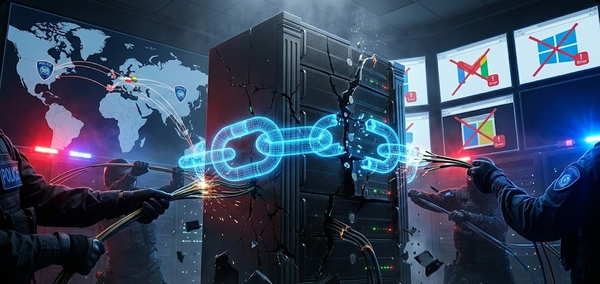
Poland successfully defended against what officials are calling the most serious cyberattack on its energy infrastructure in years, narrowly avoiding a nationwide blackout that could have left 500,000 people without heat during brutal winter conditions. The sophisticated assault, which occurred in the final days of December 2025, represents a dangerous evolution in cyber warfare tactics targeting critical infrastructure.
A New Attack Vector Emerges
Unlike previous cyberattacks that focused on large power generation facilities or high-voltage transmission networks, this campaign specifically targeted the communication systems connecting renewable energy installations—solar farms and wind turbines—to the national power grid. This tactical shift marks a significant escalation in how adversaries approach critical infrastructure disruption.
"We have not experienced an attack like this before," Energy Minister Miłosz Motyka told reporters. "For the first time, various locations were targeted simultaneously." The coordinated assault attempted to disrupt communications between renewable energy sources and power distribution operators across multiple regions, threatening approximately 25% of Poland's electricity generation capacity.
Digital Affairs Minister Krzysztof Gawkowski emphasized the severity of the threat during a radio interview: "We were very close to a blackout. The digital tanks are already here." The minister confirmed that the attack aimed to cut electricity for civilians during Poland's harsh winter, when temperatures plummeted below -15°C.
Attribution and Geopolitical Context
While Polish officials declined to provide explicit attribution details, multiple cybersecurity experts and intelligence assessments point to Russia's GRU military intelligence unit, specifically the notorious Sandworm group (also tracked as APT44, Seashell Blizzard, and Iron Viking).
"Everything points to Russian sabotage," stated Minister Gawkowski, noting the attack's sophistication, multi-phase intrusion strategy, and timing coinciding with extreme weather conditions. The campaign bore the hallmarks of Sandworm, which maintains a track record of disrupting Ukrainian power grids and conducting some of the most destructive cyberattacks in history, including the 2017 NotPetya outbreak. Recent analysis shows Sandworm has evolved its tactics, shifting from expensive zero-day exploitation to targeting misconfigured network edge devices.
Russia's cyber operations against Poland have intensified dramatically since the full-scale invasion of Ukraine began in February 2022. Poland's digital affairs ministry revealed that Russian military intelligence tripled its resources dedicated to cyber operations targeting Poland in 2025 alone. Of the 170,000 cyber incidents identified in the first three quarters of 2025, a significant portion was attributed to Russian actors. This aligns with broader trends showing a 34% increase in attacks on critical infrastructure including energy, water, and transportation sectors across Europe and North America.
As a NATO member and crucial ally to Ukraine—providing shelter to refugees, extensive military assistance, and serving as a logistics hub for Western aid—Poland has become a prime target for Russian hybrid warfare operations. Similar attacks have targeted other European nations, with Denmark recently attributing critical infrastructure attacks to Russian state-connected actors. The country has also made significant investments in supporting Ukraine's energy infrastructure, including modernizing transmission lines to export electricity to Ukraine's Khmelnitsky nuclear power station.
Technical Analysis: Targeting the Renewable Energy Layer
The December attack represents a significant tactical evolution. Security researchers analyzing the incident identified several key characteristics:
Target Selection: The attackers specifically focused on Industrial Control Systems (ICS) and SCADA protocols managing the integration of decentralized renewable energy sources. By targeting these distributed assets rather than centralized generation, the adversaries sought to exploit the inherently complex, multi-vendor architecture of modern renewable energy infrastructure. This represents a departure from historical attacks on Ukraine's power grid which focused on high-voltage transmission and centralized generation facilities.
Attack Methodology: The campaign attempted to disrupt real-time data flows used for grid balancing. By "blinding" operators to the output of renewable sources accounting for approximately 25% of Poland's energy mix, the attackers aimed to trigger frequency instability that could cascade into a system-wide failure.
Timing and Coordination: The multi-wave attack peaked during the final days of December—a period typically characterized by reduced cybersecurity staffing and delayed incident response capabilities during the holiday season. The operation coincided with a severe cold snap, maximizing potential humanitarian impact.
According to technical analysis published by cybersecurity firm Shieldworkz, the attackers deployed sophisticated malware including variants of QUEUESEED and GOSSIPFLOW to compromise target systems. The campaign showed evidence of extensive prior reconnaissance, suggesting months of preparation and intelligence gathering.
Poland's Successful Defense
Poland's ability to thwart the attack demonstrates the effectiveness of its Cyberspace Defense Forces (DKWOC) and the maturity of cyber resilience programs developed over years of persistent threats. "The cybersecurity system for energy infrastructure worked effectively during the December attacks," confirmed officials.
Prime Minister Donald Tusk praised intelligence services and cybersecurity teams for their rapid response, stating that critical infrastructure was not compromised despite the attack's severity. The government has since referred the incident to the Internal Security Agency for comprehensive investigation.
The successful defense also highlighted the importance of public-private coordination. Energy Minister Motyka noted that the attack targeted "one combined heat and power plant as well as numerous individual renewable energy sources," requiring coordinated response across multiple operators and jurisdictions.
Legislative Response and Future Preparations
In response to the attack, Polish lawmakers are accelerating passage of the Act on the National Cybersecurity System, which will introduce more stringent requirements for risk management, protection of IT and OT (operational technology) systems, and incident response protocols.
"We are striving for the autonomy and Polonization of security systems," Prime Minister Tusk emphasized, noting the government's commitment to equipping Polish institutions with tools to defend against systems and devices that could facilitate foreign interference.
The legislation will align Poland with broader European Union cybersecurity initiatives, including NIS2 directive requirements that mandate higher security standards for critical infrastructure operators across member states.
Broader Implications for Renewable Energy Security
The Poland attack underscores a critical vulnerability in the global energy transition: as countries rapidly expand renewable energy capacity, they simultaneously expand their attack surface. The distributed nature of solar and wind installations—spread across vast geographic areas and managed by multiple operators—creates numerous potential entry points for adversaries.
Security experts have long warned about the cybersecurity challenges inherent in renewable energy systems:
IT-OT Convergence Risks: Modern renewable installations rely on sophisticated digital control systems that connect operational technology with information technology networks, significantly expanding potential attack vectors.
Supply Chain Complexity: Renewable energy projects typically involve multiple suppliers, subcontractors, system operators, and IoT devices, creating numerous opportunities for compromise throughout the supply chain.
Legacy System Vulnerabilities: Many SCADA and ICS systems were designed decades ago without cybersecurity as a primary concern, and retrofitting security controls remains technically challenging and expensive. Recent incidents have demonstrated how attackers exploit these vulnerabilities to compromise critical infrastructure ranging from water systems to power generation facilities.
A 2025 survey of energy sector professionals revealed that 70% are concerned that a successful cyberattack could cause catastrophic failures, including explosions. The same survey found that 97% worry about operational shutdowns and 96% believe attacks could impact employee safety. The first quarter of 2025 alone saw unprecedented attacks on critical infrastructure, including transportation systems, municipal governments, and healthcare providers.
According to CERT Polska's 2024 Annual Report, Poland's energy sector recorded 4,632 reported security incidents, with ransomware campaigns, APT operations, data manipulation, and ICS intrusion attempts among the predominant threats.
Parallel Threats Across Europe
The Poland attack occurred against a backdrop of intensifying cyber operations against European critical infrastructure. Russia continues to bombard Ukraine's energy system with both kinetic strikes and coordinated cyberattacks, leaving millions without power, heating, and water during winter.
In November 2025, ESET researchers documented Sandworm deploying new data wiper malware—including Zerolot and Sting—against Ukrainian governmental entities and companies in the energy, logistics, and grain sectors. The group's apparent objective: weakening the Ukrainian economy through systematic disruption.
Recent analysis by cybersecurity firms shows Sandworm has shifted tactics in 2025, moving away from vulnerability exploitation to focus on misconfigured network edge devices, particularly those hosted on cloud platforms. This evolution reduces the risk of detection while maintaining persistent access to target networks.
Recommendations for Critical Infrastructure Operators
The December attack on Poland offers critical lessons for energy sector organizations worldwide:
- Enhanced OT Monitoring: Implement continuous monitoring specifically designed for operational technology environments, recognizing that traditional IT security tools are insufficient for protecting ICS and SCADA systems.
- Network Segmentation: Isolate critical control systems from corporate networks and implement strict access controls between zones. The distributed nature of renewable installations makes this particularly challenging but essential.
- Supply Chain Security: Establish rigorous vendor risk management programs, recognizing that third-party access to control systems represents a significant attack vector.
- Incident Response Planning: Develop and regularly test incident response playbooks that account for the unique requirements of operational technology, where aggressive security measures could disrupt critical processes.
- Threat Intelligence Integration: Maintain awareness of threat actor tactics, techniques, and procedures relevant to the energy sector, with particular attention to groups like Sandworm that have demonstrated both capability and intent.
- Regulatory Compliance: Ensure compliance with evolving standards such as NERC CIP, NIST frameworks, IEC 62443, and EU NIS2 directive requirements, recognizing these as minimum baselines rather than aspirational goals.
- Third-Party Access Management: Given that OEMs and service providers frequently access renewable assets for maintenance, implement robust controls for remote access, including multi-factor authentication and session monitoring.
The Strategic Imperative
As cybersecurity researcher Barry Mainz, CEO of Forescout Technologies, noted in recent analysis: "Organizations who develop software or other technologies for industrial control systems and other critical infrastructure components should have APT44 front and center in their threat models."
The Poland attack serves as a stark reminder that cyber threats to critical infrastructure are no longer hypothetical scenarios but persistent operational realities. As energy systems become increasingly digitalized and renewable energy's share of generation capacity grows, the imperative for robust cybersecurity programs becomes more urgent.
Poland's successful defense demonstrates that effective protection is achievable through mature cybersecurity programs, coordinated public-private partnerships, and sustained investment in defensive capabilities. However, the near-miss also illustrates the razor-thin margins between success and catastrophic failure. The broader 2025 threat landscape reveals that 50% of all ransomware attacks now target critical infrastructure sectors—a 34% year-over-year increase.
For energy sector CISOs and security teams, the message is clear: the digital battlefield extends far beyond traditional IT networks. Operational technology protecting power generation and distribution requires specialized expertise, continuous monitoring, and proactive threat hunting. The cost of failure extends beyond data breaches or financial losses—it threatens the fundamental infrastructure that modern societies depend on for survival.
As Poland accelerates its cybersecurity legislation and fortifies its defenses, the broader energy sector must take heed. The attackers will return, likely with evolved tactics and renewed determination. The only question is whether critical infrastructure operators will be ready.
Additional Resources
- CERT Polska 2024 Annual Report: Comprehensive analysis of security incidents affecting Polish critical infrastructure
- Mandiant APT44 Technical Profile: Detailed examination of Sandworm's tools, tactics, and procedures
- ICS-CERT Advisories: Current vulnerability disclosures and mitigation guidance for industrial control systems
- ENISA Report on Energy Sector Cybersecurity: European perspective on protecting power infrastructure
- NERC CIP Standards: North American regulatory framework for bulk electric system security