Poland's Winter Power Grid Attack: Sandworm's DynoWiper Targets 30 Facilities in Coordinated Critical Infrastructure Assault

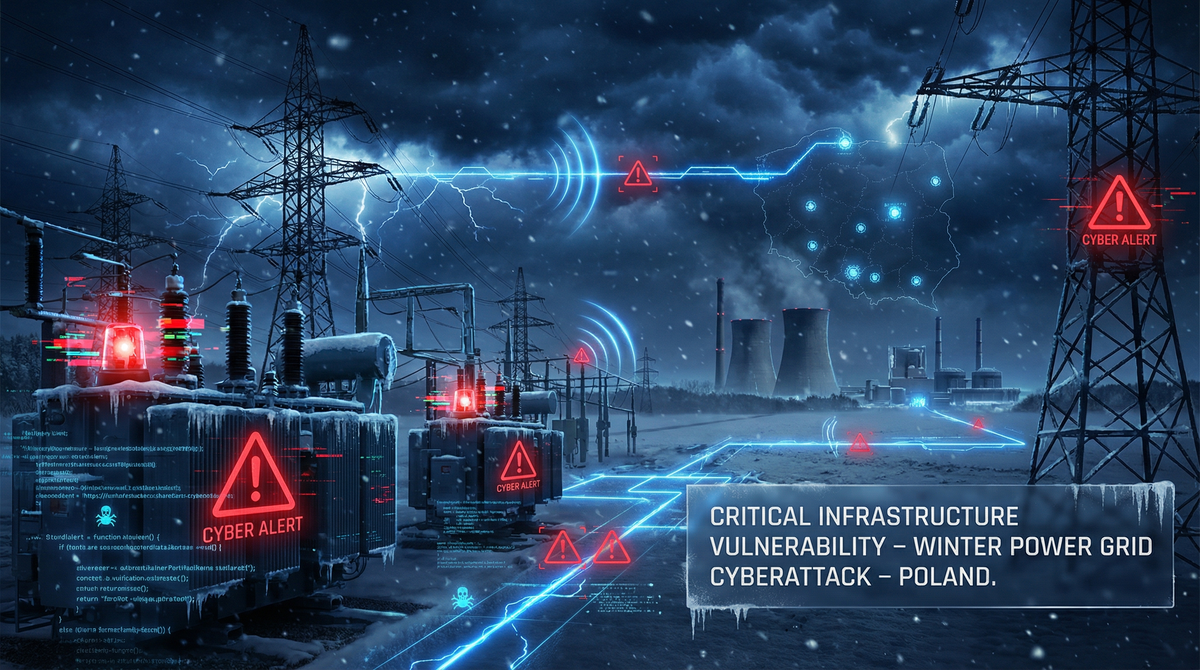
In the depths of a Polish winter, Russian military intelligence orchestrated one of the most significant cyberattacks on European critical infrastructure in a decade. On December 29-30, 2025, approximately 30 distributed energy facilities across Poland fell victim to a coordinated wiper malware campaign attributed to Sandworm (also known as ELECTRUM), a threat group linked to Russia's GRU Unit 74455. While Polish authorities successfully thwarted the attack before it could cause widespread blackouts that could have affected 500,000 people, the incident marks a dangerous evolution in critical infrastructure targeting and a stark warning for power utilities worldwide.
Executive Summary
What Happened: Between December 29-30, 2025, sophisticated threat actors deployed DynoWiper malware across approximately 30 electrical generation and distribution facilities in Poland, targeting distributed energy resources (DERs) including wind farms, solar installations, and combined heat and power (CHP) plants.
Who's Responsible: Cybersecurity firms ESET and Dragos attribute the attack with medium-to-moderate confidence to Sandworm (ELECTRUM), a Russian military intelligence unit notorious for the 2015 Ukraine power grid attack that left 230,000 without power and the devastating 2017 NotPetya campaign that caused over $10 billion in global damages.
The Threat: Attackers compromised Remote Terminal Units (RTUs), network infrastructure, and communications systems that provide operational visibility and control capabilities for distributed generation assets. The deployment of wiper malware demonstrates destructive intent—not espionage—aimed at rendering systems inoperable during winter's peak energy demand.
Why It Matters: This represents the first coordinated, large-scale attack specifically targeting distributed energy resources. As the global energy transition drives explosive growth in renewable and distributed generation, this attack exposes critical security gaps in infrastructure that receives significantly less cybersecurity investment than traditional centralized power plants—yet is equally vital to grid stability.
The Timing: The attack occurred almost exactly 10 years after Sandworm's historic December 2015 attack on Ukraine's power grid, suggesting deliberate symbolic timing. Conducting destructive infrastructure attacks during winter, when heating failures can prove lethal, represents what cybersecurity experts describe as "potentially lethal to the civilian population."
Key Recommendations: Power utilities and critical infrastructure operators must immediately prioritize OT-specific threat detection, implement Purdue Model network segmentation, secure internet-exposed RTUs and SCADA systems, develop offline recovery capabilities, and prepare for mandatory incident reporting under emerging regulations like CIRCIA and NIS2.
Attack Timeline and Discovery
Initial Compromise: December 29-30, 2025
The attack unfolded during one of the coldest periods of Poland's winter, when energy demand peaks and any disruption to heating or power systems poses genuine threats to public safety. Threat actors simultaneously targeted multiple facilities across Poland's electrical generation and distribution infrastructure:
- Two combined heat and power (CHP) plants that provide both electricity and heating to local populations
- Wind farm installations contributing renewable energy to the national grid
- Solar photovoltaic facilities with grid-connected generation capabilities
- Renewable energy management systems that coordinate distributed generation sources
According to CERT Polska, which led the investigation and response efforts, attackers successfully compromised approximately 30 sites, gaining access to operational technology systems that manage energy production and distribution.
Government Disclosure: January 13-14, 2026
Polish Prime Minister Donald Tusk briefed government leaders on January 14, 2026, revealing details of the sophisticated cyber assault. In a subsequent press conference, Tusk stated that Poland had "successfully defended itself from the breach" and emphasized that "at no point was critical infrastructure threatened, meaning the transmission networks and everything that determines the safety of the entire system."
Energy Minister Milosz Motyka characterized the December attack as "the strongest attack on the energy infrastructure in years," acknowledging both the severity of the threat and the effectiveness of Poland's defensive response.
The Polish government's transparency in disclosing the attack—while emphasizing that defensive measures prevented operational impact—demonstrates a maturing approach to critical infrastructure cyber incidents. This openness contrasts sharply with the secrecy that often surrounds such events and enables the broader security community to learn from the attack patterns and defensive successes.
Attribution and Public Analysis: January 24-28, 2026
On January 24, 2026, Slovak cybersecurity firm ESET publicly disclosed technical analysis of the malware used in the attack, which they designated "DynoWiper." ESET attributed the campaign "with medium confidence" to Sandworm based on tactics, techniques, and procedures (TTPs) consistent with previous Sandworm wiper incidents in Ukraine.
Robert Lipovsky, ESET's principal threat intelligence researcher, told journalists that "pulling off a disruptive cyberattack against the Polish energy sector is a big deal," noting that the operation is "unprecedented" in Poland, where previous cyberattacks were not disruptive in nature or intent.
Industrial control systems security firm Dragos, actively involved in incident response for one of the affected facilities, published its own analysis confirming "with moderate confidence" that the threat group ELECTRUM—which Dragos tracks separately but acknowledges exhibits "technical and operational overlaps with Sandworm"—was responsible for the coordinated campaign.
Technical Analysis: Anatomy of a Distributed Energy Attack
DynoWiper: Destructive Malware Designed for Disruption
The centerpiece of the attack was a previously unknown data-wiping malware that ESET designated "DynoWiper" (detected as Win32/KillFiles.NMO, SHA-1 hash: 4EC3C90846AF6B79EE1A5188EEFA3FD21F6D4CF6).
What is a Wiper? Data wipers represent the most destructive category of malware. Unlike ransomware, which encrypts data for financial extortion while theoretically preserving recovery options, wipers are designed purely for sabotage. They systematically iterate through filesystems, deleting or overwriting critical files, rendering operating systems unusable and forcing complete rebuilds from backups or fresh installations.
Target Systems: According to ESET's analysis, DynoWiper was aimed at IT systems that would have been critical for recovery operations if an outage occurred. While the wiper did not directly target operational technology (OT) systems that control grid operations, destroying IT systems would have severely hampered restoration efforts, extended outage duration, and complicated coordination between facilities and grid operators.
This targeting strategy reveals sophisticated understanding of critical infrastructure operations: attackers recognized that even if OT systems continue operating in degraded modes, destroying the IT systems needed for monitoring, diagnostics, and coordinated recovery could transform a manageable incident into a prolonged crisis.
Limited Technical Disclosure: As of this writing, neither ESET nor other security researchers have published detailed reverse-engineering analysis of DynoWiper. The malware has not appeared in public malware repositories like VirusTotal, suggesting that samples remain tightly controlled to prevent adversary adaptation. This responsible disclosure approach prioritizes defender remediation over public technical curiosity.
Compromising the Distributed Edge: RTUs and Network Infrastructure
Beyond the wiper malware itself, the attack's most significant aspect was how attackers achieved access to operational technology systems across multiple geographically distributed sites.
Remote Terminal Units (RTUs): RTUs serve as the critical bridge between physical equipment (generators, transformers, switchgear) and centralized control systems. These field devices:
- Monitor equipment status, voltage, frequency, and environmental conditions
- Execute commands from control centers to adjust generation output or switch equipment
- Provide telemetry data that enables grid operators to maintain system balance and stability
- Often run embedded operating systems with limited security capabilities
Dragos confirmed that attackers successfully compromised RTUs at multiple sites, demonstrating knowledge that goes beyond exploiting generic vulnerabilities: "Taking over these devices requires capabilities beyond simply understanding their technical flaws. It requires knowledge of their specific implementation."
Network and Communications Infrastructure: In addition to RTUs, attackers targeted network devices and communications systems that facilitate telemetry and control between distributed sites and centralized control centers. These systems typically include:
- Industrial routers and switches connecting field devices to corporate networks
- VPN concentrators enabling remote access for maintenance and monitoring
- Serial-to-Ethernet converters bridging legacy protocols to modern networks
- Cellular gateways providing connectivity to remote sites without wired infrastructure
Attack Vectors and Access Methods: While specific initial access vectors remain undisclosed to protect operational security, Dragos identified several patterns consistent with how attackers achieved widespread compromise:
- Internet-Exposed Devices: Many distributed energy sites deploy RTUs and network equipment with direct internet connectivity to enable remote monitoring and management. These devices often lack robust authentication, run outdated firmware, or have known vulnerabilities that defenders have failed to patch due to operational constraints.
- Vulnerability Exploitation: Attackers demonstrated strong understanding of common vulnerabilities in widely-deployed industrial devices, enabling them to systematically exploit similar configurations across multiple sites.
- Misconfigurations: Default credentials, inadequate access controls, and improperly configured VPN tunnels provided entry points that attackers could identify and exploit at scale.
- Standardized Deployments: The very efficiency that makes distributed energy resources cost-effective—standardized configurations deployed across dozens of sites—became a liability. Once attackers mapped the configuration and operational patterns at one site, they could systematically replicate their attack across others.
Operational Access: According to Dragos, "The compromised systems included Remote Terminal Units (RTUs) that manage site operations, network devices that facilitate telemetry and control, and communications infrastructure connecting sites to control centers."
While the attack did not achieve the coordinated operational impact seen in previous ELECTRUM operations against Ukraine, it demonstrated the adversary's ability to access OT systems at scale across distributed infrastructure. The nature of the access achieved represents the type of foothold that could enable operational impacts if attackers develop deeper knowledge of specific site configurations or achieve similar access across even larger numbers of sites simultaneously.
The Distributed Energy Resources (DER) Threat Surface
This attack marks a watershed moment in critical infrastructure security because it specifically targets distributed energy resources—a rapidly growing segment of modern power grids that has historically received far less security attention than traditional centralized generation.
What Makes DERs Different?
Traditional power grids relied on a relatively small number of large, centralized power plants (coal, nuclear, natural gas) that fed energy through high-voltage transmission systems to distribution networks serving end users. This model meant that critical assets were concentrated in a few dozen well-protected facilities with dedicated security teams and substantial budgets.
Distributed energy resources fundamentally change this equation:
- Scale: Instead of dozens of major power plants, modern grids integrate hundreds or thousands of smaller generation sites (wind farms, solar arrays, small hydro, biogas, battery storage)
- Geography: DERs span vast geographic areas, making physical security and network monitoring exponentially more challenging
- Economics: Built with tighter cost margins to compete economically, DERs often lack the security budgets of traditional power plants
- Connectivity: Extensive remote connectivity is essential for operations, maintenance, and grid coordination—but every connection is a potential attack vector
- Regulations: Many sites fall below regulatory thresholds designed for larger facilities, exempting them from mandatory security controls
Dragos emphasized the significance: "The Poland attack is significant because of the coordinated nature of the attacks across numerous sites simultaneously and the demonstrated intent of a sophisticated adversary to systematically target this infrastructure."
Why Attackers Target DERs:
From a threat actor's perspective, distributed energy resources offer compelling advantages:
- Softer Targets: Lower security investment means more vulnerable systems
- Force Multiplier: Compromising 30 small sites can impact grid stability as much as attacking one major plant
- Detection Evasion: Attacks distributed across many sites may avoid triggering centralized security monitoring designed for major facilities
- Standardization: Similar configurations across sites mean one exploit can compromise many targets
- Growing Dependence: As renewable energy grows, DERs become increasingly critical to grid stability
Attribution: The Sandworm Connection
GRU Unit 74455: Russia's Infrastructure Saboteurs
Sandworm (also tracked as ELECTRUM, APT44, UAC-0113, and Seashell Blizzard by various security firms and governments) represents one of the most destructive and persistent threat actors in modern cyber warfare. The group is widely attributed to Russia's Main Intelligence Directorate (GRU) Military Unit 74455, operating with apparent state sanction to conduct disruptive and destructive campaigns against adversary nations.
Attribution Confidence: Both ESET and Dragos attribute the Poland attack to Sandworm/ELECTRUM with "medium" to "moderate" confidence—intelligence community terminology indicating that the assessment is credibly sourced and plausible, but not yet supported by conclusive technical evidence or signals intelligence. This confidence level typically means that:
- Tactics, techniques, and procedures (TTPs) closely match known Sandworm operations
- Target selection aligns with Russian strategic interests
- Malware characteristics share similarities with previous Sandworm tools
- However, definitive attribution markers (such as unique code strings or infrastructure) have not been identified
The Polish government was more direct in its attribution. Prime Minister Donald Tusk stated without qualification: "Everything indicates that these attacks were prepared by groups directly linked to the Russian services."
Historical Context: A Decade of Infrastructure Warfare
Understanding the Poland attack requires examining Sandworm's documented history of critical infrastructure targeting:
2015: Ukraine Power Grid Attack (BlackEnergy/Industroyer)
On December 23, 2015, approximately 230,000 residents of Ukraine's Ivano-Frankivsk region lost power in what security researchers widely recognize as the first confirmed malware-caused power outage. Sandworm attackers:
- Conducted sophisticated spear-phishing campaigns targeting utility employees
- Compromised corporate IT networks and pivoted to OT systems
- Used BlackEnergy malware for initial access and KillDisk wiper for disruption
- Manually operated circuit breakers via compromised SCADA systems to cut power
- Wiped operator workstations to delay restoration
- Conducted telephone denial-of-service attacks against customer service lines to prevent outage reporting
The attack demonstrated unprecedented operational understanding of electrical grid operations, industrial control protocols (specifically IEC 60870-5-104), and the integration between IT and OT systems in modern utilities.
2016: Ukraine Transmission Station Attack (Industroyer/CrashOverride)
Exactly one year later, on December 17, 2016, Sandworm struck again—this time deploying Industroyer (also known as CrashOverride), the most sophisticated ICS-focused malware ever discovered. Unlike BlackEnergy, which relied on attackers manually operating compromised systems, Industroyer was purpose-built malware that:
- Automated attacks against ICS protocols including IEC 60870-5-101, IEC 60870-5-104, IEC 61850, and OPC DA
- Targeted a transmission-level substation (higher voltage than 2015's distribution-level attack)
- Included wiper components to destroy evidence and complicate recovery
- Demonstrated the capability for autonomous, repeatable attacks without human intervention
While the 2016 attack caused a shorter outage affecting fewer people than 2015, it represented a qualitative escalation in capability: automated malware that could theoretically be replicated across multiple sites simultaneously.
2017: NotPetya - The $10 Billion "Wiper Disguised as Ransomware"
On June 27, 2017, Sandworm unleashed what would become the most financially destructive cyberattack in history. NotPetya initially appeared to be ransomware targeting Ukrainian businesses through compromised accounting software (MeDoc), but analysis quickly revealed its true nature: a wiper designed to inflict maximum economic damage while providing a fig leaf of deniability.
NotPetya:
- Spread globally, affecting major multinational corporations including Maersk, FedEx, Merck, and Mondelez
- Caused estimated damages exceeding $10 billion
- Used the EternalBlue exploit (leaked from the NSA) and credential harvesting for lateral movement
- Encrypted master boot records and file tables in ways that made recovery impossible, even if victims paid ransom
- Demonstrated Russia's willingness to cause massive collateral damage to achieve strategic objectives
The U.S. government formally attributed NotPetya to Russia's military in February 2018, and the U.K. government assessed that NotPetya was "almost certainly" a Russian military attack.
2022-2025: Ukraine Wartime Campaigns
Following Russia's 2022 invasion of Ukraine, Sandworm has been linked to numerous attacks on Ukrainian infrastructure:
- April 2022: Industroyer2, an updated version of the 2016 malware, targeted Ukrainian energy infrastructure alongside new wiper variants
- June 2025: Data-wiping attacks on Ukraine's grain export sector during critical harvest season
- September 2025: Destructive campaigns against Ukrainian education and government systems
This sustained pattern of infrastructure targeting during armed conflict represents the integration of cyber warfare into conventional military operations.
Why Poland? Geopolitical Context
Poland's prominent role as a logistics hub and staunch supporter of Ukraine makes it a natural target for Russian hybrid warfare:
Strategic Significance:
- Poland serves as the primary transit route for Western military aid to Ukraine
- Polish territory hosts NATO forward-deployed forces and missile defense installations
- Poland has accepted over 1 million Ukrainian refugees since 2022
- Polish government maintains one of the most hawkish anti-Russian positions in the EU
Symbolic Timing: The December 29-30, 2025 attack occurred almost exactly 10 years after the December 23, 2015 Ukraine power grid attack. ESET researchers specifically noted this timing: "ESET believes the DynoWiper attack on Poland was timed to mark the ten-year anniversary of Sandworm's 2015 attack on Ukraine's energy sector."
This deliberate anniversary timing serves multiple purposes:
- Demonstrates continued capability and intent
- Sends a message to NATO allies supporting Ukraine
- Reinforces Russia's willingness to target critical civilian infrastructure
- Tests defensive responses and resilience of European critical infrastructure
Escalation Calculus: Attacking Poland—a NATO member state—represents a potential escalation from targeting Ukraine, a non-NATO nation. However, the use of cyber attacks provides plausible deniability and operates below the threshold that would clearly trigger Article 5 collective defense obligations. This ambiguity is precisely what makes cyber operations attractive for hybrid warfare.
The Nightmare Scenario That Didn't Happen (This Time)
What Could Have Occurred
While Polish authorities successfully thwarted the attack before it caused operational disruption, understanding the potential consequences provides critical context for why this incident demands urgent attention from critical infrastructure operators worldwide.
Immediate Operational Impact:
If attackers had succeeded in their apparent objectives, the consequences could have included:
- Loss of Distributed Generation: Simultaneously disabling 30 distributed energy facilities would have removed significant generation capacity from Poland's grid, requiring rapid adjustments by grid operators to maintain frequency stability and prevent cascading failures.
- Communications Blackout: Wiping IT systems and disabling RTUs would have eliminated visibility into facility status, preventing operators from assessing conditions, coordinating response, or issuing control commands to remaining assets.
- Extended Recovery: Unlike simple equipment failures that can be repaired or replaced, recovering from wiper attacks requires forensic analysis, system rebuilding from clean backups (if available), verification of integrity, and cautious restoration—processes that can take days or weeks.
- Manual Operation Requirements: With automated control systems compromised, operators would be forced to deploy personnel to individual sites for manual operation—challenging when dealing with 30 geographically dispersed facilities simultaneously during a crisis.
Human Impact in Winter:
Dragos emphasized the potentially lethal timing: "An attack on a power grid at any time is irresponsible, but to carry it out in the depths of winter is potentially lethal to the civilian population dependent on it. It is unfortunate that those who attack these systems appear to deliberately choose timing that maximizes impact on civilian populations."
During Polish winter, when temperatures regularly drop below freezing:
- Electric heating failures can cause hypothermia and death, particularly among elderly and vulnerable populations
- Combined heat and power plants provide both electricity and heating to apartment buildings and district heating systems
- Emergency response is complicated by winter weather conditions
- Hospitals, emergency services, and vulnerable populations face amplified risks
Polish authorities stated that a successful attack could have affected power delivery to 500,000 people—a population roughly equivalent to Gdańsk, Poland's sixth-largest city.
Why the Attack Failed: Defensive Successes
While public reporting has not disclosed specific defensive measures that prevented the attack from achieving operational impact, several factors likely contributed to Poland's successful defense:
Network Segmentation: Properly implemented network segmentation following the Purdue Model (separating IT from OT networks and creating security zones based on function and risk) would prevent malware from spreading from initial compromise points to critical control systems.
Detection Capabilities: CERT Polska's ability to identify the attack relatively quickly (within the December 29-30 timeframe rather than months later) suggests effective threat detection capabilities, potentially including:
- Network traffic analysis identifying anomalous communications
- Endpoint detection and response (EDR) tools identifying malicious processes
- Security operations center (SOC) monitoring for indicators of compromise
- Threat intelligence integration flagging known Sandworm TTPs
Incident Response Preparedness: The coordinated response involving CERT Polska, affected utilities, government leadership, and international partners (including Dragos) indicates that incident response procedures, communication channels, and escalation protocols were well-established and regularly tested.
Backup and Recovery: Having secure, offline backups and tested recovery procedures would enable rapid restoration if systems were wiped, limiting the window of vulnerability.
Human Expertise: Ultimately, cyber defense requires skilled professionals who can recognize attacks, make rapid decisions, and coordinate complex responses under pressure. Poland's investment in cybersecurity talent and capacity-building appears to have paid dividends.
Important Caveat: We should not assume that defensive successes in Poland will automatically translate to other environments. Success in this case may have resulted from:
- Specific implementation details at targeted sites
- Attacker mistakes or incomplete intelligence on target networks
- Fortunate timing (detection before final payload execution)
- Unknown defensive measures that remain classified
The threat remains real, and other utilities may not be as fortunate.
Implications for Global Critical Infrastructure
The Distributed Energy Transition Creates New Vulnerabilities
The Poland attack arrives at a pivotal moment in global energy transformation. Governments worldwide are aggressively promoting renewable energy and distributed generation to meet climate goals:
Growth Projections:
- International Energy Agency (IEA) projects renewable energy capacity to grow by 50% between 2024-2029
- Distributed energy resources could account for 30-40% of total generation capacity in advanced economies by 2030
- European Union's REPowerEU plan accelerates renewable deployment to reduce dependence on Russian fossil fuels
Security Implications:
This rapid expansion creates a perfect storm of cybersecurity challenges:
- Scale Overwhelms Traditional Security Models: Security approaches designed for protecting dozens of major power plants cannot scale to thousands of distributed sites without fundamental architectural changes.
- Speed Prioritizes Deployment Over Security: Aggressive renewable energy targets create pressure to deploy systems quickly, often shortcutting security reviews and proper configuration.
- Supply Chain Risks: Distributed energy equipment often comes from diverse global suppliers with varying security standards, creating opportunities for supply chain compromises.
- Skills Gap: The energy sector faces severe shortages of cybersecurity professionals with OT/ICS expertise. This gap is even more pronounced for distributed energy operators who may lack dedicated security staff.
- Legacy Security Assumptions: Many renewable energy deployments assume that geographic dispersion and small individual capacity provide inherent security ("why would attackers target a single wind turbine?"). The Poland attack demolishes this assumption by demonstrating that coordinated attacks across multiple small sites can achieve strategic impact.
Evolution of Adversary Tactics
Sandworm's targeting of distributed energy resources represents tactical evolution based on defender vulnerabilities:
Previous Focus: Centralized control centers and transmission substations
New Focus: Distributed generation at the grid edge
Advantage to Attackers: More targets, softer security, force multiplication
This evolution mirrors broader trends in cyber warfare: as defenders harden traditional targets, adversaries seek alternative attack surfaces that can achieve similar strategic effects with lower barriers to entry.
Predictable Next Steps:
Based on threat actor behavior patterns, we should anticipate:
- Scaling: If 30 sites created concern, attackers will attempt to compromise 300 in future operations
- Automation: Manual compromise of individual sites doesn't scale; expect automated exploitation frameworks targeting common DER configurations
- Coordination: Future attacks will likely attempt simultaneous impact across compromised sites to maximize grid disruption before defenders can react
- Sophistication: As defenders improve, attackers will develop more sophisticated implants with deeper understanding of specific equipment types and operational procedures
NATO and Collective Defense Challenges
The attack on Poland—a NATO member state—raises complex questions about collective defense in the cyber domain:
Article 5 Ambiguity: NATO's collective defense clause states that an attack on one member is an attack on all. But cyber attacks exist in gray zones:
- Attribution is rarely certain enough to justify kinetic military response
- Impacts may be limited or successfully mitigated, making proportional response unclear
- Cyber operations below the threshold of armed attack may not trigger Article 5 at all
Deterrence Challenges: Traditional deterrence relies on credible threats of retaliation. In cyber operations:
- Attribution delays undermine immediate response
- Proportional cyber responses may lack visible impact
- Escalation to kinetic responses risks uncontrolled conflict
EU NIS2 Directive: The European Union's revised Network and Information Security (NIS2) Directive, which entered into force in January 2023 and requires member state implementation by October 2024, imposes strict cybersecurity requirements on critical infrastructure including energy:
- Risk management measures appropriate to threats
- Incident reporting within 24 hours of awareness
- Business continuity and crisis management procedures
- Supply chain security
- Substantial penalties for non-compliance (up to €10 million or 2% of global turnover)
Poland's response to this attack will likely influence how NIS2 requirements are interpreted and enforced across the EU.
Technical Defensive Framework for Power Utilities
Critical infrastructure operators—particularly those managing distributed energy resources—must urgently implement comprehensive defensive measures. The following framework synthesizes recommendations from Dragos, CISA, NERC CIP standards, and incident response best practices.
1. Network Architecture and Segmentation (Purdue Model)
The Purdue Model (also called the Purdue Enterprise Reference Architecture) provides a hierarchical framework for industrial control system network segmentation:
Level 0 (Physical Process): Sensors, actuators, physical equipment
Level 1 (Basic Control): PLCs, RTUs, IEDs, DCS controllers
Level 2 (Supervisory Control): SCADA, HMI, supervisory systems
Level 3 (Operations Management): Historians, MES, asset management
Level 4 (Business Logistics): ERP, business systems
Level 5 (Enterprise Network): Corporate IT, email, internet access
Critical Implementation Requirements:
- Unidirectional Data Flows: Data should flow from Level 0-1-2 upward to business systems, but control commands should only flow downward through authenticated channels
- DMZs Between Levels: Demilitarized zones with firewalls, data diodes, or secure gateways between IT (Levels 3-5) and OT (Levels 0-2)
- No Direct Internet Connectivity: OT systems should never be directly accessible from the internet; remote access must traverse secure jump hosts with multi-factor authentication
- Separate OT Network Infrastructure: Dedicated switches, routers, and wireless access points for OT networks, not shared with IT
For Distributed Energy Resources:
Traditional Purdue Model implementation assumes centralized facilities with physical security perimeters. DERs require adaptations:
- Site-level Segmentation: Even small remote sites should implement basic segmentation separating RTUs from maintenance networks
- Secure Remote Access: VPN concentrators with certificate-based authentication, not just passwords
- Encrypted Communications: All telemetry and control communications should use encrypted protocols (TLS, IPSec, or OT-specific encryption)
- Cellular Network Isolation: If using cellular connectivity, implement private APNs or VPN-on-boot configurations
2. Asset Inventory and Visibility
You Cannot Protect What You Cannot See
Many organizations lack complete inventories of OT assets, particularly across distributed sites. Essential visibility requirements include:
- Passive Network Monitoring: Deploy passive network monitoring tools (like Dragos Platform, Nozomi Networks, or Claroty) that can identify all devices communicating on OT networks without requiring agents or active scanning
- Asset Attributes: Document manufacturer, model, firmware version, network addresses, communication protocols, and operational purpose for every OT device
- Configuration Baselines: Establish and monitor known-good configurations for RTUs, PLCs, and network devices; alert on unauthorized changes
- Communication Patterns: Map normal communication flows between devices to identify anomalous connections
For DERs: Standardized site deployments can simplify inventory management—create master templates that document expected assets and configurations for each site type, then verify actual deployments match templates.
3. Threat Detection Specific to OT Environments
Traditional IT security tools (antivirus, EDR, SIEM) often fail in OT environments due to:
- Legacy operating systems that can't run modern security agents
- Operational constraints prohibiting software installation on controllers
- Network protocols and attack patterns unfamiliar to IT-focused detection logic
OT-Specific Detection Capabilities:
- Protocol Anomaly Detection: Monitor ICS protocols (Modbus, DNP3, IEC 60870-5-104, IEC 61850) for unauthorized commands, configuration changes, or unusual patterns
- Behavioral Analytics: Establish baselines for normal RTU communications, generation output patterns, and maintenance activities; flag deviations
- Firmware Integrity Monitoring: Detect unauthorized firmware changes on RTUs and PLCs
- Threat Intelligence Integration: Incorporate ICS-CERT advisories, Sandworm/ELECTRUM indicators of compromise, and critical infrastructure threat intelligence
Detection Use Cases Relevant to Poland Attack:
- RTU login attempts from unexpected source IPs
- File deletion patterns consistent with wiper malware on HMI or engineering workstations
- Simultaneous communication anomalies across multiple sites (indicating coordinated attack)
- Network scanning activity identifying OT assets
- Credential brute-forcing against RTU management interfaces
4. Access Control and Authentication
Principle of Least Privilege: Grant users and systems only the minimum access required for their operational role.
Critical Controls:
- Multi-Factor Authentication (MFA): Required for all remote access, privileged accounts, and access to OT systems from IT networks
- Role-Based Access Control (RBAC): Define roles (grid operator, maintenance technician, cybersecurity analyst) with specific permissions; assign users to roles, not individual permissions
- Privileged Access Management (PAM): Store, rotate, and audit privileged credentials (RTU admin passwords, engineering workstation credentials) in vaults; require approval workflows for access
- Service Accounts: Prohibit shared "admin" accounts; create specific service accounts for automated systems with credentials that rotate regularly
- Network Access Control (NAC): Authenticate and authorize devices before allowing network access; quarantine unknown or non-compliant devices
For DERs: With numerous distributed sites, centralized identity and access management becomes critical. Implement:
- Central authentication (RADIUS, TACACS+, or LDAP) so credential changes propagate across all sites
- Automated account lifecycle management (provision access when technicians are hired, revoke upon termination)
- Just-in-time privileged access for maintenance activities rather than standing administrative permissions
5. Patch Management and Vulnerability Remediation (The ICS Challenge)
Patching OT systems is notoriously difficult:
- Vendors may not release patches for legacy equipment
- Operational constraints often prohibit downtime required for patching
- Patches can introduce instability in safety-critical systems
- Change management processes move slower than IT patch cycles
Pragmatic Approach:
- Risk-Based Prioritization: Not all vulnerabilities require immediate patching; prioritize based on exploitability, exposure (internet-facing vs. internal), and criticality
- Compensating Controls: When patching is impossible, implement network-based protections (firewall rules, IDS signatures) to prevent exploitation
- Virtual Patching: Network security tools can block exploit attempts even when vulnerable systems remain unpatched
- Maintenance Windows: Schedule regular maintenance windows for critical updates; test patches in lab environments before production deployment
- Asset Retirement: Sometimes the best "patch" is replacing obsolete equipment that vendors no longer support
Vulnerability Sources:
- ICS-CERT advisories (https://www.cisa.gov/ics)
- Vendor security bulletins
- CVSS scores with ICS-specific context (a "critical" IT vulnerability may be low risk in air-gapped OT)
6. Backup, Recovery, and Resilience
The Poland attack specifically deployed wiper malware designed to destroy systems and complicate recovery. Comprehensive backup strategies are essential:
Backup Requirements:
- Offline Backups: Critical system images, configurations, and data must exist in offline, air-gapped storage that malware cannot reach via network connections
- Configuration Backups: RTU configurations, SCADA databases, PLC ladder logic, HMI projects, network device configurations
- Testing: Regularly test backup restoration procedures; backup integrity means nothing if restoration fails during crisis
- Versioning: Maintain multiple backup versions in case current backups are already compromised when attack is discovered
Recovery Procedures:
- Incident Response Playbooks: Document step-by-step procedures for recovering from wiper attacks, ransomware, or OT system compromises
- Communications: Maintain out-of-band communication channels (satellite phones, separate radio networks) for crisis coordination if primary networks are compromised
- Manual Operation: Train operators in manual control procedures and maintain documentation for operating critical equipment without automation
- Forensic Preservation: Balance urgency of restoration with need to preserve evidence for attribution and investigation
Resilience Architecture:
- Geographic Diversity: Avoid single points of failure; distribute control capabilities across multiple sites
- Redundant Communications: Multiple communication paths (fiber, microwave, cellular, satellite) so attacks on one pathway don't eliminate visibility
- Graceful Degradation: Systems should fail to safe states and continue critical functions in degraded modes rather than complete failure
7. Supply Chain Security
Distributed energy resources often involve complex supply chains with equipment from multiple vendors, integrators, and service providers:
Vendor Risk Management:
- Security Requirements in Procurement: RFPs should mandate specific security capabilities (encrypted communications, secure boot, patch support duration)
- Vendor Assessment: Evaluate vendor cybersecurity practices, incident history, and disclosure policies before procurement
- Software Composition Analysis: Understand open-source components and third-party libraries in vendor products that may contain vulnerabilities
- Contractual Security Obligations: Contracts should require vendors to notify customers of vulnerabilities, provide patches within defined timeframes, and support incident investigations
Integration and Installation:
- Secure Configuration Baselines: Vendors and integrators should deliver systems with secure default configurations, not "get it working first, secure it later"
- Acceptance Testing: Include security verification in system acceptance (vulnerability scanning, configuration review, penetration testing where appropriate)
- Documentation: Require comprehensive as-built documentation including network diagrams, credentials, and configuration settings
Third-Party Access:
- Principle of Least Privilege: Vendors and contractors should have access only to systems they need to support, not broad network access
- Time-Limited Access: Grant vendor access for specific maintenance windows, then revoke
- Monitoring: All third-party access should be logged and monitored; alert on unusual activities
8. Insider Threat and Physical Security
While nation-state threat actors dominate headlines, insider threats—whether malicious employees or compromised credentials—pose significant risks:
Personnel Security:
- Background Checks: Appropriate vetting for personnel with privileged access to critical systems
- Separation of Duties: No single individual should be able to make critical changes without review or approval
- Behavioral Monitoring: Unusual access patterns, large data downloads, or attempts to access unauthorized systems should trigger investigation
- Offboarding: Immediately revoke all access when employees leave organization
Physical Security:
Distributed sites present physical security challenges:
- Access Control: Locked enclosures, fencing, alarms for site intrusions
- Video Surveillance: Cameras monitoring site access and equipment areas
- Tamper Detection: Alerts if cabinet doors are opened or equipment is disconnected
- Serial Port Security: Physical security locks on serial console ports where attackers could gain direct access to RTU command lines
9. Incident Response and Threat Hunting
Incident Response Plan:
- Defined Roles: RACI matrix documenting who is Responsible, Accountable, Consulted, and Informed during incidents
- Communication Procedures: Who to notify (internal leadership, regulators, law enforcement, customers), when, and through what channels
- Technical Procedures: Isolation procedures, forensic collection, system recovery steps
- Regular Exercises: Tabletop exercises and technical simulations at least annually
Proactive Threat Hunting:
Don't wait for automated alerts. Regularly search for:
- Indicators of compromise (IOCs) from recent critical infrastructure attacks
- Unusual RTU login times or locations
- Persistence mechanisms (scheduled tasks, autostart registry keys, malicious services)
- Living-off-the-land techniques (abuse of legitimate administrative tools like PsExec, PowerShell, WMI)
Information Sharing:
- Participate in industry ISACs (E-ISAC for electricity sector)
- Share anonymized incident information to help industry learn
- Consume threat intelligence from CISA, FBI, industry peers
Regulatory and Compliance Landscape
The Poland attack highlights the growing regulatory pressure on critical infrastructure operators to demonstrate effective cybersecurity:
United States: CIRCIA and NERC CIP
CIRCIA (Cyber Incident Reporting for Critical Infrastructure Act): CISA expects to publish final rules in May 2026 requiring critical infrastructure entities across 16 sectors to report:
- Substantial cyber incidents within 72 hours
- Ransomware payments within 24 hours
Failure to report carries substantial penalties and regulatory scrutiny.
For more details: See our comprehensive analysis: CIRCIA Final Rule Expected May 2026: Critical Infrastructure Faces Mandatory Reporting
NERC CIP (Critical Infrastructure Protection) Standards: Electric utilities in North America must comply with mandatory CIP standards covering:
- Electronic security perimeters
- Personnel training
- Incident response
- Recovery planning
- Supply chain risk management
Many smaller distributed generation facilities currently fall below NERC CIP thresholds, but the Poland attack demonstrates that aggregate DER capacity can impact bulk electric system reliability, potentially triggering regulatory expansion.
European Union: NIS2 Directive
The revised Network and Information Security Directive (NIS2) became enforceable across EU member states in October 2024, imposing stringent requirements:
Covered Entities: Energy (including electricity, oil, gas), transport, banking, healthcare, digital infrastructure, water, wastewater
Requirements:
- Risk management measures
- Incident handling capabilities
- Business continuity plans
- Supply chain security
- Security training
- Encryption and access controls
Reporting: Entities must notify national authorities of significant incidents within 24 hours, with detailed reports following within 72 hours
Penalties: Up to €10 million or 2% of global annual turnover, whichever is higher
Poland's implementation of NIS2 likely influenced the country's effective response and transparent disclosure of the December attack.
Insurance Implications
Cyber insurance for critical infrastructure is evolving rapidly:
Underwriting Changes:
- Insurers increasingly require evidence of specific controls (MFA, network segmentation, offline backups) before offering coverage
- Exclusions for nation-state attacks and "acts of war" are common but legally ambiguous
- Critical infrastructure may face higher premiums or reduced coverage due to elevated risk
Claims Considerations:
- Detailed logging and documentation during incidents essential for claims processing
- Business interruption calculations complex when attack is thwarted before operational impact
- Third-party liability exposure if attack on your systems impacts interconnected entities
Strategic Recommendations for Energy Sector Leadership
For Power Utility CISOs and Security Executives
Immediate Actions (Next 30 Days):
- DER Security Assessment: Conduct comprehensive inventory and vulnerability assessment of all distributed energy resources, prioritizing internet-exposed systems and those with default or weak credentials
- Sandworm IOC Hunt: Search networks for indicators of compromise associated with Sandworm/ELECTRUM campaigns, including DynoWiper signatures shared by ESET and Dragos
- Segmentation Verification: Audit network segmentation between IT and OT, and between centralized control systems and distributed sites; identify and remediate unauthorized connection paths
- Backup Testing: Verify that offline backups exist for critical OT systems and test restoration procedures for at least one representative system
- Incident Response Readiness: Review and update incident response plans specifically addressing coordinated attacks across multiple distributed sites; conduct tabletop exercise simulating Poland attack scenario
Medium-Term Initiatives (Next 90 Days):
- OT-Specific Monitoring: Deploy or enhance OT network monitoring and threat detection capabilities, especially for distributed sites
- Access Control Hardening: Implement multi-factor authentication for all remote access and review privileged account management practices
- Third-Party Risk Assessment: Evaluate security practices of DER equipment vendors, system integrators, and maintenance contractors; address gaps through contractual requirements or additional controls
- Training and Awareness: Conduct specialized training for operations staff on recognizing and reporting potential cyber incidents; emphasize that unusual system behavior should be investigated, not dismissed
- Regulatory Compliance Verification: Ensure compliance with NERC CIP (North America) or NIS2 (Europe) requirements; address gaps before mandatory reporting deadlines
Strategic Long-Term Investments (Next 12 Months):
- Architecture Modernization: Develop roadmap for modernizing legacy OT systems that cannot support security controls; prioritize systems critical to safety and reliability
- Security Operations Capability: Build or enhance security operations center (SOC) with OT-specific expertise, threat intelligence, and incident response capabilities
- Resilience Engineering: Invest in redundant control capabilities, diverse communication paths, and manual operation procedures to maintain critical functions during cyber incidents
- Industry Collaboration: Actively participate in information sharing through E-ISAC, NERC, regional reliability organizations, and government partnerships
For Government and Regulatory Bodies
Expand Critical Infrastructure Security Requirements:
- Lower Regulatory Thresholds: Distributed energy resources below current NERC CIP thresholds collectively represent significant capacity; aggregate impact should trigger security requirements even if individual sites are small
- Security-by-Design Mandates: Require security features (encrypted communications, secure boot, authenticated firmware updates) in procurement specifications for DER equipment
- Funding and Incentives: Provide grants, tax incentives, or rate recovery mechanisms to offset security investment costs, particularly for smaller utilities and rural co-ops with limited budgets
Enhance Threat Intelligence Sharing:
- Classified-to-Unclassified Translation: Government intelligence agencies should rapidly declassify and share actionable threat intelligence with private sector critical infrastructure operators
- International Coordination: Coordinate attribution, sanctions, and defensive measures with allies (NATO, EU) to present unified response to infrastructure attacks
Incident Response Support:
- National Cyber Incident Response Teams: Enhance CERT capabilities to provide on-site incident response assistance to affected utilities
- Legal and Liability Protections: Clarify liability protections for utilities that disclose incidents and share information in good faith
For Technology Vendors and Integrators
Secure Product Development:
- Security Development Lifecycle: Integrate security requirements, threat modeling, and testing throughout product development
- Coordinated Vulnerability Disclosure: Establish and publicize processes for security researchers to report vulnerabilities responsibly
- Patch Support Commitments: Clearly communicate patch support duration and end-of-life timelines; provide migration paths before ending support
Secure Deployment Practices:
- Eliminate Default Credentials: Every device should ship with unique credentials or require credential setting during initial configuration
- Secure Defaults: Ship products in secure configurations; make insecure options opt-in, not default
- Security Documentation: Provide comprehensive hardening guides and security best practice documentation
The Road Ahead: Securing the Energy Transition
The Poland power grid attack should serve as an urgent wake-up call for the energy sector worldwide. As we transition to cleaner, more distributed energy systems to address climate change, we cannot afford to build insecure infrastructure that nation-state adversaries can easily compromise.
Key Takeaways
- Distributed Energy Resources Are Now Strategic Targets: The assumption that small, distributed sites are too insignificant to attack has been decisively disproven. Coordinated attacks across multiple DERs can achieve strategic impact comparable to attacking centralized generation.
- Wipers Demonstrate Destructive Intent: The use of wiper malware in Poland—following Sandworm's pattern in Ukraine—shows that objectives are disruption and destruction, not espionage or financial gain. Critical infrastructure must plan for worst-case scenarios.
- Winter Timing Is Deliberate: Conducting infrastructure attacks during periods when failures can cause maximum civilian harm is a conscious choice that elevates cyber operations from nuisance to potentially lethal threat.
- Defense Is Possible But Requires Investment: Poland's successful defense demonstrates that attacks can be thwarted with proper detection, segmentation, incident response, and coordination. But these capabilities require sustained investment and expertise.
- International Cooperation Is Essential: Critical infrastructure crosses borders (interconnected grids, shared vendors, transnational threat actors); effective defense requires information sharing and coordinated response among allies.
Unanswered Questions
Several critical questions remain as the investigation continues:
- Initial Access Vector: How did attackers initially compromise the first site? Spear-phishing? Exploitation of internet-exposed devices? Supply chain compromise? Understanding entry points is essential to preventing future incidents.
- Operational Intent: Did attackers attempt to issue commands to compromised RTUs to disrupt generation, or were they solely focused on deployment of wiper malware? Dragos noted that responders are still working to understand if commands were issued.
- Full Scope: Were there additional compromised sites beyond the ~30 publicly acknowledged? Could attackers maintain persistent access in systems that haven't been discovered?
- International Dimension: Were other countries' distributed energy resources similarly targeted? Poland's transparency in disclosure is commendable, but other nations may have faced similar attacks without public reporting.
Final Thoughts
Ten years after Sandworm demonstrated the ability to turn off lights in Ukraine, we face a sobering reality: the threat has not diminished—it has evolved and expanded. The rapid deployment of distributed energy resources, essential for addressing climate change, has created vast new attack surfaces that adversaries are actively exploiting.
The choice before energy sector leaders, government officials, and technology vendors is clear: invest proactively in security now, or reactively recover from devastating attacks later. Poland's successful defense proves that protection is achievable. But success requires treating cybersecurity not as a compliance checkbox or IT problem, but as a fundamental requirement for energy reliability and public safety.
The attackers will return. They will refine their techniques, expand their targeting, and attempt to achieve the operational impact they failed to accomplish in Poland. The question is whether we will use this warning to harden our defenses—or whether we will wait for the attack that doesn't get stopped in time.
Additional Resources
Official Sources and Advisories
- CERT Polska: Poland's Computer Emergency Response Team leading the investigation
- CISA ICS Advisories: https://www.cisa.gov/ics - U.S. government advisories on industrial control systems
- Dragos Intelligence Brief: "ELECTRUM: Cyber Attack on Poland's Electric System 2025" (requires registration)
- ESET Research: DynoWiper technical analysis and Sandworm attribution
- Polish Government Statement: Prime Minister's briefing on attack and defensive measures
Industry Organizations and Information Sharing
- E-ISAC (Electricity Information Sharing and Analysis Center): https://www.eisac.com/ - Primary threat intelligence sharing organization for North American electricity sector
- NERC (North American Electric Reliability Corporation): https://www.nerc.com/ - Reliability standards and guidance for bulk electric system
- ENISA (European Union Agency for Cybersecurity): https://www.enisa.europa.eu/ - EU cybersecurity guidance and threat landscape reports
Standards and Frameworks
- NERC CIP Standards: Mandatory cybersecurity requirements for bulk electric system in North America
- IEC 62443: International standards for industrial automation and control systems security
- NIST Cybersecurity Framework: Widely adopted framework for critical infrastructure risk management
- MITRE ATT&CK for ICS: Knowledge base of adversary tactics and techniques specific to industrial control systems