Seven Years Behind Bars: L3Harris Executive Peter Williams Sentenced for Selling Cyber Exploits to Russia

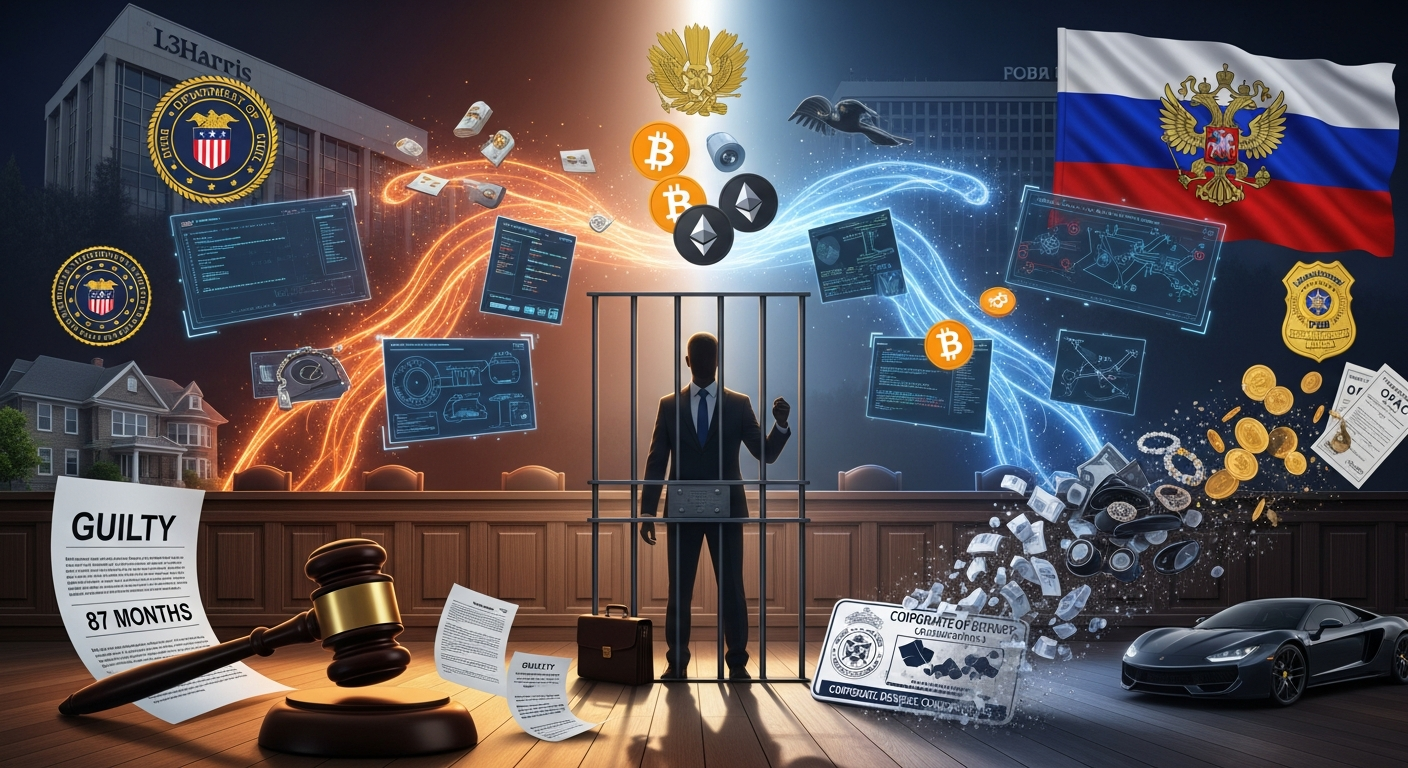
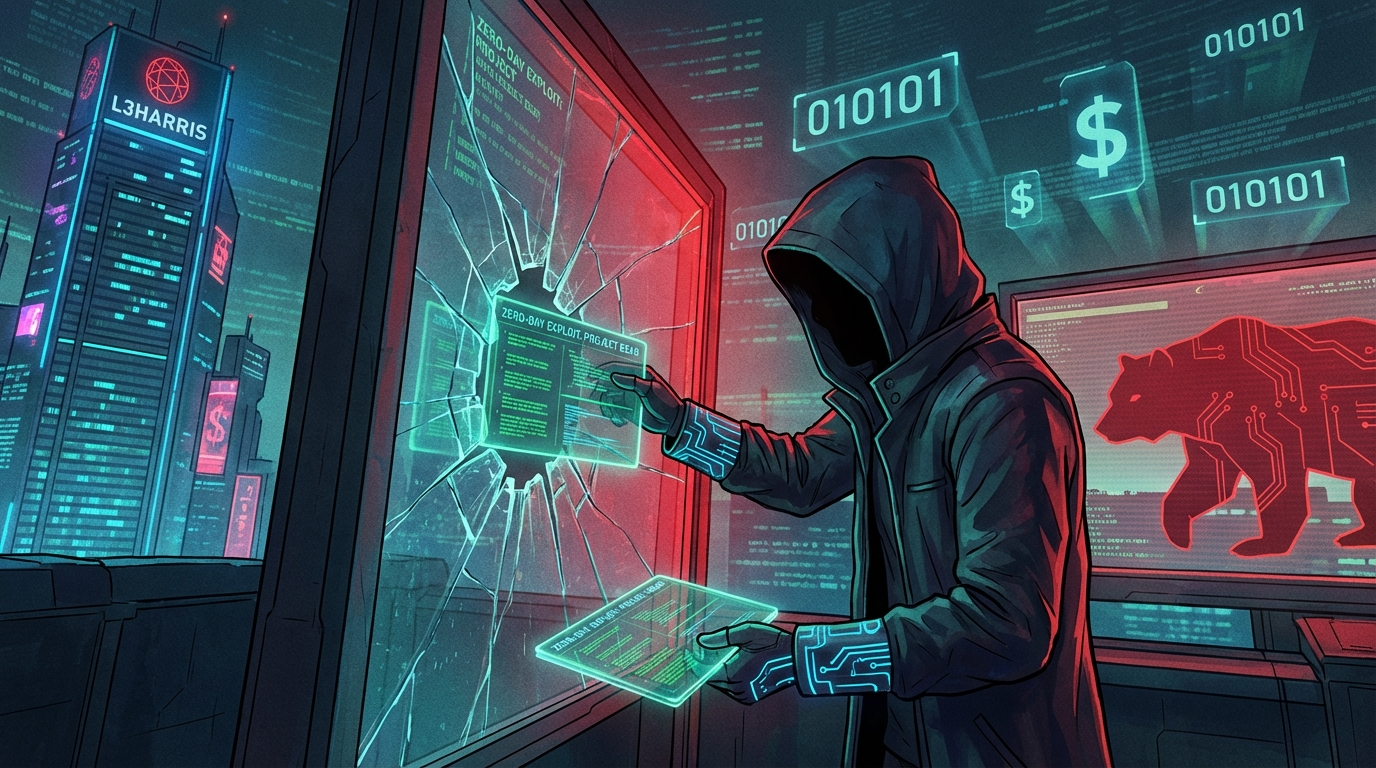
Update to our October 2025 coverage: The insider threat case that shocked the defense industry has reached its conclusion. Peter Williams, the former general manager of L3Harris's Trenchant cyber division, has been sentenced to 87 months (seven years) in federal prison for selling highly sensitive cyber exploits to Russia. This sentencing brings closure to a case we first covered in October 2025 when Williams was initially charged, and reveals the full extent of his betrayal.
The Sentencing: Seven Years and $1.3 Million Forfeiture
This week's sentencing hearing in federal court delivered a strong message about the consequences of betraying your country for cryptocurrency. Peter Williams, 39, an Australian citizen who rose to a senior leadership position at one of America's most sensitive defense contractors, will spend the next seven years behind bars after pleading guilty to selling trade secrets to Russia.
The Full Penalty:
- 87 months (7 years, 3 months) in federal prison
- $1.3 million cash forfeiture
- Forfeiture of all cryptocurrency received from Russian buyers
- Forfeiture of properties and luxury items purchased with Russian money
- Restitution hearing scheduled for May 12, 2026
US Attorney Jeanine Pirro revealed that Williams sold the exploits for up to $4 million in cryptocurrency—a staggering sum that funded a lifestyle of luxury while putting American national security at risk.
 Breached Company
What Was Stolen: Eight Exploits Over Three Years
According to Williams' guilty plea and court documents, he systematically stole eight cyber exploits over a three-year period between 2022 and 2025. These weren't off-the-shelf hacking tools—they were highly specialized capabilities developed by Trenchant, L3Harris's cyber operations division, under contracts that required exclusive delivery to the United States government.
What Makes These Exploits Special:
Exploits developed by defense contractors like L3Harris are typically:
- Zero-day vulnerabilities in widely-used software or hardware
- Highly reliable and extensively tested
- Operationally proven in real-world intelligence operations
- Designed for stealth to avoid detection by security tools
- Extremely expensive to develop, often costing millions per exploit
- Classified with restrictions on who can possess or use them
When Williams sold these exploits to Russia, he wasn't just sharing technical knowledge—he was handing over offensive cyber capabilities that the US intelligence community likely used for national security operations. The moment Russia received these tools, American operations using those exploits were potentially compromised.
The Russian Connection: Operation Zero
In a coordinated action announced the same day as Williams' sentencing, the US Treasury Department's Office of Foreign Assets Control (OFAC) sanctioned the Russian exploit broker who bought Williams' stolen tools: Sergey Sergeyevich Zelenyuk and his company, Operation Zero.
Operation Zero: Russia's Exploit Marketplace
Operation Zero, based in St. Petersburg, Russia, operates as an exploit broker—essentially a black market middleman connecting zero-day exploit sellers with buyers, many of whom are Russian intelligence services, cybercriminals, and state-sponsored hacking groups.
Key Facts About Operation Zero:
- Founded: Active since at least 2021
- Business model: Purchasing exploits from various sources and reselling to Russian clients
- Target software: Popular US software and encrypted messaging platforms
- Pricing: Offers millions of dollars for high-value zero-days
- Policy: Openly states they will only sell to non-NATO countries
- Downstream use: Exploits used for ransomware, espionage, and cyber attacks
Treasury confirmed that Operation Zero was the recipient of all eight exploits Williams sold, and that the company subsequently resold these tools to "at least one unauthorized user"—likely a euphemism for Russian intelligence services or state-sponsored hacking groups.
The Tradecraft: How Williams Betrayed His Country
Williams' method of betrayal demonstrates sophisticated operational security, though ultimately insufficient to avoid detection:
The Sale Process:
- Steal exploits from Trenchant's systems while in a position of trust
- Communicate with Russian broker via encrypted channels
- Negotiate pricing for each exploit (varying based on target and reliability)
- Receive payment in cryptocurrency to obscure the money trail
- Convert crypto to luxury purchases to enjoy the proceeds
What He Bought: According to prosecutors, Williams used the Russian cryptocurrency payments to purchase:
- Expensive jewelry
- Multiple properties
- Luxury vacations
- Other high-end consumer goods
The lifestyle upgrade was presumably what eventually attracted attention—a senior executive at a defense contractor suddenly buying properties and luxury goods with no obvious legitimate source of income is exactly the kind of anomaly that triggers counterintelligence investigations.
The Damage Assessment: $35 Million Loss
Williams acknowledged in his guilty plea that his actions caused a $35 million loss to the United States and its geopolitical allies. This figure likely includes:
Direct Costs:
- Development costs for the compromised exploits (millions per exploit)
- Operational losses from compromised intelligence operations
- Remediation costs to develop replacement capabilities
Indirect Costs:
- Strategic disadvantage from adversary gaining US cyber capabilities
- Damage to intelligence relationships with allied countries
- Loss of trust from partner nations
- Harm to L3Harris's reputation and future contract prospects
The $35 million figure is almost certainly a conservative estimate. The strategic cost of handing Russia advanced US cyber weapons is nearly impossible to fully quantify—how do you put a price on compromised intelligence operations or the advantage Russia gained?
The Broader Sanctions Package
Williams' sentencing came alongside a comprehensive sanctions package targeting Russia's exploit acquisition ecosystem:
Individuals Sanctioned:
- Sergey Sergeyevich Zelenyuk - Founder and operator of Operation Zero
- Marina Evgenyevna Vasanovich - Zelenyuk's assistant
- Azizjon Makhmudovich Mamashoyev - Suspected exploit broker
- Oleg Vyacheslavovich Kucherov - Suspected Trickbot gang member with business dealings with Operation Zero
Entities Sanctioned:
- Operation Zero - The St. Petersburg-based exploit broker
- Special Technology Services LLC FZ (STS) - Zelenyuk's UAE-based company for Asian/Middle Eastern operations
- Advance Security Solutions - Mamashoyev's UAE/Uzbekistan-based alleged exploit broker
This coordinated sanctions action marks the first use of authorities under the Protecting American Intellectual Property Act (PAIPA), which became law in 2023 specifically to provide tools for combating the theft of US trade secrets.
Treasury Secretary Scott Bessent made the government's position clear: "If you steal US trade secrets, we will hold you accountable. Treasury will continue to work alongside the rest of the Trump administration to protect sensitive American intellectual property and safeguard our national security."
The FBI's Message: A Clear Warning
FBI Assistant Director Roman Rozhavsky of the Counterintelligence and Espionage Division issued a strongly-worded statement emphasizing the FBI's commitment to prosecuting insider threats:
"Peter Williams stole a US defense contractor's trade secrets about highly sensitive cyber capabilities and sold them to a broker whose clients include the Russian government, putting our national security and countless potential victims at risk. The FBI and our partners remain unwavering in our commitment to protecting America's critical technologies, and we will ensure any who attempt to profit at our nation's expense face the full weight of the criminal justice system.
Let this be a clear warning to all who consider placing greed over country: if you betray your position of trust and sell sensitive American technology to our foreign adversaries, the FBI will not rest until you're brought to justice."
Lessons from the Williams Case
1. Insider Threats Remain the Hardest to Detect
Williams had legitimate access to the exploits he stole. He didn't need to hack into systems or bypass security controls—the exploits were literally his job to manage and deliver to government customers. This is what makes insider threats so pernicious: the trusted insider already has the access, and their activity looks legitimate until you examine it closely.
Key Insight: Security controls designed to keep outsiders out are largely ineffective against insiders who already have authorized access. Organizations need behavioral monitoring, audit logging, and anomaly detection focused on insider threat indicators.
2. Lifestyle Changes Are Detection Opportunities
Williams' purchase of properties, jewelry, and luxury items with no obvious legitimate source appears to have been a key factor in his eventual exposure. In counterintelligence, this is called a "lifestyle anomaly"—when someone's spending dramatically outpaces their known income.
Key Insight: Financial monitoring of employees with access to sensitive information can identify potential insider threats before significant damage occurs. This isn't about invasive surveillance—it's about noticing when someone suddenly starts living beyond their means.
3. The Cryptocurrency Challenge
Williams received payment in cryptocurrency specifically to obscure the money trail. While crypto's pseudonymity makes it harder to trace than traditional banking, it's not perfect anonymity—and in this case, the crypto trail was ultimately documented as part of the forfeiture proceedings.
Key Insight: Organizations should monitor for employees with access to sensitive information who suddenly become active in cryptocurrency markets, particularly if they're converting large amounts to cash or luxury purchases.
4. Export Controls Are Only as Good as Their Enforcement
Williams' exploits were subject to strict export controls requiring exclusive delivery to the US government. Yet he managed to steal and sell eight of them over three years before being caught. This suggests significant gaps in how these controls were monitored and enforced.
Key Insight: Export control compliance can't be just a paperwork exercise. Organizations need technical controls to prevent unauthorized access, copying, or transmission of controlled items, backed by continuous monitoring and audit.
5. Russia's Exploit Supply Chain Is Well-Organized
The existence of Operation Zero and similar exploit brokers demonstrates that Russia has developed a sophisticated supply chain for acquiring foreign cyber capabilities. This isn't individual hackers operating independently—it's an organized ecosystem with multiple brokers, established pricing models, and clear policies about who they'll sell to.
Key Insight: The threat isn't just individual insiders being compromised. It's systematic targeting of Western defense contractors, technology companies, and security researchers by an organized adversary with deep pockets and clear objectives.
What This Means for Defense Contractors
The Williams case should prompt serious soul-searching at every defense contractor with cyber capabilities:
Security Program Failures at L3Harris
While we don't have full details on exactly how Williams was caught, his ability to steal eight exploits over three years suggests multiple security failures:
Potential Gaps:
- Insufficient access logging to detect unauthorized copying of sensitive files
- Lack of behavioral monitoring to identify anomalous access patterns
- Inadequate segregation of duties allowing one person too much access
- Missing technical controls to prevent copying or exfiltration of controlled items
- Insufficient financial monitoring of employees with sensitive access
- Delayed detection of lifestyle changes inconsistent with salary
What Should Have Been In Place:
- Data Loss Prevention (DLP) to detect and block unauthorized copying
- User and Entity Behavior Analytics (UEBA) to identify anomalous access
- Privileged Access Management (PAM) with session recording and real-time monitoring
- Financial disclosure requirements for employees with access to export-controlled items
- Counterintelligence awareness training for all employees with security clearances
- Regular polygraph examinations for employees with access to most sensitive materials
The Trusted Insider Problem
Williams wasn't just any employee—he was the general manager of Trenchant's cyber division. This is someone who would have:
- Security clearance at the highest levels
- Extensive background investigations before being hired and during his employment
- Access to some of the most sensitive US cyber capabilities
- Responsibility for safeguarding those capabilities
- Direct interaction with government customers
If someone at this level of trust can betray their country for seven figures in cryptocurrency, then no one is beyond suspicion. This is the uncomfortable reality of insider threat: anyone with access could potentially be compromised.
The Australian Angle
Williams is an Australian citizen who worked for a US defense contractor with access to some of America's most sensitive cyber capabilities. This raises questions about:
Vetting of Foreign Nationals:
- What level of background investigation did Williams undergo?
- Were his foreign contacts and travel adequately monitored?
- Did his Australian citizenship create additional counterintelligence risks?
- How are foreign nationals with access to sensitive US capabilities monitored?
International Implications: Australia is a member of the Five Eyes intelligence alliance with the US, UK, Canada, and New Zealand. An Australian citizen selling US cyber capabilities to Russia represents a potential strain on this intelligence-sharing relationship—not because Australia did anything wrong, but because it highlights the risks of extending access to non-US citizens.
Looking Forward: Restitution and Continued Investigation
While sentencing brings this case to a legal conclusion, several threads remain:
May 12, 2026 Restitution Hearing: The court will determine additional restitution Williams must pay beyond the already-ordered $1.3 million forfeiture. This could include compensation for the full $35 million in calculated damages, though whether Williams has the assets to pay such a sum is unclear.
Ongoing Investigation: The FBI and partner agencies are likely continuing to investigate:
- Whether Williams sold exploits to other buyers beyond Operation Zero
- Whether other L3Harris employees were involved
- What other Western defense contractors Operation Zero has targeted
- Where the stolen exploits have been used in Russian cyber operations
- Whether any of the exploits can be "burned" (rendered useless) through disclosure or patching
Downstream Impact: Security researchers and government agencies will be working to:
- Identify which specific exploits were compromised
- Determine if those exploits have been used in observed Russian cyber operations
- Develop countermeasures or patches for the affected vulnerabilities
- Assess what other operations may have been compromised
The Deterrence Question
Seven years in federal prison, loss of $1.3 million, and the destruction of a successful career—is this enough to deter the next potential insider threat?
Arguments for Deterrence:
- Significant prison time makes the consequences real
- Public nature of the case serves as a warning to others
- Financial penalties eliminate the profit motive
- Comprehensive sanctions disrupt the Russian exploit supply chain
- Career destruction is permanent—Williams will never work in tech or defense again
Arguments Against Deterrence:
- Risk-reward calculation - $4 million for seven years might still appeal to some
- Belief in not getting caught - many insiders think they're smarter than security
- Desperation factors - financial problems or ideological motivation can override deterrence
- Foreign intelligence recruitment often involves coercion, not just money
- Limited enforcement - most insider threats are never caught
The reality is that deterrence works on rational actors making calculated decisions. It's less effective against those motivated by desperation, ideology, or coercion—or those who simply believe they won't get caught.
The Broader Context: Russia's Quest for Western Cyber Capabilities
The Williams case is part of a broader Russian intelligence effort to acquire Western cyber capabilities through any means necessary:
Recent Examples:
- Recruitment of defense contractor employees (Williams case)
- Compromise of security researchers through social engineering
- Exploitation of bug bounty programs to acquire vulnerabilities
- Theft from security companies that discover zero-days
- Penetration of government agencies with access to classified cyber tools
Russia's strategy is multi-faceted: if they can't develop certain capabilities indigenously, they'll steal them. Operation Zero's existence as an organized marketplace for this stolen knowledge demonstrates the systematic nature of the threat.
Conclusion: The High Cost of Betrayal
Peter Williams will spend the next seven years in federal prison thinking about his decision to trade American national security for luxury items and cryptocurrency. His name will forever be associated with one of the most significant insider threat cases in the defense industry.
For the rest of us, the Williams case offers stark lessons:
For security professionals:
- Insider threats are real and require dedicated detection programs
- Behavioral monitoring and financial oversight are essential for high-risk roles
- No one is beyond suspicion when they have access to sensitive capabilities
For defense contractors:
- Security clearances and background checks are necessary but not sufficient
- Technical controls must prevent unauthorized copying and exfiltration
- Audit and monitoring must catch anomalous behavior before significant damage occurs
For employees:
- Your access to sensitive information makes you a target for foreign intelligence
- The money may seem tempting, but the consequences are severe and permanent
- If you're approached by foreign intelligence, report it immediately
For policymakers:
- The Russian exploit acquisition ecosystem is organized and well-funded
- Sanctions like those imposed on Operation Zero are essential but not sufficient
- Export control enforcement needs continuous improvement
The betrayal of Peter Williams reminds us that the insider threat is among the most dangerous challenges in cybersecurity. We can build walls, deploy firewalls, and implement zero-trust architectures, but none of it matters if the person with the keys decides to sell out.
Seven years in prison is a steep price to pay for greed. For the United States and its allies, the cost of that betrayal—in compromised operations, lost capabilities, and damaged security—will be felt for far longer.
Sources:
- US Department of Justice Press Release (February 25, 2026)
- US Department of Treasury OFAC Sanctions Announcement (February 25, 2026)
- The Register: "Ex-L3Harris exec jailed 7 years for selling exploits to Russia" (February 25, 2026)
- Breached Company: "Former L3Harris Cyber Executive Charged with Selling Trade Secrets to Russia" (October 2025)
 Breached Company