South Korea's Cybersecurity Crisis: 2,383 Breaches in 2025 as Deepfake Attacks Target Virtual Meetings

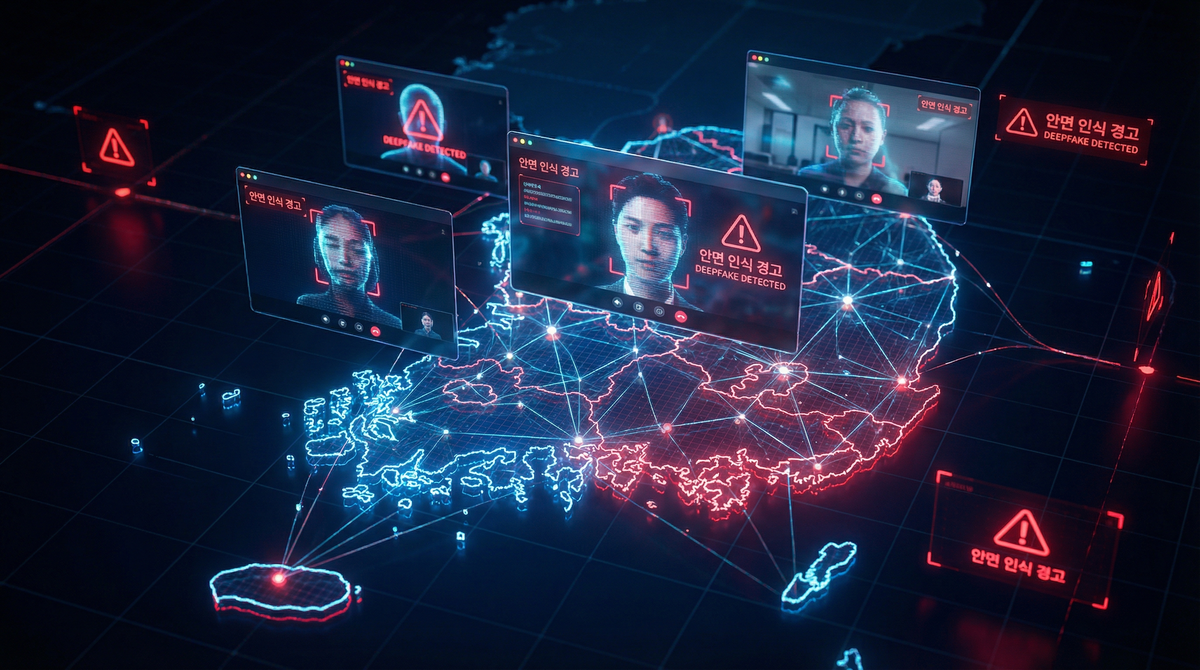
South Korea reported 2,383 cybersecurity breaches in 2025, a 26% increase from the previous year, according to a government report released Tuesday by the Ministry of Science and ICT. The surge is driven by increasingly sophisticated AI-powered attacks, with North Korean state-sponsored groups deploying deepfake technology in spear-phishing campaigns against military and diplomatic targets. Most alarmingly, security officials warn that 2026 will see attackers infiltrate "trust-based communication methods"—virtual meetings and real-time voice calls—using deepfake audio and video that impersonate executives, colleagues, and trusted partners.
 Breached Company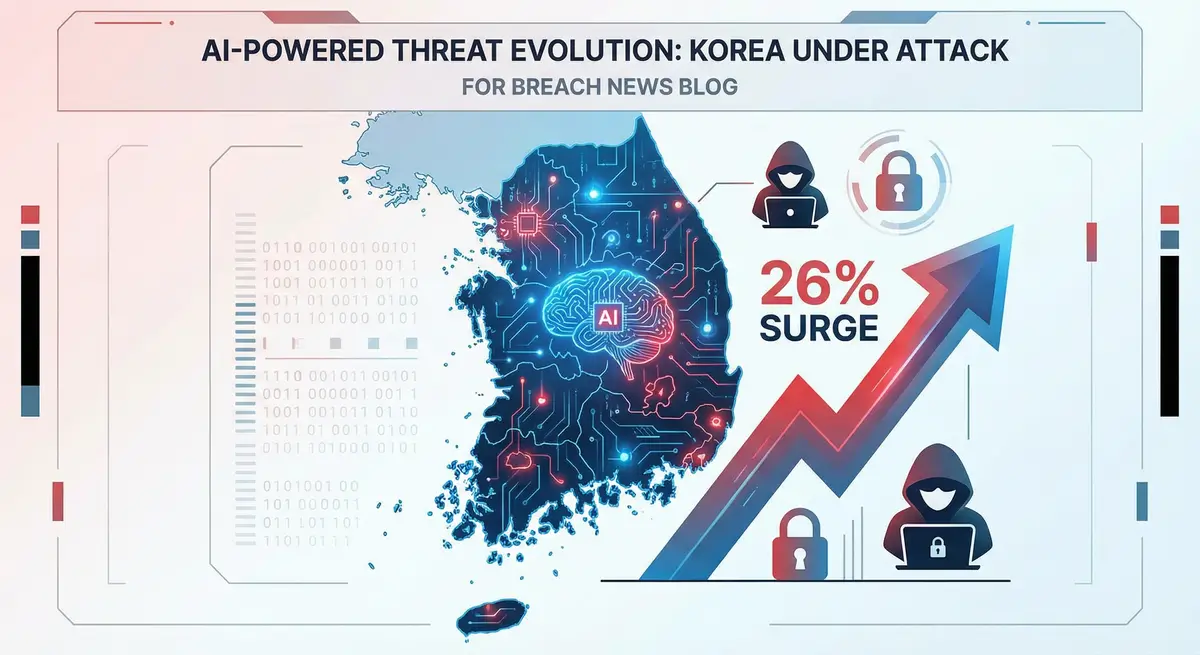
Executive Summary
South Korea's digital defenses are crumbling under sustained assault from state-sponsored threat actors, cybercriminal groups, and AI-enhanced attack vectors. The statistics paint a stark picture:
- 2,383 reported breaches in 2025 (26% year-over-year increase)
- 1,887 breaches in the first half of 2025 alone (averaging one significant incident every 2.7 days)
- Server intrusions remain the primary attack vector, followed by DDoS and ransomware
- SK Telecom breach compromised 27 million customer accounts (roughly half of South Korea's population)
- North Korea-linked Kimsuky group deployed AI-generated deepfake images in military spear-phishing
- Russian-linked groups claimed terabyte-scale data theft from Welcome Financial Group
The root cause isn't just sophisticated adversaries—it's fragmented cybersecurity governance. Unlike nations with designated cyber incident response authorities, South Korea has no clear "first responder" agency. When breaches occur, ministries and regulators scramble in parallel, sometimes deferring to each other rather than coordinating unified responses. This institutional weakness, combined with AI-powered attack evolution, creates a perfect storm that security experts warn will only intensify in 2026.
The Numbers Behind the Crisis
2,383 Breaches: A 26% Year-Over-Year Surge
The Ministry of Science and ICT's annual cybersecurity report reveals the scale of South Korea's digital vulnerability:
Breakdown by Attack Type:
- Server intrusions: Largest share of attacks (specific percentage not disclosed)
- DDoS attacks: Second-most common vector
- Ransomware incidents: Third-place, but growing rapidly
- Malware infections: Consistent threat across all sectors
First-Half 2025 Intensity:
- 1,887 breaches reported between January-June 2025
- Average: One significant cyber incident every 2.7 days
- Acceleration pattern: H1 breach rate suggests full-year total could exceed 3,500 if trend continues
Context: These are reported breaches to government authorities. Security researchers estimate actual breach numbers are 2-4x higher when including:
- Unreported incidents in small/medium businesses
- Successful intrusions that went undetected
- Breach attempts blocked before data exfiltration
- Shadow IT compromises never discovered
 Breached Company
The SK Telecom Catastrophe: 27 Million Accounts Compromised
In April 2025, SK Telecom—South Korea's largest telecommunications provider—disclosed a breach affecting approximately 27 million customer accounts (South Korea's total population is ~51 million). Attackers sustained undetected access within SK Telecom's servers for an undisclosed period, potentially harvesting:
- Customer names, phone numbers, and addresses
- Account credentials and authentication data
- Call detail records and messaging metadata
- Payment information and billing data
- Location data from mobile devices
Why This Matters:
SK Telecom isn't just a telecom—it's critical infrastructure. The breach potentially exposed:
- Government official communications
- Military personnel mobile data
- Corporate executive travel patterns
- Healthcare provider patient contact methods
This single breach affected more than half of South Korea's population. For context, that's equivalent to a U.S. breach exposing 170 million Americans—larger than the 2017 Equifax breach (147 million) and the 2013 Yahoo breach (3 billion, but globally distributed).
The Deepfake Threat: AI-Generated Attacks Against Trust
Kimsuky's AI-Generated Spear-Phishing
The North Korea-linked Kimsuky threat group (also tracked as APT43, ARCHIPELAGO, Black Banshee, and Velvet Chollima) deployed AI-generated deepfake images in July 2025 attacks against South Korean military organizations and defense contractors. Unlike traditional spear-phishing using stolen photos or fake identities, these attacks used:
AI-Generated Personas:
- Synthetic "military official" profile photos created by generative AI
- Fabricated LinkedIn-style backgrounds with realistic details
- AI-written biographical information that passed cursory verification
Multi-Stage Social Engineering:
- Initial contact via email using deepfake profile images
- Follow-up requests for sensitive documents or access credentials
- Secondary attacks via messaging apps once trust established
- Lateral movement through trusted relationships
Embassy Infiltration Campaigns:
Kimsuky spent months infiltrating foreign embassies in Seoul by disguising attacks as routine diplomatic correspondence. Attackers impersonated:
- Embassy administrative staff
- Diplomatic attachés
- Cultural program coordinators
- Visa processing personnel
Success Rate: While specific success rates remain classified, security researchers indicate that deepfake-enhanced spear-phishing has 3-5x higher success rates than traditional attacks because targets:
- Trust visual verification (profile photos appear legitimate)
- Don't suspect AI-generated content yet
- Lack tools to detect synthetic images
- Rely on social proof (fake LinkedIn profiles with connections)
The 2026 Threat: Deepfake Virtual Meetings
The Ministry of Science and ICT issued a stark warning: In 2026, hackers will infiltrate "trust-based communication methods"—real-time voice calls and virtual meetings—using deepfake audio and video.
Attack Scenarios:
1. Executive Impersonation:
- Attacker joins Zoom/Teams meeting as "CEO" using deepfake video
- Requests wire transfer or sensitive data
- Team members comply because they "see and hear" their boss
2. IT Support Scams:
- Deepfake "IT admin" joins call claiming security emergency
- Requests credentials to "prevent breach"
- Employees share passwords believing they're helping
3. Vendor/Partner Fraud:
- Attackers impersonate known vendor contact
- Request contract changes or payment rerouting
- Finance teams authorize because voice/video match records
4. Board Meeting Infiltration:
- Deepfake board member attends virtual meeting
- Influences strategic decisions or votes
- Exfiltrates confidential M&A/IP discussions
Technical Feasibility:
- Voice cloning requires just 3-10 seconds of audio (easily obtained from public videos/calls)
- Video deepfakes now achievable in real-time using consumer GPUs
- Latency/quality issues that previously exposed fakes are diminishing rapidly
- Detection tools lag behind generation capabilities by 6-12 months
Fragmented Governance: South Korea's Systemic Weakness
No Clear "First Responder"
Unlike the United States (CISA), United Kingdom (NCSC), or Singapore (CSA), South Korea lacks a designated national cyber incident response authority. When breaches occur:
Current Response Pattern:
- Victim organization detects breach (or learns from media/researchers)
- Multiple agencies simultaneously notified:
- Ministry of Science and ICT (telecom/internet)
- Korea Internet & Security Agency (KISA)
- National Intelligence Service (national security threats)
- Personal Information Protection Commission (privacy/data)
- Financial Services Commission (financial sector)
- Agencies defer to each other or investigate in parallel
- Victim faces conflicting guidance and duplicated requests
- Critical response time wasted in coordination overhead
Real-World Impact:
- SK Telecom breach response involved at least 4 government agencies
- Welcome Financial Group attack had unclear lead investigator for first 72 hours
- Embassy intrusions required NIS-Ministry coordination that delayed attribution
Contrast with U.S. CISA Model:
- Single agency designated as lead for critical infrastructure
- Clear escalation procedures and defined authorities
- Standardized incident reporting requirements
- Coordinated threat intelligence sharing
- Unified public communication
Legislative Gaps and Regulatory Fragmentation
Data Protection Laws:
- Personal Information Protection Act (PIPA): Managed by PIPC
- Information and Communications Network Act: Managed by MSIT
- Credit Information Act: Managed by FSC
- No unified federal breach notification standard
Sector-Specific Regulations:
Each critical infrastructure sector has separate cybersecurity requirements with minimal harmonization:
- Telecommunications (MSIT)
- Finance (FSC)
- Energy (MOTIE)
- Healthcare (MOHW)
- Transportation (MOLIT)
Result: Organizations in multiple sectors face overlapping, sometimes contradictory requirements with no single authority to provide guidance.
Why This Matters for Global Organizations
South Korea as Bellwether
South Korea's experience serves as a warning for other nations:
1. AI-Powered Attacks Are Here:
The Kimsuky deepfake campaigns aren't theoretical—they're operational. Organizations globally should assume:
- Nation-state groups are deploying AI-generated social engineering
- Deepfake virtual meeting attacks will proliferate in 2026
- Traditional "trust but verify" approaches fail against synthetic media
2. Governance Fragmentation Amplifies Risk:
South Korea's multi-agency chaos demonstrates that cybersecurity isn't just a technical problem—it's a governance and coordination challenge. Nations and organizations with unclear incident response authorities will face:
- Slower breach detection and response
- Duplicated efforts and wasted resources
- Regulatory uncertainty that discourages reporting
- Delayed threat intelligence sharing
3. Critical Infrastructure Interdependence:
The SK Telecom breach shows how a single telecommunications compromise can cascade across:
- Government communications
- Military operations
- Healthcare delivery
- Financial services
- Supply chain logistics
Recommendations for Organizations
Immediate Actions (Q1 2026):
1. Implement Multi-Factor Authentication for Virtual Meetings:
- Use meeting-specific PINs/passwords
- Require authentication for all participants (disable "guest" joins)
- Deploy secondary verification channels (e.g., Slack confirmation before sensitive discussions)
2. Establish "Code Words" for High-Risk Requests:
- Create pre-arranged authentication phrases for wire transfers
- Require in-person or phone-call verification for credential requests
- Train teams to demand callback verification for unusual requests
3. Deploy Deepfake Detection Tools:
- Implement real-time meeting monitoring (Reality Defender, Microsoft Video Authenticator)
- Train security teams on deepfake indicators (unnatural blinking, lip-sync issues, lighting inconsistencies)
- Record and review critical meetings for post-incident analysis
4. Update Incident Response Plans:
- Add deepfake social engineering scenarios to tabletop exercises
- Define clear escalation procedures for suspected synthetic media attacks
- Establish coordination protocols if spanning multiple jurisdictions/regulators
Medium-Term Initiatives (Q2-Q4 2026):
5. Zero-Trust Architecture for Communications:
- Implement continuous authentication for active sessions
- Use behavioral biometrics to detect anomalous interactions
- Deploy AI-powered anomaly detection for meeting participants
6. Vendor/Partner Identity Verification:
- Establish cryptographic identity verification for business partners
- Use digital certificates for sensitive communications
- Implement out-of-band verification protocols for payment changes
7. Employee Training and Awareness:
- Monthly deepfake awareness training
- Simulated deepfake phishing exercises
- Clear reporting procedures for suspected synthetic media
8. Regulatory Preparation:
- Monitor South Korea's governance reforms (potential model for other nations)
- Engage with industry groups on deepfake defense standards
- Advocate for clear incident response authority in your jurisdiction
The Road Ahead: 2026 Predictions
Security researchers and government officials predict:
Attack Volume:
- 3,000+ breaches in South Korea in 2026 (26% YoY growth continuing)
- Global deepfake attacks will triple as tools commoditize
- First documented deepfake board meeting infiltration likely by Q2 2026
Regulatory Response:
- South Korea expected to designate unified cyber response authority by end of 2026
- Mandatory deepfake detection for financial services virtual meetings (proposed legislation)
- International cooperation agreements on synthetic media attribution
Technology Evolution:
- Real-time deepfake detection tools reaching commercial viability (but still 6+ months behind generation capabilities)
- Blockchain-based identity verification for virtual meetings gaining traction
- AI-powered behavioral authentication to detect impersonation even with perfect visual deepfakes
Conclusion: Trust Is the New Perimeter
South Korea's cybersecurity crisis—2,383 breaches in 2025, deepfake attacks against military targets, and governance fragmentation—reveals a fundamental shift in the threat landscape. Attackers are no longer just exploiting software vulnerabilities or weak passwords. They're weaponizing trust itself.
When every video call could be a deepfake, every voice mail a synthetic impersonation, and every profile photo an AI-generated persona, traditional security controls fail. Organizations must:
- Assume breach (zero-trust for communications, not just networks)
- Verify continuously (not just at authentication)
- Plan for governance gaps (internal coordination when external authorities conflict)
- Train relentlessly (monthly deepfake awareness, not annual compliance checks)
The 26% year-over-year increase in South Korean breaches isn't an anomaly—it's a preview. As AI tools democratize sophisticated attack capabilities, every organization will face the same choice South Korea confronts now: adapt defenses to a world where seeing and hearing are no longer believing, or become the next statistic in an accelerating breach epidemic.
The deepfake attacks targeting virtual meetings in 2026 aren't coming. They're already here. The question isn't whether your organization will face them—it's whether you'll recognize the attack when it happens.