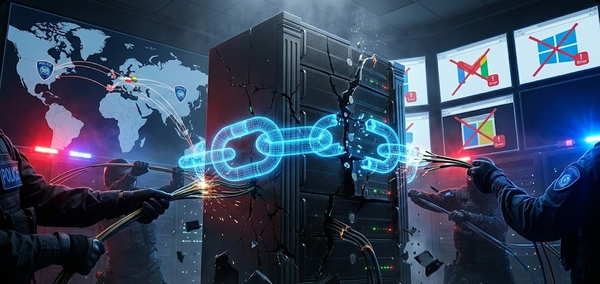
State of Ransomware 2026: The Definitive Landscape Analysis

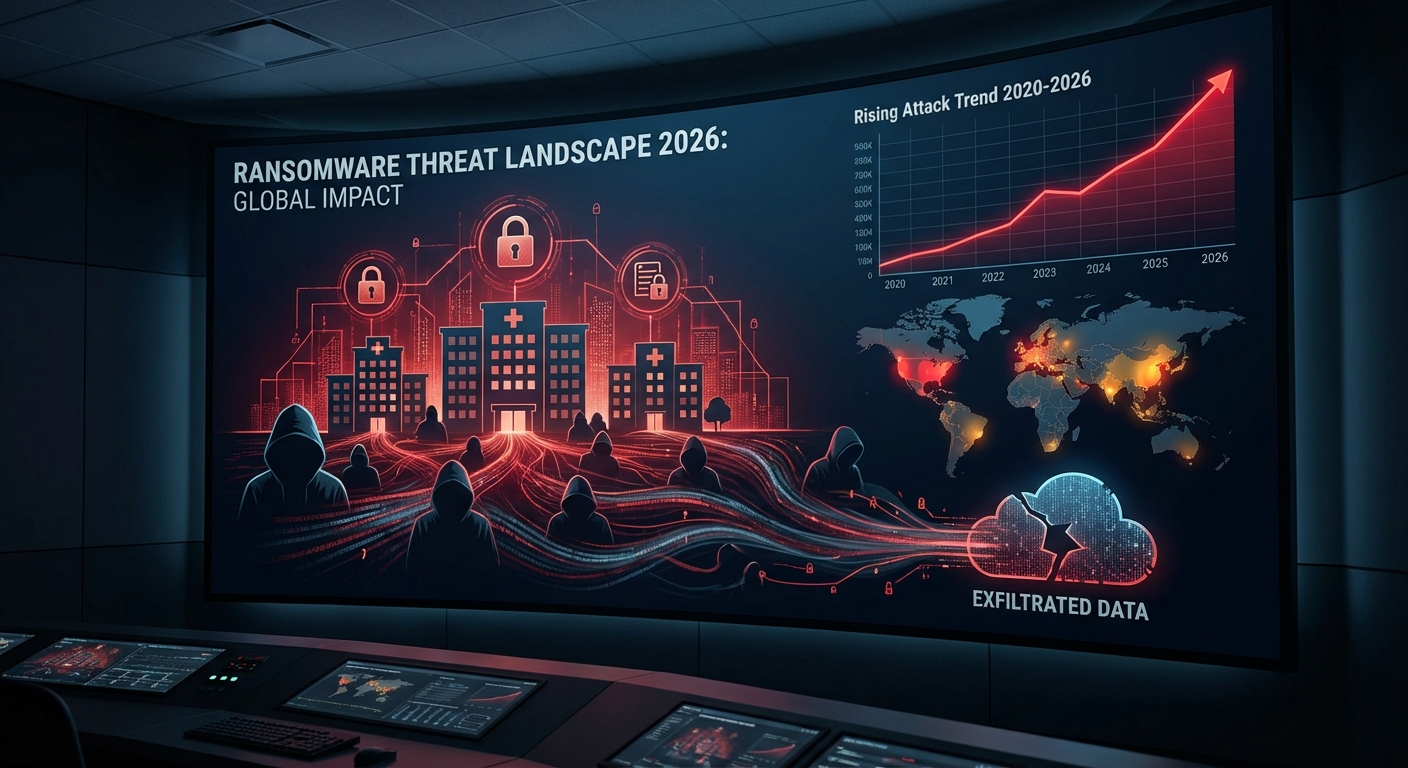
The most comprehensive analysis of ransomware threats in 2026, covering Qilin, LockBit 5.0, Akira, CL0P, and all major threat actors. Complete with victim statistics, attack trends, law enforcement effectiveness, and actionable defense strategies. 12,000+ projected victims. 58% YoY increase. This is the ransomware landscape report every CISO needs to read.
Executive Summary
Ransomware in 2026 is no longer an emerging threat—it is a mature, industrialized criminal economy operating at unprecedented scale. Despite a year of aggressive law enforcement operations, including Operation Cronos's dismantling of LockBit infrastructure, the seizure of the RAMP forum, and arrests spanning four continents, ransomware attacks increased 58% year-over-year. Groups averaged nearly 700 victims per month across the final four months of 2025, with no signs of deceleration entering the new year.
This report represents the most comprehensive analysis of the 2026 ransomware landscape available. We profile every major threat group, examine the tactics driving modern attacks, assess law enforcement effectiveness, and provide actionable intelligence for defenders navigating what has become the single greatest operational threat facing organizations worldwide.
The findings are sobering: despite unprecedented law enforcement action, despite billions in defensive spending, despite growing awareness—the criminals are winning. And the gap is widening.
The Numbers That Matter
| Metric | Value | Context |
|---|---|---|
| YoY Attack Increase | 58% | Highest growth rate since 2019 |
| Q4 2025 Victims | 2,018 | Single quarter record |
| January 2026 Victims | 679 | On pace for 8,000+ annually |
| Healthcare Attacks (Jan 2026) | 27 | Most targeted sector |
| Active Groups | 126-141 | Up from 72 in 2023 |
| Attacks with Data Exfiltration | 74% | Data theft now standard |
| Unclaimed Attacks | 49% | True scale vastly understated |
| 2026 Projected Victims | 12,000+ | If trajectory holds |
The most troubling statistic: nearly half of all ransomware attacks go unclaimed by known groups. The visible landscape—the leak sites, the negotiations, the headlines—represents only the tip of a much larger criminal iceberg.
Part I: The Industrial Phase of Ransomware
Understanding the 58% Surge
The ransomware ecosystem has entered what we are terming its "industrial phase"—a period characterized by commoditized attack infrastructure, professional affiliate networks, and operational processes that would be familiar to any Fortune 500 executive. This isn't cybercrime anymore. It's cyberbusiness.
The 58% year-over-year increase in attacks defies the conventional narrative that law enforcement actions are turning the tide. While tactical victories continue—arrests, infrastructure seizures, decryptor releases—the strategic picture remains grim. Ransomware attacks are increasing faster than defenses can adapt.
Several factors drive this acceleration:
1. The Fragmentation Effect
When law enforcement disrupts a major operation, the result is rarely elimination—it's fragmentation. LockBit affiliates didn't retire after Operation Cronos; they dispersed across competing platforms. The affiliate pool expanded rather than contracted, and groups like Qilin and Akira absorbed experienced operators hungry for new homes.
2. The RaaS Economy Matures
Ransomware-as-a-Service has become genuinely commoditized. The barrier to entry has never been lower. Modern RaaS platforms provide:
- Turnkey encryption/decryption infrastructure
- Automated negotiation portals
- Professional victim communication systems
- Technical support for affiliates
- Revenue sharing models that minimize upfront costs
An aspiring cybercriminal can become operational within hours. LockBit 5.0's decision to drop affiliate fees to just $500—down from thousands—reflects this competitive, low-barrier market.
3. Data-Only Extortion Rises
The shift from encryption to pure data extortion is accelerating. In 2026, 74% of ransomware attacks involve data exfiltration, with a growing number skipping encryption entirely. This evolution has profound implications:
- Speed: Data theft takes minutes; encryption takes hours
- Stealth: No encryption behavior means fewer EDR triggers
- Backup irrelevance: Perfect backups don't help when data is already stolen
- Regulatory leverage: GDPR, HIPAA, and emerging privacy laws add legal pressure
For attackers, data-only extortion is simply more efficient. Expect this trend to accelerate.
Geographic Distribution: The American Concentration
The United States absorbs a disproportionate share of global ransomware activity:
| Country | Share of Global Attacks |
|---|---|
| United States | 46-58% |
| Australia | 10-14% |
| United Kingdom | 8-10% |
| Germany | 5-7% |
| Canada | 4-5% |
| France | 3-4% |
This concentration reflects several realities: the size of the American economy, the prevalence of cyber insurance (which can signal payment capacity), weaker data protection regulations creating incentive misalignment, and—bluntly—the fact that most ransomware operators reside in nations adversarial to the United States.
CL0P's recent campaign temporarily elevated UK and Australian percentages, demonstrating how a single group's focus can shift geographic patterns. But the fundamental American concentration remains structural.
Sector Targeting: Healthcare in Crisis
Healthcare has emerged as the sector facing the greatest ransomware pressure:
| Sector | Attack Share (Q2 2025) |
|---|---|
| Professional Services | 19.7% |
| Healthcare | 13.7% |
| Consumer Services | 13.7% |
| Manufacturing | 10-12% |
| Government/Public Sector | 9.4% |
| Financial Services | 7.7% |
| IT Services | 6-8% |
| Education | 5-6% |
January 2026 saw 27 healthcare ransomware incidents—more than any other sector. The reasons are grimly logical:
Why Attackers Target Healthcare:
- Operational Pressure: Patient care cannot wait. Every hour of downtime directly threatens lives, creating payment urgency that other sectors lack.
- Data Value: Medical records contain comprehensive personal information—SSNs, insurance details, diagnoses, treatment histories—commanding premium dark web prices.
- Regulatory Leverage: HIPAA violations, breach notification requirements, and potential lawsuits add legal and financial pressure beyond the ransom itself.
- Legacy Infrastructure: Many healthcare systems run aging, unpatched technology. Connected medical devices expand attack surfaces.
- Underfunded IT: Healthcare IT security budgets consistently lag behind threat sophistication.
The human cost is staggering. Research indicates ransomware-affected hospitals see increased patient mortality, longer emergency department wait times, delayed procedures, and ambulance diversions. The average hospital loses access to electronic health records for 18 days following an attack.
When ransomware hits a hospital, patients don't just lose data—they lose time. In emergency medicine, time is measured in lives.
In 2025, 445 ransomware attacks struck hospitals, clinics, and direct care providers—a 49% year-over-year increase. The crisis is intensifying, not abating.
Part II: Threat Actor Profiles
Tier 1: The Dominant Powers
These groups represent the apex of the ransomware ecosystem—well-resourced, operationally sophisticated, and responsible for the largest share of global attacks.