TikTok's First Censorship Crisis Under US Ownership: Epstein Name Blocked, ICE Videos Suppressed Days After Trump-Backed Deal

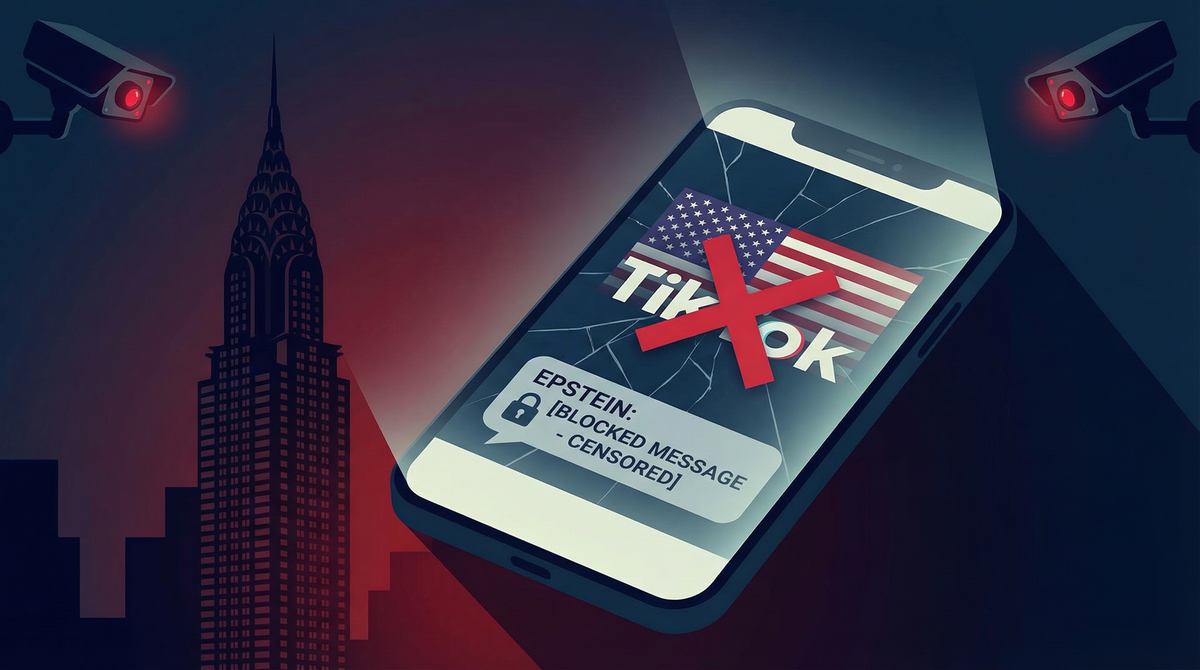
Just five days after finalizing a $14 billion deal that transferred majority control of TikTok's US operations to American investors approved by President Donald Trump, the platform is facing its first major censorship scandal. Users across the country report they cannot type "Epstein" in direct messages, ICE shooting videos from Minneapolis are vanishing or showing as blank squares, and anti-Trump content is experiencing dramatic reach suppression. California Governor Gavin Newsom launched a state investigation Monday to determine whether TikTok is violating state law by censoring content critical of the president. TikTok attributes the issues to a "cascading systems failure" originating from a power outage at a US data center—but critics point to the investor consortium's close ties to Trump and ask: Is this technical glitch or political censorship?
Executive Summary
The transformation of TikTok from Chinese-owned ByteDance subsidiary to American-majority joint venture was supposed to resolve national security concerns. Instead, it's creating a new crisis: What happens when a platform with 170 million US users and sophisticated censorship infrastructure falls under control of investors loyal to the sitting president?
The Timeline:
- January 22-23, 2026: ByteDance finalizes deal transferring 80.1% ownership to US/global investors (retains 19.9%)
- January 24-27, 2026: Users report widespread censorship and technical issues
- January 26, 2026: #TikTokCensorship trends on X (Twitter) as complaints surge
- January 27, 2026: California launches investigation, Democrats demand answers
- January 27, 2026: TikTok blames "power outage" causing "multiple bugs"
What's Being Censored:
- "Epstein" name blocked in direct messages (reference to Jeffrey Epstein, Trump's former associate and convicted sex offender)
- ICE shooting videos suppressed (Minneapolis federal agent shootings, including death of Renee Good)
- Anti-Trump content reach limited (videos getting zero views, disappearing from watch history)
- Protest coverage throttled (immigration raid content, Democratic lawmaker posts)
Key Investors in New TikTok US:
- Oracle (15% stake): Co-founder Larry Ellison is prominent Trump supporter
- Silver Lake (15% stake): Private equity firm with tech investments
- MGX (15% stake): United Arab Emirates sovereign wealth fund
- ByteDance (19.9% retained): Chinese parent company maintains minority stake
The Stakes:
This is the first test of whether a major social media platform can maintain editorial independence when its ownership is intertwined with political power. The precedent—Elon Musk's transformation of Twitter into X—suggests the answer is no. But TikTok brings unique capabilities: a censorship infrastructure originally built for the Chinese government, now potentially available to suppress American dissent.
The Deal: How TikTok Became America's (Trump's?) Platform
The Path to Divestiture
The saga began in 2024 when Congress passed a law requiring ByteDance to divest TikTok's US operations or face a nationwide ban. The legislation, driven by bipartisan concerns about Chinese government access to American user data, set a deadline that would have shut down the app for 170 million US users—roughly half the country's population.
The Ban Threat:
- Law signed March 2024
- Original deadline: January 19, 2025
- Extended to January 19, 2026 after legal challenges
- Trump campaigned on "saving TikTok"
- January 22-23, 2026: Deal finalized just days after inauguration
The New Ownership Structure
TikTok US Data Security (USDS) Joint Venture:
Ownership Breakdown:
- 80.1%: US and global investors
- Oracle: 15% (Larry Ellison, major Trump donor)
- Silver Lake: 15% (private equity)
- MGX: 15% (UAE sovereign wealth fund)
- Other investors: ~35% (Michael Dell of Dell Computer, also Trump donor)
- 19.9%: ByteDance (Chinese parent company)
What ByteDance Retains:
- Minority financial stake
- TikTok's algorithm (recommendation engine)
- Global TikTok operations outside US
What US Joint Venture Controls:
- US user data
- Content moderation decisions
- Platform operations for American users
- Partnership with Oracle for cloud infrastructure
The Trump Connection:
President Trump claimed credit for the deal in a Truth Social post: "I SAVED TIKTOK!" The investor consortium includes multiple Trump allies:
- Larry Ellison: Oracle co-founder, hosted Trump fundraisers, donated millions to pro-Trump PACs
- Michael Dell: Dell Computer founder, Trump donor
- Frank McCourt: Real estate billionaire who joined consortium late
The Elon Musk Precedent
Why This Matters:
Elon Musk's October 2022 acquisition of Twitter (rebranded to X) demonstrated how ownership can rapidly reshape a platform's ideology and moderation policies:
What Musk Changed at Twitter/X:
- Reinstated previously banned accounts (including Trump's)
- Gutted content moderation teams (80%+ workforce cuts)
- Boosted right-wing content in algorithms
- Deprioritized links to competitors and news outlets
- Changed policy on "hate speech" and misinformation labels
- Made platform explicitly pro-Trump during 2024 campaign
Key Quote from Tech Journalist Jacob Ward (PBS NewsHour):
"Musk rewrote the rules of what any of us expect as to how ownership of a major communications platform would work. And now we're in a world where close allies of the president of the United States now are co-owners of this incredibly powerful and influential platform."
TikTok's Unique Advantage for Censorship:
Unlike Twitter, which had to build censorship tools from scratch, TikTok inherited sophisticated content suppression infrastructure from its Chinese origins:
- Real-time keyword detection (can flag and suppress content within seconds)
- Shadowbanning capabilities (reduce reach without notifying creators)
- Algorithmic demotion (content exists but never surfaces in feeds)
- Location-based filtering (show different content to different regions)
- Retroactive suppression (already-posted content can vanish from watch histories)
Ward explained: "Because this thing had its origins in China, it has incredible capabilities to detect in real time whether you're saying things it doesn't want you to say... If in future they decided to do what Musk decided to do, they would have every kind of controls available to them to pull that off, because that is exactly how TikTok is built."
The Censorship Evidence: What Users Are Reporting
"Epstein" Name Blocked in Direct Messages
What's Happening:
Starting January 24-26, 2026, users discovered they cannot type "Epstein" in TikTok direct messages. Attempts to send the name result in:
- Message fails to send
- No error message displayed
- Blank message on recipient's end
- Other text in same message goes through, only "Epstein" blocked
Why This Matters:
Jeffrey Epstein was a convicted child sex offender and financier who maintained close relationships with powerful figures, including Donald Trump. Trump and Epstein appeared together at parties in the 1990s-2000s, with photos and videos showing them socializing at Mar-a-Lago and other venues. Trump later distanced himself from Epstein after the criminal cases.
The Timing:
The Epstein name block appeared within days of Trump-allied investors taking control—raising questions about whether the censorship protects the president from association with the disgraced financier.
TikTok's Response:
The company says it's "investigating" why the name is blocked and that it "does not prohibit the use of the name." However, as of January 27, the block remains in place.
California Governor Newsom's Response:
"It's time to investigate" — posted on X alongside screenshot showing TikTok preventing user from sending "epstein" in message
Newsom announced California Attorney General's office will investigate whether TikTok is violating state law by censoring content critical of Trump.
ICE Shooting Videos Suppressed in Minneapolis
The Incident:
On January 24-25, 2026, federal Immigration and Customs Enforcement (ICE) agents conducted raids in Minneapolis that resulted in shooting deaths of US citizens, including a woman named Renee Good. The incidents sparked immediate protests and social media coverage.
What Content Creators Report:
Multiple TikTok users documented attempts to post videos about the shootings:
Blank Squares in Watch History:
- Videos appear to upload successfully
- Creator can see video on their own profile
- But followers report seeing blank square where video should be
- In watch history, video shows as empty placeholder
- Some videos get zero views despite creator having large following
California State Senator Scott Wiener:
Senator Wiener (D-CA) attempted to share a post about ICE accountability and couldn't post it for "several hours." His video:
"I am advancing a bill now to say that, in California, it's not going to be just local and state law enforcement who can be sued if they violate your rights, but federal agents can as well."
Pattern of Suppression:
Content creators tracking reach metrics report:
- ICE-related videos: 90-95% drop in typical views
- Videos mentioning "federal agents" or "shootings": Dramatically reduced reach
- Same content on Instagram Reels or YouTube Shorts: Normal engagement
- Suggests platform-specific suppression, not content quality issue
Anti-Trump Content Reach Collapse
Celebrity Reports:
Meg Stalter (actress, "Hacks"): Deleted TikTok account, posted on Instagram:
"The app is under new ownership and we are being completely censored and monitored."
Billie Eilish: Multiple posts discussing political content suppression
Academic Researchers:
Academics studying content moderation report:
- Anti-Trump hashtags: Significantly reduced impressions
- Pro-administration content: No similar suppression
- Control group (non-political content from same creators): Unaffected
Democratic Office Holders:
Multiple Democratic lawmakers report inability to post content critical of administration policies:
- Immigration enforcement videos
- Policy critiques
- Protest coverage from constituents
The "Cascading Systems Failure" Defense
TikTok's Official Statement (January 27, 2026):
"TikTok suffered a cascading systems failure that caused multiple bugs on the platform after a power outage at one of its U.S. data centers."
What TikTok Claims:
- Power outage at single data center
- Cascading failures across systems
- Affected "all kinds of creators" (cooks, makeup artists, not just political content)
- No intentional censorship
- Working to resolve technical issues
CNBC Follow-Up:
When asked directly about censorship accusations, TikTok spokesperson said:
- Videos of Minneapolis incident "were available on the platform and had been since Saturday"
- Separately investigating why "Epstein" fails to send in DMs
- Name is not on prohibited words list
Tech Journalist Assessment:
Jacob Ward (PBS NewsHour) noted:
"It seems as if every kind of creator trying to post content, whether they were cooks or makeup artists or political content creators, none of them could post for a while there. And so it doesn't seem like it's specifically aimed at it. But if you're someone whose work is consistently something that speaks out against the government at the moment, then you're going to feel particularly persecuted."
The Skepticism:
Critics point out:
- Selective impact: While TikTok says all creators affected, reports disproportionately cite political content
- Epstein block: Doesn't explain specific keyword blocking in DMs, which isn't a "systems failure"
- Timing: Issues began within 48-72 hours of ownership transfer
- Duration: "Power outage" persisting for 3+ days raises questions about whether it's truly technical
The New Terms of Service: Enhanced Surveillance
TikTok Updated Terms of Service (January 2026):
In conjunction with the ownership transfer, TikTok implemented new Terms of Service that expand surveillance capabilities:
New Data Collection Permissions:
1. Precise Location Tracking:
- TikTok can now "much more precisely track your location"
- Applies even when app is in background
- Mitigation: Can be disabled in device settings (Settings → Privacy → Location Services → TikTok → Never)
2. Cross-Platform Following:
- TikTok can "follow you elsewhere when you are elsewhere off of the platform"
- Tracks browsing activity after you leave TikTok
- Enables targeted advertising across the web
- Mitigation: Can be disabled in device ad settings (varies by iOS/Android)
3. Expanded Data Sharing:
- New terms allow sharing user data with "partners and service providers"
- Includes Oracle (which hosts infrastructure) and other consortium members
- Data may be shared with government if required by law
Tech Journalist Assessment:
Jacob Ward: "All of this, I think we should remember, is pretty standard-issue for the surveillance capitalist world we are in currently. All of these platforms are trying to do the same kind of stuff. Just this is a more explicitly spelled-out thing in the terms of services."
Why It Matters in Censorship Context:
The enhanced tracking means TikTok can now:
- Correlate on-platform behavior with off-platform political activity
- Identify users who share censored content elsewhere (Twitter, Instagram)
- Build comprehensive profiles of political affiliations and activism
- Potentially share data with government agencies investigating protesters or activists
The Precedent: What Musk Did to Twitter
The Transformation of Twitter to X
Timeline After Musk Takeover (October 2022):
Month 1-3: Staff Purge
- Fired 80% of workforce (~6,000 employees)
- Gutted Trust & Safety team (content moderation)
- Eliminated entire departments (human rights, ethics, accessibility)
- Result: Content moderation collapsed, platform flooded with hate speech
Month 4-6: Policy Changes
- Reinstated banned accounts (Trump, Andrew Tate, others)
- Changed "hate speech" definition to be more permissive
- Removed labels on COVID misinformation
- Deprioritized external links (to drive engagement on-platform)
Month 7-12: Algorithmic Manipulation
- Boosted right-wing accounts in For You feed
- Musk's own tweets received massive algorithmic promotion
- Competitors' links (Substack, Instagram) shadowbanned
- Journalists critical of Musk had reach suppressed
2024 Election Cycle:
- Platform explicitly promoted Trump campaign
- Musk personally endorsed and amplified Trump content
- Suppressed pro-Biden/Harris content
- Allowed widespread election misinformation
The Result:
Twitter/X went from platform claiming editorial neutrality to explicit partisan tool. Musk used ownership to reshape public discourse in favor of his political preferences.
Will TikTok Follow the Same Path?
Similarities:
- New ownership with political ties: Larry Ellison (Oracle) donated millions to Trump, hosted fundraisers
- Powerful censorship tools: TikTok's Chinese-origin infrastructure even more sophisticated than Twitter's
- Lack of transparency: Private company, no obligation to disclose moderation policies
- Precedent set: Musk demonstrated ownership can reshape platform ideology without legal consequences
Differences:
- Joint venture structure: Multiple investors, not single owner (but Oracle/Ellison has outsized influence as infrastructure provider)
- Regulatory scrutiny: California investigation, Democratic oversight, potential FTC involvement
- User base: 170 million US users (vs. Twitter's ~50 million active US users) means higher stakes
- Newer ownership: Only 5 days in, may be too soon for coordinated censorship
Expert Prediction:
Jacob Ward: "I think this ownership group is too newly in charge to make that kind of move. But that's not to be confused with the idea that they couldn't do that. I think the capability of doing so is incredibly powerful and worth watching."
The Broader Context: Social Media Addiction Trial Settlement
Landmark Case:
While censorship dominated headlines, TikTok also reached a major settlement January 2026 to avoid trial in landmark social media addiction lawsuit involving multiple platforms.
Who Settled vs. Who's Going to Trial:
- Settled: TikTok, Snapchat (Snap Inc.)
- Still facing trial: Google (YouTube), Meta (Facebook, Instagram)
What the Discovery Revealed:
Internal documents from discovery show:
- Companies valued kids' business highly: Documented internal discussions about "lifetime value" of child users
- Knew of harms for years: Evidence platforms were aware of addiction mechanisms and mental health impacts
- Failed to act: Despite knowledge of harms, prioritized engagement metrics over safety
Quote from Jacob Ward:
"Incredible stuff is already coming out that shows not only did these companies deeply value the business value of kids was an enormous thing for these companies. And they were aware of harms to kids for years and years and years without necessarily acting on them."
Why This Matters:
The settlement and ongoing trial demonstrate:
- Platforms have sophisticated tools to manipulate user behavior (including addiction)
- Those same tools can be used for censorship (if you can optimize for engagement, you can suppress content)
- Companies prioritize business interests over user welfare
- Regulatory pressure can force accountability—but only after years of harm
What Happens Next: Investigations and Accountability
California Attorney General Investigation
Governor Newsom's Directive:
California AG will investigate whether TikTok is:
- Violating state consumer protection laws
- Engaging in false advertising (if claiming editorial neutrality while censoring)
- Breaching data privacy laws (if sharing user data politically)
- Violating First Amendment principles (if acting as state actor due to government ties)
Legal Theory:
While private companies generally can censor content (First Amendment doesn't apply), California law provides additional protections:
- California Constitution Article 1, Section 2: Broader free speech protections than federal law
- Unruh Civil Rights Act: Prohibits discrimination in business establishments
- Consumer protection laws: False advertising, deceptive practices
Challenge:
TikTok will argue "power outage" defense, claim no intentional censorship. California must prove pattern of politically motivated suppression.
Congressional Oversight
Democratic Lawmakers Demanding Answers:
- House Energy and Commerce Committee
- Senate Intelligence Committee
- Questions about Oracle's role (as infrastructure provider, does Oracle have access to content moderation systems?)
Republican Response:
So far, silence. Republicans who championed TikTok ban over Chinese control have not commented on censorship under American ownership.
User Response and Platform Alternatives
Alternatives Gaining Traction:
- Instagram Reels: Meta's TikTok competitor seeing surge in political content
- YouTube Shorts: Google's short-form video gaining creators fleeing TikTok
- RedNote (Xiaohongshu): Chinese app seeing US downloads spike (ironic given original ban rationale)
Creator Dilemma:
Most creators can't afford to leave TikTok entirely:
- 170 million users = massive reach
- Algorithmic discovery better than competitors
- Monetization opportunities
- But now questioning whether platform is safe for political speech
Recommendations: What Users and Creators Should Do
For Individual Users
1. Assume Everything Is Monitored:
- TikTok's new terms grant extensive tracking
- Even if "technical glitch" now, infrastructure exists for censorship later
- Treat platform like public space—nothing is truly private
2. Enable Privacy Protections:
- Disable location tracking: Settings → Privacy → Location Services → TikTok → Never
- Limit ad tracking: Settings → Ads → Opt out
- Review data sharing: Settings → Privacy → Personalization → Disable all
3. Diversify Platform Presence:
- Don't rely solely on TikTok for political organizing or activism
- Cross-post to Instagram, YouTube, Twitter/X
- Maintain direct communication channels (Signal, email lists)
4. Document Censorship:
- Screenshot posts before they vanish
- Record view counts and engagement metrics
- Report to California AG hotline: [placeholder - would be real contact]
- Share evidence with journalists and researchers
For Content Creators
5. Test Content Suppression:
- Post identical content on TikTok and competitor platforms
- Compare engagement metrics (views, shares, comments)
- If TikTok consistently underperforms, you're likely being shadowbanned
6. Diversify Revenue Streams:
- Don't depend on TikTok monetization alone
- Build audience on YouTube, Instagram, Patreon
- Establish direct relationship with followers (email list, Discord)
7. Use Euphemisms and Code Words:
- If "Epstein" is blocked, try "Ep****n" or "E-word"
- Avoid direct mentions of sensitive topics in first few seconds (algorithm scans opening)
- Put disclaimers early to avoid suppression
8. Consider Platform Exit:
- High-profile departures (like Meg Stalter) send message
- If enough creators leave, TikTok loses content value
- But coordinate with other creators—solitary exits have less impact
For Organizations and Activists
9. Assume Surveillance:
- Organizing on TikTok is now like organizing on a platform owned by Trump allies
- Use encrypted communications (Signal, Element) for sensitive planning
- TikTok for public messaging only, not internal coordination
10. Demand Transparency:
- Pressure TikTok to publish transparency reports
- Request data on content removals, suppression, and algorithms
- Support legislative efforts to require platform audits
11. Support Alternative Platforms:
- Invest in decentralized social media (Mastodon, Bluesky)
- Fund open-source alternatives that can't be politically captured
- Build infrastructure that doesn't depend on single platform
Conclusion: The Illusion of Saving TikTok
President Trump claimed he "SAVED TIKTOK" by brokering the deal that transferred ownership to American investors. But for users now facing censorship of Epstein's name, suppression of ICE shooting videos, and throttling of anti-administration content, the question is: Saved for whom?
The Chinese government's access to American user data was always the stated concern. But surveillance and censorship don't become acceptable just because they're American surveillance and censorship—especially when the surveillance apparatus is controlled by allies of the sitting president.
The Three Possibilities:
1. Technical Glitch (TikTok's Claim):
Power outage caused cascading failures, Epstein name block is bug, ICE video suppression is random. If true, problems should resolve within days, and similar issues should affect all content types equally.
2. Overzealous Automated Moderation:
Algorithms trained to suppress "controversial" content are catching political material in broad net. This would be worrying even if unintentional—shows how easily AI moderation can become censorship.
3. Intentional Political Censorship:
New ownership is testing how much suppression they can apply without triggering mass exodus. Start with Epstein (protects Trump), ICE videos (protects administration), see if users accept "technical problems" excuse.
The Pattern to Watch:
- If issues resolve quickly and don't recur → likely technical
- If "glitches" persist or recur around politically sensitive moments → likely intentional
- If Epstein block remains while other issues resolve → obvious censorship
What We Know for Certain:
- TikTok has the infrastructure for sophisticated censorship (inherited from Chinese origins)
- New ownership has strong Trump ties (Ellison, Dell, others)
- Precedent exists (Musk transformed Twitter to serve his politics)
- Users are already experiencing suppression (whether bug or feature)
- No meaningful oversight exists (private company, can moderate as it wishes)
The Fundamental Question:
If we objected to Chinese government having access to TikTok's censorship tools, should we be comfortable with Trump-allied investors having the same access? The answer depends on whether you believe American political censorship is less dangerous than foreign surveillance—or whether you recognize that control over public discourse is dangerous regardless of who wields it.
TikTok was never truly "saved." It was simply transferred from one set of powerful interests to another. And for the 170 million Americans who use the platform to organize, protest, and speak truth to power, the new boss may be worse than the old one—because this time, the censorship isn't coming from Beijing. It's coming from inside the house.